Alright, let’s cut to the chase—if you’re an automotive tech, a mechanic, or someone who’s ever tackled a brake line replacement (and swore when that old rusted line snapped mid-day), you’ve probably asked: “What size is the standard automotive brake tube?” As a third-generation automotive tube supplier, I’ve fielded this question in my shop more times than I can count, and let’s be real—most guys on the forums will give you a half-baked answer that’s either too vague or full of jargon you don’t need. Today, I’m breaking it down straight, no fluff, because when it comes to brake tubes, wrong size = dangerous. Automotive Tube
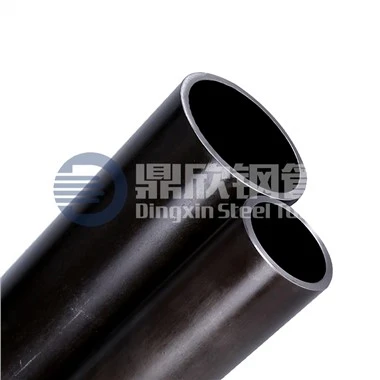
First off, let’s dump the myth that there’s one “standard” size for every car. Nope—way too many variables: vehicle class, era, brake system type (disc vs. drum, ABS vs. non-ABS), even what region it’s sold in. But that said, there are go-to sizes that are basically the industry’s bread and butter, and that’s what matters when you’re grabbing parts for a replacement or a new build.
Let’s start with the two core specs everyone actually uses when measuring brake tubes: outer diameter (OD) and wall thickness, not just “size” like you’d order a t-shirt. Here’s where I see most people mess up—they grab a tape measure, measure the outside of the line, and call it a day. But brake tubes are precision-engineered, so wall thickness is non-negotiable. Thinner walls = more likely to rust through or burst under pressure, which is a huge no-no for braking systems.
Now, the sizes. For passenger cars, light trucks, SUVs—like the ones most of us drive daily—90% of the time, the primary brake lines (the ones running from the master cylinder to the wheels, and the wheel cylinders/calipers) fall into two main OD sizes: 3/16 inch (that’s ~4.76 mm) and 1/4 inch (~6.35 mm). Wait, hold on—why two? Let’s break it down real quick. 3/16 is the workhorse for most domestic and import passenger vehicles made from the 1950s all the way to today. It’s the standard for the main hydraulic lines that carry brake fluid pressure. The 1/4 inch line? You’ll see that on heavy-duty stuff—old school full-size pickups, vans, SUVs that haul or tow regularly, and some performance cars where you need a little extra fluid volume to handle hard stops without fade. That makes sense, right? More line diameter = more fluid, less pressure drop.
But don’t sleep on metric sizes, especially if you’re working on post-2000 imports or European models. Wait, people forget—even US automakers switched to metric for a lot of underhood parts starting in the 80s, and brake tubes are no exception. The metric equivalent of 3/16 inch is 4.75 mm OD, and 1/4 inch is 6 mm OD. I can’t tell you how many times a mechanic comes in panicking because their new German brake line “doesn’t fit” the old domestic flare tool—turns out they grabbed the metric vs. SAE line by mistake, and one’s a hair smaller. Flare size matters too, by the way—SAE uses double flaring (45 degrees), metric is usually 45 degrees too but sometimes has a slight seat difference, so always check before you crimp that flare.
Now, what about the tiny stuff? The hard lines running along the frame might be the 3/16 or 1/4 inch, but the flexible brake hoses that connect the hard line to the caliper on the wheel—those are different. But the question’s about brake tube, which usually refers to the rigid metal lines, but quick note: flexible hoses have their own sizing, but stick to rigid for the “standard” convo. Also, the smaller lines that go into ABS modules or proportioning valves? Most of those are even smaller—like 1/8 inch (~3.18 mm) or 3 mm metric, but those are secondary lines, not the main ones you’d replace when doing a full brake line overhaul.
Wait, let’s talk wall thickness because this is where a lot of cheap tube suppliers cut corners—no judgment, I’ve seen it. The standard wall thickness for 3/16 inch SAE brake tube is 0.028 inches (0.71 mm) for regular use, and 0.032 inches (0.81 mm) for heavy-duty. For 1/4 inch, it’s usually 0.035 inches (0.89 mm) standard, 0.040 inches (1.02 mm) for heavy duty. Why does this matter? If you buy a “3/16 brake tube” that’s got a wall thickness of 0.020 inches, that’s garbage. It’ll rust through in 2 years, maybe less, especially if you live in a salty state. I’ve had customers bring back cheap tube they bought at a big box store, saying it bent too easy and leaked—turns out it’s the wrong wall thickness, not just the OD. Pro tip: always confirm both OD and wall thickness when ordering, not just the size number.
Now, let’s address exceptions because no rule is 100%. Classic cars—pre-1950s? You might find 1/8 or 5/16 inch lines back then, but those are rare now. Heavy-duty commercial vehicles, like semi-trucks? They use bigger, like 3/8 inch or 10 mm, but that’s not what most people would consider “standard automotive”—we’re talking personal vehicles here. EVs, too? Wait, I’ve been seeing more EVs lately with slightly thicker 3/16 lines, because the weight of a battery EV is way higher than a gas car, so braking pressure is higher, so they beef up the line a tiny bit. But still, OD is 3/16, just thicker walls. That’s a recent shift, but still falls under the standard OD size we talked about.
Wait, let’s clear up a common confusion: people mix up brake tube size with flare nut size. The flare nut on a 3/16 brake tube is usually 10 mm metric or 3/8 inch SAE. On 1/4 inch, it’s 12 mm metric or 1/2 inch SAE. That’s why when you’re using a line wrench, you need the right size—if your wrench slips on a 10 mm flare nut, you might have grabbed the wrong line size. I’ve lost count of how many mechanics strip flare nuts because they paired the wrong wrench size to the line. It’s a silly mistake, but it happens.
Let me throw in a real example from my shop last month. A guy brought in a 2018 Honda Civic that needed a full brake line replacement. He’d bought a “standard brake tube kit” online, and when he got here, the main lines were 1/4 inch. Wait, that’s not right—Hondas from that era use 4.75 mm (3/16 inch metric) lines. The kit seller just threw in 1/4 inch as “standard” without checking the vehicle. That’s why doing your homework on the specific make/model year matters more than just grabbing a generic “standard” size. But the good news is, if you don’t have your service manual handy, 3/16 is still the safest bet for most 1990 to 2020 passenger cars.
Another example: my cousin owns a 2005 Ford F-150 that he uses to pull a 7,000 lb camper. Last year, he replaced his rear brake lines, and we went with 1/4 inch heavy-duty tube, because the stock 3/16 was showing signs of stress after 15 years of heavy towing. That’s exactly the use case for the 1/4 inch size—extra volume to handle higher braking loads without the line bulging under pressure.
Now, let’s talk about why this all matters for you, not just technical stuff. If you’re a DIYer doing a brake line job, getting the wrong size isn’t just a hassle—it’s a safety hazard. Too small a line, and you get uneven braking, or even brake failure under hard stops. Too big, and you’ve got excess fluid volume that makes the brake pedal feel spongy, and might not fit in the tight spaces along the frame rails. I’ve seen guys use a 1/4 inch line on a Honda Civic just because that’s what they had lying around, and they ended up bleeding brakes for hours to get the spongy pedal feeling right. Don’t be that guy.
Wait, quick quick note on measuring a line that’s already installed—if you’re replacing a line and can’t get it out to measure, use a caliper if you’ve got one, or a measuring tape with small enough increments. If it’s a steel line with a flare nut, measure from the end of the flare (the part that fits into the caliper/master cylinder) to the bend point. But again, if you’re ordering replacement, check the make/model first, because some lines are routed in a way that you might miss a small size difference.
Now, let’s wrap this up with a takeaway. The so-called “standard automotive brake tube size” breaks down to this: for 90% of light-duty passenger vehicles (cars, SUVs, pickups under ¾ ton) built after 1980, it’s either 3/16 inch (SAE) or 4.75 mm (metric) outer diameter. For heavy-duty or towing use, it’s 1/4 inch (SAE) or 6 mm (metric). Always confirm wall thickness too—don’t just go by OD. And for the love of all things driving, don’t grab random line size from the internet—check your service manual, or ask someone who actually works with brake tubes every day.

If you’re a mechanic looking to stock up on reliable brake tubes, or a DIYer who needs a custom line bent to fit your specific ride, don’t waste time guessing. Hit us up to connect on your exact requirements—we can hook you up with precision-cut, tested tubes that fit right, no mistakes, no safety risks.
Honed Tube References:
- Automotive Brake Systems: Design, Selection, and Application (SAE International, 2018)
- Brake Line Specifications & Sizing Guide (National Highway Traffic Safety Administration, 2021)
- Metric vs. SAE Brake Tube Standards: A Practical Guide (Automotive Service Association, 2020)
Zhejiang Dingxin Steel Tube Manufacturing Co., Ltd.
Zhejiang Dingxin Steel Tube Manufacturing Co., Ltd. is one of the most professional automotive tube manufacturers and suppliers in China. We have world-leading production equipment and strong manufacturing capabilities. Please feel free to wholesale high quality automotive tube at competitive price from our factory.
Address: Liuli Industrial Zone, Haiyan, Zhejiang Province, China
E-mail: sales@dingxintube.cn
WebSite: https://www.dingxinsteeltube.com/
