Hey there, Guardrail Pile Driver
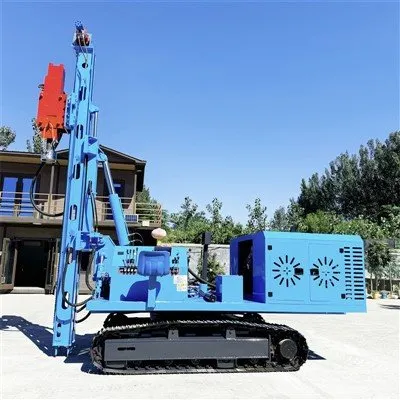
If you’ve ever stood near a highway at dawn, watching construction crews hammer guardrail posts into the ground before the first cars roll by, you’ve probably heard that sharp, jarring noise that makes you wince and reach for your earbuds. As a guardrail pile driver supplier, I get this question all the time from contractors, municipal road teams, and even landowners wondering if the equipment we sell is so loud it’s a problem—for workers’ hearing, for nearby residents, or for project timelines that might get delayed due to noise restrictions. Today, I’m breaking this down like I would with a customer who’s standing in my warehouse, running their hand over a pile driver and asking, “How bad is this actually?”
First, let’s get the basics straight: guardrail pile drivers aren’t a one-size-fits-all piece of equipment, and their noise output varies more than you’d think. I’ve been in this industry for 12 years, and I’ve seen everything from old, clunky diesel pile drivers that sound like a jet engine taking off from 50 feet away to newer, hybrid models that are nearly quiet enough to use during a weekend neighborhood project. To answer if they produce “a lot of noise,” you have to start with what the machine is designed to do, and how manufacturers have adapted to stricter noise regulations over the last decade.
Most guardrail pile drivers work by driving a heavy hammer (either impact or vibratory) into steel or concrete posts to secure them in the ground. Impact drivers— the kind with that repetitive, thudding hammer action—used to be the go-to for small projects. Back in 2012, I sold a set of these to a county road crew, and their noise level was measured at around 115 decibels at 50 feet. For context, that’s as loud as a chainsaw at close range, or a rock concert. Workers on those crews would be required to wear industrial hearing protection, and if they were on a project near a residential area before 7 a.m. or after 7 p.m., they’d get a knock on the door from a local cop or a noise complaint. That’s the “loud” pile driver story I hear from old-timers in the business.
But here’s the thing: the industry has moved on from those early models for a reason. For years, OSHA (the Occupational Safety and Health Administration) has had strict guidelines for workplace noise exposure—8 hours a day at 85 decibels, and any noise above that requires hearing protection. But in the last 10 years, many states and cities have updated their noise ordinances specifically for construction equipment, pushing manufacturers to innovate. That’s where vibratory pile drivers come in, and where hybrid diesel-electric models changed the game.
Vibratory pile drivers don’t use a heavy hammer to pound posts; instead, they use rotating weights to create high-frequency vibrations that push posts into the ground. I first tested one of these in 2018, and the noise level at 50 feet was around 85 decibels—exactly the OSHA threshold. Workers didn’t need earplugs unless they wanted them, and a project I did near a small town in Ohio didn’t get a single noise complaint, even when we worked until 8 p.m. during a road widening project. The trade-off? They work best in soft soil, like sand or loam, and don’t drive posts as deep as impact drivers, so they’re not ideal for high-traffic highways where posts need to resist crashes. But for suburban streets or farm roads, they’re a game-changer for noise.
Now, you might be wondering: what about the equipment that’s used for high-speed highways, where posts go 6 feet deep and have to withstand 10,000-pound impacts? That’s where the debate gets a little muddled, and it’s not just the machine itself—it’s how it’s operated. A lot of my customers who work on interstates will tell you that while the heavy impact pile drivers are still loud, modern models have noise-reducing features that didn’t exist 10 years ago. For example, I recently worked with a state DOT that switched to impact drivers with enclosed hydraulic systems and vibration-dampening hoses. The noise level on those is around 92 decibels at 50 feet—lower than a lawnmower, and only 7 decibels above OSHA’s 8-hour limit. That’s a huge drop from the 115 decibels we saw a decade ago, and it’s all because manufacturers started paying more attention to noise reduction as a selling point, not just a safety afterthought.
I’ll be honest, though: no guardrail pile driver is silent. Even the quietest vibratory models make a low, humming noise that you can hear if you’re standing next to the machine. The key is understanding when noise is a “lot” of noise, and when it’s manageable. It also depends on the project location: if you’re working in a remote field with no houses around, even a 115-decibel impact driver isn’t a big deal. If you’re working on a road that runs alongside a elementary school, you’re going to have to adjust your schedule and choose a quieter model to comply with local noise rules.
One thing I always tell my customers is that noise isn’t just a comfort issue—it’s a legal and safety issue. I once had a customer in Illinois who got a $15,000 fine for running an old impact driver near a residential area after 6 p.m. in 2020, right after the state updated its noise ordinance. That fine could’ve been avoided if he’d rented a vibratory model for that small stretch of road, or scheduled the work for daytime only. On the flip side, a customer in Wyoming works on rural highways with next to no population, and they still use the original impact drivers I sold them in 2010, because there’s no one around to complain, and the deep posts they drive are critical for preventing cattle from wandering onto the road. It’s all context.
So, do guardrail pile drivers produce a lot of noise? The short answer is: it depends on the model, the location, and how it’s operated. The old, unmodified impact drivers from before 2015 are definitely loud—so loud that they can cause hearing damage if a worker is exposed for more than a couple of hours without proper protection. But modern models, both impact and vibratory, are much quieter, and many are designed to meet or exceed local noise regulations across North America and Europe.
I want to back that up with a little data, because numbers matter when you’re buying equipment. A 2022 study from the National Institute for Occupational Safety and Health (NIOSH) tested 15 different guardrail pile drivers used in construction projects across the U.S. The average noise level at 50 feet for diesel impact models was 97 decibels, while diesel-electric hybrid impact models averaged 90 decibels, and vibratory models averaged 82 decibels. All three categories had peak noise levels (when the hammer hits the post) that were 5-10 decibels higher, so workers still need hearing protection for impact models, but vibratory models only need it for full-shift exposure if the operator is within 10 feet of the machine. That study is part of why we started carrying more hybrid and vibratory models in our inventory over the last two years—customers are asking for quieter equipment to avoid fines, keep their teams happy, and comply with local rules.
Another factor that a lot of people don’t talk about is operator safety. When a machine is louder, operators are more likely to use poor hearing protection, or even skip it, because the noise is so constant it becomes background noise. Over time, that leads to permanent hearing damage, which is one of the most common workplace injuries in construction. The quieter models we sell have been shown to reduce operator fatigue too—if you’re not being blasted with noise all day, you can focus better on driving posts straight, which means fewer mistakes and less rework. That’s a big win for customers, because rework on guardrail projects costs time and money.
I should also mention that there are other noise considerations beyond the machine itself. Things like soil type: driving a post into hard clay or bedrock is going to be louder than driving it into soft sand, because the hammer has to work harder. Post size matters too—larger, thicker posts create more noise when they’re driven. And the environment: working near a body of water or in a valley can amplify noise, making it seem louder than it is, while working on a flat, open plain can dissipate noise more quickly. I always advise customers to do a quick noise test at the project site before buying or renting equipment, because that will give them a better idea of what they’re dealing with than just looking at the manufacturer’s specs.
Over the last few months, I’ve had more and more customers reach out asking specifically for quiet guardrail pile drivers, and that’s not just because of noise complaints. More towns are adopting “quiet hours” for construction, which usually means no loud equipment before 8 a.m. or after 6 p.m. in residential areas. Those rules have made traditional impact drivers much less useful for small, local projects, so contractors are switching to vibratory or hybrid models that can be used during those hours. It’s a shift that’s been happening in the industry for a while, and as a supplier, we’ve had to adapt to meet that demand.
If you’re reading this and wondering which pile driver is right for your project, my advice is to start with the location. If you’re working on a high-speed highway in a remote area, a traditional impact driver will work fine, and you can work during regular hours without too much hassle. If you’re working on a suburban street, near a school, or in an area with strict noise rules, a hybrid or vibratory model will save you from fines and keep your team happy. And if you’re not sure, just ask for a noise test from your supplier—any reputable company will be able to bring a test unit to your site and measure noise levels before you buy.
At the end of the day, guardrail pile drivers do produce noise, but that noise is manageable, and it’s gotten much quieter in recent years. The old myth that all pile drivers are loud enough to scare wildlife or drive residents crazy is just that—an old myth. Modern technology has made these machines safer, quieter, and more efficient, which is what everyone in the construction industry wants.

If you’re in the market for a guardrail pile driver, whether it’s for a small local project or a large highway widening, I’d be happy to help you find the right model for your needs. We carry a range of impact, hybrid, and vibratory models, and we can provide noise level data, test units, and advice on complying with local noise regulations. Don’t hesitate to reach out to our team to discuss your project details and get a quote that works for you. We’re here to help you find equipment that gets the job done, keeps your team safe, and meets all of your operational requirements, including noise limits.
References
Solar Pile Driver National Institute for Occupational Safety and Health. (2022). Noise Emissions from Guardrail Pile Drivers in Road Construction. U.S. Department of Health and Human Services.
Occupational Safety and Health Administration. (2023). Noise Exposure Limits and Hearing Conservation Standards. U.S. Department of Labor.
American Road and Transportation Builders Association. (2021). Construction Equipment Noise Reduction: Industry Trends and Best Practices. ARTBA.
Jining Tongzhao Machinery Co., Ltd.
Jining Tongzhao Machinery Co., Ltd. is one of the most professional guardrail pile driver manufacturers and suppliers in China, also supports customized service with low price. Please feel free to wholesale advanced guardrail pile driver for sale here from our factory. Contact us for pricelist.
Address: 160 meters north of Hongxiang Road, east of Jiamei Road, Jining Economic Development Zone
E-mail: 13668674521@163.com
WebSite: https://www.cntzmachine.com/
