If you’re in the heat-treated parts industry (or just dabbling in metal processing, no judgment), you’ve probably wondered: “What’s the maximum temp a commercial tempering furnace can hit?” As a tempering furnace supplier, I get this question all the time—usually right after someone asks me to explain what tempering even is (spoiler: it’s not the same as hardening, and mixing those two will get you a really confused batch of metal parts). Let’s break this down straight, no jargon, no weird corporate fluff, just what you actually need to know. Tempering Furnace
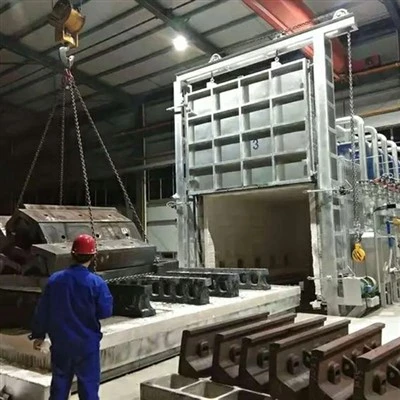
First, let’s clear up the basics: tempering is that final step after quenching metal (like steel, aluminum, or even some alloys) to make it less brittle. Quenching heats metal super hot, then drops it in oil/water to cool fast—great for hardness, terrible for shattering if you drop it. Tempering “relaxes” that brittleness by heating it to a precise temp, holding it there, then cooling slow. But the max temp here? It’s not a one-size-fits-all number. It depends on what you’re tempering, what you’re trying to get out of the part, and the kind of furnace you’re using.
Most commercial tempering furnaces (the ones shops actually buy for production, not lab prototypes) max out between 1,200°F (649°C) and 1,500°F (816°C). Wait, hold up—why not higher? Let’s think: steel, for example, starts losing its hardness if you heat it above that range. If you crank a carbon steel part to 1,600°F, you’re basically undoing all the hardening work you just did. It’ll be soft, not tough—useless for anything structural, like car axles or gear parts.
But here’s the thing: some specialty furnaces can go way higher, like 2,000°F (1,093°C) or even more. Those aren’t your run-of-the-mill commercial tempering furnaces, though. I only sell those for specific use cases—like tempering high-speed steel for cutting tools, or aerospace alloys that need extra heat resistance. Those are for niche industries, not your average machine shop cranking out thousands of steel bolts a day.
Wait, let’s talk about the two main types of commercial tempering furnaces, because their max temps differ a lot too. Convection tempering furnaces are the workhorses—they heat air, circulate it evenly, great for most steel parts. Their sweet spot max is around 1,400°F (760°C) for standard commercial models. Then there’s salt bath furnaces—they use molten salt instead of air, heat way faster, and can hit up to 1,600°F (871°C). I’ve had customers in the tool and die industry swear by these for their high-speed steel bits, since they can temper to a uniform hardness without warping parts.
But let’s get real—why does max temp matter so much? If you’re a shop owner, picking a furnace with a max temp you’ll never use is a waste of money. I once had a guy come to me bragging he bought a furnace that goes to 1,800°F. Turns out he only ever temped at 400°F for small engine parts—he spent $10k extra on a feature he didn’t need. That’s the kind of mistake I try to help people avoid. On the flip side, if you need to temp parts that require higher heat, skimping on a furnace with a max temp that’s too low means you’ll ruin parts, waste material, and lose money on reworks.
Let’s break down common materials and their ideal max tempering ranges, so you can see how that plays out. Carbon steel (the most common stuff, like for construction parts): max temp ~1,300°F (704°C) is perfect. You can go up to 1,400°F if you need less brittleness, but that’s about it. Alloy steel (like for gears, shafts): can go up to 1,500°F (816°C) without losing too much hardness. Aluminum alloys—wait, aluminum tempering is way lower, max around 600°F (316°C), so a regular steel furnace is too hot for that. If I sell a furnace to an aluminum shop, I make sure to note the max temp is set correctly, not cranked to the steel range.
Now, let’s address a question I get all the time: can you operate a tempering furnace at its max temp every day? Short answer: no. Furnaces are built to handle peak temps, but running them at the absolute max 24/7 will wear out the heating elements way faster, cause more wear on the chamber, and lead to more maintenance. It’s like driving a car at 100 mph every day—you’ll break down sooner. I tell all my customers to run at 100-150°F below the max temp most of the time, save the max for when they’re working on specialty parts that actually need it. That makes the furnace last longer, keeps operating costs down, and avoids surprise breakdowns during a production run.
Wait, what about newer tech? A lot of people ask about vacuum tempering furnaces these days—they’re clean, no oxidation on parts, great for precision parts like medical implants. Their max temp? Usually around 1,700°F (927°C), which is higher than convection, but still way lower than a hardening furnace. I work with a couple of medical device makers who swear by these for titanium parts—they don’t get that ugly scale buildup, so they don’t have to do extra finishing work after. That’s a big win for them, since time is money in the medical supply chain.
Now, let’s get to the part you care about if you’re actually shopping for a furnace. How do you pick the right max temp for your operation? First, list all the materials you’ll be tempering. If you’re only doing carbon steel bolts, a convection furnace with a 1,400°F max is more than enough. If you’re making high-speed steel cutting tools or aerospace alloys, you’ll need at least a 1,600°F max salt bath or vacuum furnace. Second, think about future needs—if you might expand into new materials down the line, it’s better to get a furnace with a slightly higher max temp than you need right now, instead of having to replace it in 2 years.
Here’s a common mistake I see: some cheap furnaces on the market claim max temps way higher than they can actually reach. A buddy of mine who runs a job shop bought a budget furnace online that said it hit 2,000°F. Turns out it only got to 1,100°F, and even that was uneven—parts on the top shelf were way hotter than the bottom. You end up ruining a whole batch of parts, which is way more expensive than paying a little more for a reliable commercial furnace. That’s why buying from a reputable supplier (hi, that’s me!) matters—we test every furnace before it leaves our shop, so you know the max temp is accurate, and the heat is even across the whole chamber.
Wait, let’s circle back to the original question: “What’s the maximum temp of a commercial tempering furnace?” It’s not a single number. It’s a range, based on furnace type, materials, and your specific needs. For most everyday commercial use, it’s 1,200-1,500°F. For specialty uses, it can go up to 2,000°F, but that’s not necessary for 90% of shops.
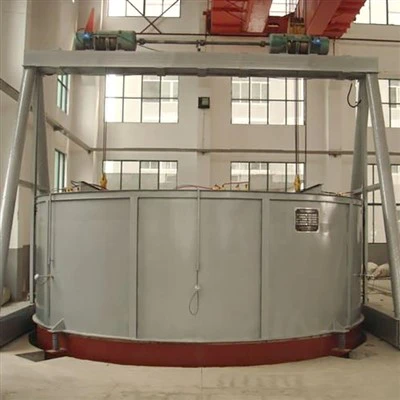
At the end of the day, a tempering furnace’s max temp is just one piece of the puzzle. Even if a furnace can hit 1,800°F, if the temperature control is garbage, or the air doesn’t circulate evenly, it’s useless for good parts. That’s why when I work with customers, I don’t just sell them a furnace and walk away. I walk them through their production needs, explain what temp they actually need, and make sure they know how to operate it right to get the best results. If you’re tired of ruining parts, dealing with furnace breakdowns, or paying too much for a furnace that doesn’t fit your needs, reach out to talk through what you’re looking for. No pressure, just straight advice from someone who’s been in the tempering furnace game for years.
Quenching Furnace References:
- ASM International. (2019). Heat Treater’s Guide: Practices and Procedures for Irons and Steels. 5th Edition.
- Metal Treating Institute. (2022). Commercial Furnace Specifications: Tempering Applications for General Manufacturing.
- Vacuum Furnace Manufacturers Association. (2021). Specialty Tempering Furnace Capacities for Aerospace and Medical Alloys.
- The Equipment Council. (2020). Practical Guide to Industrial Furnace Selection for Small to Medium Shops.
Jiangsu Fangwei Furnace Industry Co., Ltd.
Jiangsu Fangwei Furnace Industry Co., Ltd. is one of the most professional tempering furnace manufacturers and suppliers in China. With abundant experience, we are committed to providing high quality customized products with competitive price. Please feel free to buy advanced tempering furnace made in China here from our factory.
Address: No.168, HuangNian Bridge, DaoShu Town, Danyang City, JiangSu Province, China
E-mail: fangwei@fwfurnaces.com
WebSite: https://www.fwfurnaces.com/
