Hey everyone, thanks for stopping by my corner of the web. I’m Jake, and I’ve been running a mobile explosion-proof fuel station supply company for almost 8 years now—spent way too many late nights troubleshooting, answering random questions from small business owners, and of course, getting the million-dollar question: “Can your mobile explosion-proof fuel station actually supply aviation fuel?” Mobile Explosion-proof Fuel Station
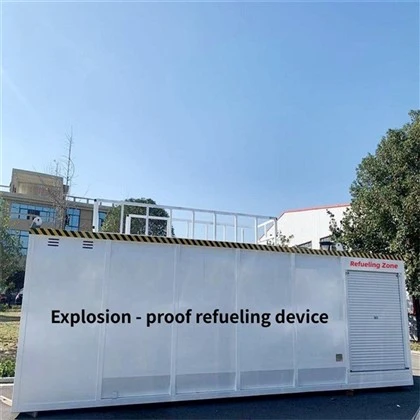
Let’s cut the crap first. A lot of folks will tell you no, because aviation fuel has some super specific standards, right? But if you know what you’re actually looking at (and how our mobile units are built), the answer isn’t a flat yes or no—it’s “it depends on what you need, and how we set the unit up.” Let’s break this down like I’d explain it to a mechanic buddy over a beer, no stuffy industry jargon that makes your eyes glaze over.
First, let’s get one thing straight: aviation fuel isn’t just “jet fuel.” There’s jet A-1, jet A, avgas (for small prop planes), even different grades for military stuff. When someone asks if our mobile station works for aviation, they’re usually talking about two big use cases: refueling small general aviation planes at remote airfields, or topping off helicopters that work off-grid (think construction sites, search and rescue, or oil rig support). If you’re running a major commercial jet at a full-service airport? Yeah, a mobile unit won’t cut it—those planes need millions of gallons, and fixed infrastructure is non-negotiable. But for the smaller, more frequent (or remote) aviation use cases? We’ve got clients making this work every single week.
Now, why would anyone bother with a mobile unit for aviation, anyway? Let’s list the pain points fixed stations have that drive people to us. Remote airfields—like the ones in mountain towns, on oil pads in West Texas, or even small grass strips in the Midwest—rarely have a dedicated aviation fuel farm. Building a fixed station out there costs a fortune, and it’s not like you’re going to have hundreds of commercial jets landing there every month to make it worth it. Then there’s emergency situations: after a hurricane, search and rescue helicopters need fuel fast, but fixed stations might be down, damaged, or just not set up to deliver to a temporary helipad. Same with construction companies that use helicopters to move gear to remote job sites—they don’t want to sink money into a permanent fuel setup when the project wraps in a year.
That’s where our mobile explosion-proof units come in. But wait—explosion-proof is non-negotiable here, right? Aviation fuel is way more volatile than diesel or regular gasoline (for cars), so any unit handling it has to meet way stricter safety rules. Let’s talk about what makes our units explosion-proof, and why that’s a game-changer for aviation. Most regular fuel tanks you see on the back of a truck have vents, right? If static builds up, or there’s a spark, that vent can let fuel vapors escape and ignite. Our units don’t work that way. We build the tank with a closed vapor recovery system—so any vapors that build up get pulled back into the tank, not into the air. We also use intrinsic safety components for everything: pumps, wiring, even the nozzles. All parts are rated for Class 1, Division 1 environments—meaning they’re safe to use where flammable gases are almost always present. That’s not a “nice to have” for aviation fuel; that’s a legal requirement in most places. Skip that, and you’re not just risking a fire—you’re looking at massive fines, or even having your entire operation shut down.
Now, can we modify these units to handle aviation fuel specifically? Short answer: yes, and we’ve got standard setups for jet A-1 and avgas that are already certified. Let’s dive into the details that matter for folks who actually use the fuel. First, filtration. Aviation fuel has to be super clean—even tiny bits of water or sediment can mess up a plane’s engine, or cause corrosion over time. Our regular diesel units have basic filtration, but for aviation, we add two extra layers: a water separator that can catch even 10 parts per million of water (that’s way smaller than a drop you can see), and a coalescing filter that removes any remaining sediment. We also test every unit before it leaves our shop—run fuel through it, check the filters, even do a pressure test on the tank to make sure there are no leaks. That’s not something every mobile fuel provider does, but it’s non-negotiable for aviation.
Then there’s metering. You can’t just dump fuel into a plane’s tank and guess how much you put in. We use aviation-approved meters that track the exact number of gallons (or liters, depending on where you are) being dispensed, with a accuracy of within 0.5%. That’s way more precise than what you’d use for a semi-truck, and it’s required by almost all aviation regulatory bodies—like the FAA in the US, or EASA in Europe. We also add a temperature sensor for jet A-1, because that fuel turns to gel at really cold temperatures (like, -47°C or lower). Our units have heating coils around the tank and the lines that keep the fuel above that gel point, even when it’s freezing outside. That’s a huge deal for planes flying in the Rockies or the Arctic—if your fuel gels mid-refuel, you’re stuck.
But let’s be real—this isn’t for everyone. I’ve had a few clients reach out thinking they can use one of our units to fuel 737s, and that’s just not going to happen. Our largest mobile unit holds 10,000 gallons of fuel. A single 737 takes about 6,000 gallons to get from New York to Chicago. So you’d need two units just for one plane, and that’s before you factor in pressure lines that can handle the fuel flow rate a commercial jet needs. Those planes are designed to refuel through underground lines that can deliver thousands of gallons per minute; our units do around 50 gallons per minute, which is perfect for small planes but way too slow for big jets.
Another big thing: regulatory compliance. A lot of people don’t know that when you use a mobile unit for aviation fuel, you can’t just take a regular diesel unit and swap the nozzle. You need to get it certified by the same body that approves fixed aviation fuel stations. We work with third-party testers to get every aviation-specific unit we build FAA-approved, EASA-compliant, and whatever other local rules your country has. I once had a client in Canada who tried to skip the certification step, and Transport Canada shut them down mid-refuel—cost him $20k in lost work and fines. So that’s not a step we skip, even if it adds a little time to the build.
Now, let’s talk about some real-world examples, because numbers don’t lie. Last year, a search and rescue team in British Columbia reached out to us. They needed to refuel their helicopter mid-mission during wildfire season—they were going into areas where fixed stations had been burned down, and they couldn’t wait for a temporary fixed station to be built. We sent them a 5,000-gallon mobile explosion-proof unit, fitted with jet A-1 filters, a heated tank, and a helicopter-specific nozzle (smaller flow rate, safer for helicopter tanks). They used it for 3 months, refueled 12 different helicopters, and said it cut their response time by 40% compared to having to drive 2 hours to the nearest fixed station. That’s the kind of use case where a mobile unit absolutely crushes it.
Another client: a small flight school in Florida that had a grass strip 10 miles from the nearest fixed aviation fuel station. Before, they had to schedule a fuel truck to come out once a week, which meant sometimes they ran out of fuel mid-week and had to turn students away. We gave them a 2,000-gallon unit with avgas-specific filtration, and now they can refuel whenever they want. They said their student numbers went up 15% last year because they never run out of fuel anymore. That’s way more affordable for them than building a fixed station—saving them over $100k in construction and permits.
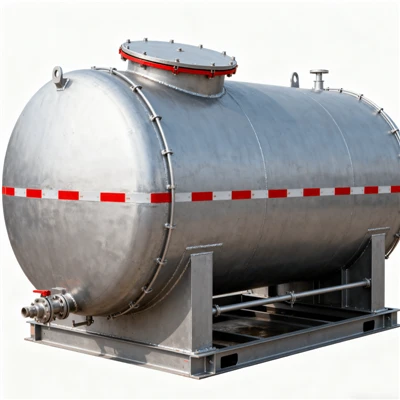
But let’s address the elephant in the room: is it safe? I get why people worry. Mobile units are on wheels, right? What if something crashes into it? What about vapors? We build our tanks with double-walled steel, so if one wall gets dented, the other holds the fuel. We also install spill containment trays around the pump and nozzle, so even if a leak happens, it can’t get into the ground or catch fire. We also train every client on how to use the unit safely—no smoking within 50 feet, how to ground the plane correctly to prevent static, how to shut down the pump in an emergency. I still do a yearly check-in with every client that’s using our units for aviation, just to make sure they’re following all the safety rules. That’s not mandatory, but it’s how we do business—we don’t want someone getting hurt because they cut a corner.
Wait, I should also mention the downside. Mobile units are great, but they have limits. You can’t move them around as easily as, say, a gas can in the back of a truck—they’re big, 20-40 feet long, so you need a semi or a heavy-duty crane to move them. They also need a flat, solid spot to sit on—can’t park them in mud or soft grass, because you don’t want them tipping over. And they don’t hold as much fuel as a fixed station, so you have to refuel the unit itself every few weeks if you’re using it a lot. But for the use cases we’re talking about, those downsides are way smaller than the benefits.
So to circle back to the original question: Can a mobile explosion-proof fuel station be used for aviation fuel supply? Yes—if you’re supplying small general aviation planes, helicopters, or operating in remote/emergency locations, and you get the unit certified, modified with the right filters and safety components, and follow all regulatory rules. No—if you need to fuel large commercial jets at a major airport, or you don’t want to deal with the safety and compliance steps.
I’ve been in this game long enough to know that there’s no one-size-fits-all answer, which is why I don’t just sell a unit and disappear. If you’re someone who’s looking to set up aviation fuel supply and you’re thinking a mobile unit might work for you, reach out to me. I’ll walk you through what modifications you need, what certifications you’ll have to get, and even help you work out if a mobile unit is actually cheaper than building a fixed station in your location. No sales pitch, no fine print—just straight talk from someone who’s been doing this for years.
I’ve seen too many people waste money on the wrong setup, and I don’t want that for you. Whether you’re a flight school owner, a search and rescue coordinator, or a construction company that needs fuel for helicopter operations, I can help you figure out if our mobile explosion-proof stations are a good fit. Hit me up, let’s chat.
Mobile Fuel Station References
- Federal Aviation Administration (FAA). (2022). Aviation Fuel Quality Standards and Handling Procedures. U.S. Department of Transportation.
- European Union Aviation Safety Agency (EASA). (2021). Mobile Fueling Units for Aviation Operations. EASA Safety Information Bulletin.
- National Fire Protection Association (NFPA). (2020). NFPA 407: Standard for Aircraft Fuel Servicing. National Fire Protection Association.
- International Organization for Standardization (ISO). (2019). ISO 14644-1: Cleanrooms and Associated Controlled Environments – Part 1: Classification of Air Cleanliness by Particulate Contamination.
- Transport Canada. (2022). Mobile Aviation Fueling Unit Requirements. Canada Aviation Safety Manual.
Shandong Jingcai Industry and Trade Co., Ltd.
As one of the most professional mobile explosion-proof fuel station manufacturers and suppliers in China, we also support customized service. With abundant experience, we warmly welcome you to wholesale high quality mobile explosion-proof fuel station in stock here from our factory. Contact us for free sample.
Address: Caojiazhuang Village Industrial Park, Lingcheng Town, Qufu City, Jining City, Shandong Province.
E-mail: shandongjingcai888@gmail.com
WebSite: https://www.sdjingcaicn.com/
