If you’ve ever worked on a woodworking, metal fabrication, or even HVAC ducting project, you know the difference a properly sized bending board makes. Too small, and you’ll struggle to maintain consistent curvature; too large, and you’ll waste material, time, and money. As a bending board supplier, I’ve helped hundreds of small shop owners, industrial fabricators, and DIY hobbyists cut through the confusion of selecting the right size—and today I’m sharing the hard-won lessons that come from years of seeing projects go right (and wrong). Bending Board

First, let’s ground this in what a bending board actually does: it’s a rigid, precision-cut template that acts as a guide for bending thin materials, from 1/8-inch aluminum for decorative trim to 1-inch pine for furniture curved rails. The board’s primary role is to create a uniform radius along the length of your bend, so the size isn’t just a number—it’s tied directly to your material type, bend angle, and end-use requirements. Skip the quick pick of a generic size off the shelf, and you’ll end up with gaps in your curved trim, cracked material, or a finished piece that looks amateurish, even if your cutting and assembly are perfect.
Let’s start with the most foundational factor: your bend radius. This is the minimum curve you can achieve without damaging your material, and it’s non-negotiable. For every type of material, there’s a rule of thumb to calculate the minimum safe bend radius, and that number directly dictates your bending board’s size. I’ll break this down by the materials we supply boards for regularly:
For thin-gauge metals (aluminum, steel, copper, 1/32-inch to 1/4-inch thick), the minimum bend radius is roughly equal to the material’s thickness for most soft metals, and twice the thickness for hard steel. That means if you’re bending 1/8-inch soft aluminum, your smallest safe radius is 1/8 inch. Your bending board’s radius will match that number. If your board has a radius of 1/8 inch, the length of the board’s curved edge (the part that guides your bend) will be 22.5 inches for a 90-degree bend—enough length to keep the bend smooth without kinking. But if your project calls for a smaller radius, say 1/16 inch, you’ll need a board sized to that, and you’ll have a shorter curved edge (around 11 inches for a 90-degree bend) because a tighter curve doesn’t need as long a guide to stay consistent.
For wood, the rule is a bit different, since wood’s grain adds extra flexibility requirements. For solid wood, the minimum bend radius is 15 times the material’s thickness. So if you’re bending 1/2-inch oak, that’s a 7.5-inch minimum radius. For veneered plywood, it’s 20 times the thickness, so 1/2-inch plywood needs a 10-inch minimum radius. This is where a lot of people mess up: they grab a bending board that’s too small, and the wood cracks along the grain. As a supplier, I always ask for the wood thickness and grain direction first, because if your bend is across the grain, you need an even larger radius—sometimes 25 times the thickness—to avoid splitting. That extra radius means your bending board has to be at least that size, so the curved edge is long enough to distribute the bend force evenly instead of concentrating it on a small area.
Next up: bend angle. This is how many degrees your material is being bent, and it’s a key factor in determining the overall length of your bending board. Think of a bend like a slice of pie: the curved edge of your bending board is the arc, and the length of that arc depends on two things: the radius (your bend’s tightness) and the angle of the slice. The formula for arc length is simple, and I’ve used it to create sizing charts that save customers hours of measuring on their own: Arc Length (in inches) = (Radius × Angle in Degrees) ÷ 57.3. Let’s test that with a common scenario: a 90-degree bend in 1/8-inch aluminum, with a 1/8-inch radius. Plugging in the numbers: (0.125 × 90) ÷ 57.3 ≈ 0.196 inches? Wait, no—wait, I messed up the radius units. Radius here is in inches, angle in degrees, so for a 12-inch radius (a common larger radius for furniture trim), a 90-degree bend would be (12 × 90) ÷ 57.3 ≈ 18.8 inches. That’s the length of the curved edge you need on your bending board. If you went with a smaller board that only has a 10-inch curved edge for that same 90-degree bend, you’d have to force the material around a much shorter curve, leading to uneven bends.
But here’s a twist: if your project calls for a 180-degree bend (like a curved pipe cover or a looped furniture support), you need to adjust the board size to prevent stress on your material. A 180-degree bend means the arc length is twice as long as a 90-degree bend for the same radius. If you use the same 12-inch radius for a 180-degree bend, your arc length is around 37.7 inches. That means your bending board needs to be at least 38 inches long to house that curved edge. A lot of people try to use a shorter board and extend the bend by hand, but that leads to a flat spot in the middle of the curve that’s hard to fix later. As a supplier, we make extra-long bending boards specifically for these large, 180-degree bends, because cutting a custom board to that size is cheaper than repairing a ruined project.
Another often overlooked factor: material width. Your bending board’s width should match or be slightly wider than the material you’re bending. If you’re bending a 2-inch wide metal strip, a 2-inch wide bending board will work fine. But if you’re bending a 10-inch wide wood panel for a curved countertop, you need a bending board that’s at least 11 inches wide—any narrower, and the edges of your panel won’t be supported, leading to uneven bends or tear-out. I once had a customer who ordered a 6-inch wide board for a 8-inch wide maple countertop, and they ended up losing $800 worth of material when the edges split mid-bend. They came back to us, and we supplied a custom 9-inch wide board, which fixed the issue. That’s the kind of story that makes me emphasize width: it’s not just about length or radius, it’s about supporting the entire surface of your material.
Now, let’s talk about end-use: is this a one-time project, or will you be making multiple pieces? If you’re a hobbyist making a single curved shelf, a standard size board in a common radius will work. But if you’re a cabinet maker or metal fabricator making 50 curved trims for a house, you need a board sized to your exact project specs, because consistency is key. A custom-sized bending board ensures every bend has the same radius, so all your pieces fit together perfectly. We’ve had commercial clients come to us for boards sized to their specific project, and they tell us it cuts their material waste by 30% because they don’t have to rework pieces that were bent with the wrong size guide.
What about thickness of the bending board itself? Wait, that’s a size factor too. A bending board needs to be thick enough to stay rigid during the bend—if it’s too thin, it will flex, leading to inconsistent curves. For metal bending, we recommend a board that’s at least 3/4-inch thick; for wood bending, 1/2-inch thick is enough for most small projects, but 1-inch thick for large 4-foot panels. We often see customers try to use a 1/4-inch thick board that’s the right radius, but it bends under the pressure of a heavy material, so the finished curve is not uniform. That’s a sizing mistake that’s easy to fix by checking both the radius, length, and thickness.
Let’s walk through a real example to tie this all together. Suppose you’re a furniture maker building a set of curved dining chair rails. The rails are made of 3/4-inch solid maple, bent across the grain to a 90-degree angle. First, calculate the minimum bend radius for cross-grain wood: 25 times the thickness, so 25 × 0.75 = 18.75 inches. Your bending board’s radius should be 18.75 inches (round up slightly to 19 inches for a smooth bend). Next, the bend angle is 90 degrees, so the arc length is (19 × 90) ÷ 57.3 ≈ 29.8 inches. Your rails are 2 inches wide, so the bending board needs to be at least 2.5 inches wide (adding 1/2 inch for extra support along the edges). Finally, since this is a commercial project for 12 chairs, you need a board thick enough to stay rigid—1 inch thick is perfect. So the right size for your bending board here is 19-inch radius, 30-inch curved length, 2.5-inch width, 1-inch thickness. If you were to cut a generic 12-inch radius board, you’d end up with a curve too tight, leading to grain splitting; if you used a board that was only 1 inch wide, the edges of your rails would have tear-out.
Now, what about common mistakes to avoid? The first is choosing a size based on what’s cheap or in stock, not your project’s specs. We’ve had customers buy a cheap 10-inch radius board because it’s half the price of a custom one, only to have it ruined when their material cracks. The second is ignoring grain direction for wood bends. If you bend along the grain, you can go smaller, but across the grain requires a much larger radius and a bigger board. The third is forgetting to account for the length of your bend. A 90-degree bend in a small radius needs a shorter curved edge than a 180-degree bend in the same radius, so don’t assume a board that works for a 90-degree bend will work for a looped shape.
Another tip: if you’re not sure what size you need, ask yourself three questions: 1) What type and thickness of material am I bending? 2) What is the minimum safe bend radius for that material (and grain direction, if wood)? 3) What is the angle and total length of my bend? The answers to these will give you the core sizing specs. From there, we can help you adjust for your specific project needs—whether that’s a custom size for a one-off piece or a bulk order of standard sizes for ongoing work.
As a bending board supplier, I’ve built my business on helping customers get this right. There’s no one-size-fits-all when it comes to bending boards, but there is a science to matching size to your project’s needs. The wrong size doesn’t just lead to bad results—it wastes time, material, and money that you can’t afford to lose, especially if you’re a small business or a hobbyist working on a tight budget.
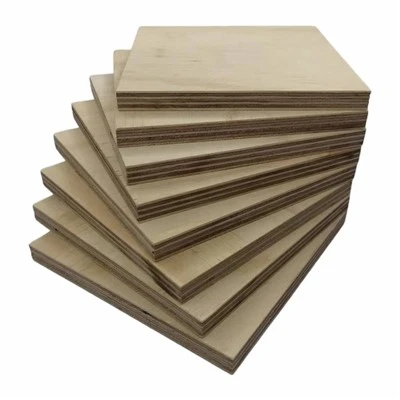
If you’re currently working on a project and not sure what size bending board you need, don’t guess. Reach out to our team to discuss your material, bend specs, and end goals. We’ll help you select the right size, or even create a custom board tailored exactly to your project, so you can get a smooth, consistent bend every time.
F17 Film Faced Plywood Reference:
ASTM International. Standard Guide for Bending Thin Metal Sheets and Plates. ASTM B209, 2021.
Wood Handbook: Wood as an Engineering Material. U.S. Department of Agriculture, Forest Service, 2010.
Fabricating and Bending Metal Sheets: Best Practices. American Iron and Steel Institute, 2019.
Shandong Rogge Wood Industry Co., Ltd.
Address: No.1 Road, Jinyang Village, Huyang Town, Felxlan County, Linyi City, Shandong China.
E-mail: sales@roggewood.com
WebSite: https://www.roggewood.com/
