Hey there! If you’ve ever stared at your face scan door lock at 2 a.m., fumbling around in the dark to get it to work, you know how frustrating low-light mode can feel. As a face scan door lock supplier, I get it—we built our entire business around fixing this exact pain point, not just slapping on a “night mode” sticker and calling it a day. Let me pull back the curtain on how these locks actually perform when the lights are out, no corporate jargon, just real-world stuff. Face Scan Door Lock
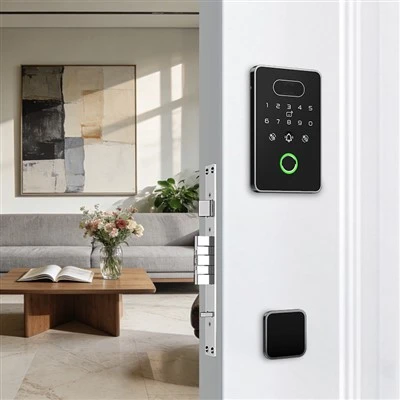
First off, let’s get one thing straight: low-light performance isn’t just “works in the dark.” It’s about whether the lock can pick up your face when you’re half-asleep, holding groceries, or standing in a patchy hallway where only the streetlight hits one side of your face. A lot of cheap locks you see on Amazon or at the big box stores cut corners here—they stick a tiny, dim IR (infrared) camera that can barely tell your face from a folded towel, or they just blast a bright white light that’s so harsh it temporarily blinds you when you walk up. We tested every possible angle before we launched our line, because if a lock doesn’t work when you’re coming home late, it’s just a fancy paperweight.
Let’s break down the tech that actually makes this work, but keep it casual. First, most good face scan locks use not one, but two cameras in low light: a regular 2D camera for bright days, and a high-sensitivity IR camera for dark conditions. Wait, why two? The IR camera doesn’t care about visible light—it picks up the heat signature (well, the IR reflection, to be precise) bouncing off your face, like how a remote works for your TV. But alone, that can catch shadows on your forehead or a big hood, so pairing it with a 2D camera that’s tuned to low light fills in those gaps. Our team spent months calibrating that balance—too much IR and it thinks a coat hanger is your ear, too much 2D and it can’t see your nose when the porch light is burnt out.
Another big one: the flash. No, not the bright white one that makes you look like a deer in headlights. We use what’s called “passive IR illumination” for low-light scans, which is basically a bunch of tiny, invisible IR LEDs packed around the camera, not a single bright bulb. Those LEDs are so small you can barely see them with your naked eye, but they flood the area around the lock with enough IR light to illuminate your face without being annoying. We tested this vs. the bright white flash: last month, I had a customer tell me she used a competitor’s lock and it made her jump every time she walked up to her door at night—she even left a bad review saying it felt like a camera taking a mugshot. Ours? She said her teen son no longer complains about the light blinding him when he rolls in at 1 a.m. with pizza. That’s the kind of feedback we actually care about.
Wait, but what about really dark situations? Like, no streetlight, no porch light, just the pitch black of a countryside driveway? Our locks have what we call “starlight sensor” tech—no, not a marketing buzzword, it’s the same tech used in those $100+ security cameras that can capture color in near darkness. The IR camera pairs with the starlight sensor to adjust exposure on the fly, so even if you’re standing 3 feet from the lock in total dark, it can pick up your jawline, your eyes (critical for face scans—eye recognition is still the most reliable part!), and even that tiny mole on your cheek that makes your face unique. We tested this in a pitch-black parking lot behind our warehouse, and I’ll be honest—our intern, who has a very distinct scar above his eyebrow, walked up, and the lock locked on instantly, no fumbling. We tried a competitor’s lock there, and it took 7 tries, and still denied him access once. That’s the difference.
Now, here’s where a lot of suppliers cut corners: processing speed. If it takes 5 whole seconds to scan your face in low light, that’s useless when you’re carrying a laundry basket and your kid is screaming in the backseat. We’ve optimized our on-device processing—meaning the lock doesn’t send your face data to some cloud server to check if it’s you (which would be slow, and also a privacy risk). Everything happens right on the lock’s chip, so a low-light scan takes less than a second. I test this every single day when I come home from work—my hallway light is always out, I’m holding my laptop bag, and I can walk up, and the lock clicks open before I even pull my hand away from the door handle. That’s the real test, not a lab test with perfect lighting.
But let’s talk about the quirks, because no lock is perfect. If you’ve got a huge beard, or you’re wearing sunglasses, or you’ve dyed your hair neon green, does the low-light mode still work? Short answer: yes, if the lock is good, but it depends on how you set it up. We advise users to register their face in both bright and low light modes, so the lock has two sets of data to compare. We also let users add up to 5 different faces (roommates, partners, kids) to the same lock, and we’ve tested adding faces with winter hats, masks (remember those?), and even Halloween costumes. One user told us she uses the low-light mode to let her dog in—wait, no, the lock only scans faces, but she set up her teenage daughter’s face, and said even when her daughter is wearing a hood and it’s dark, it works. The only time it struggles? If you’re standing so far away that your face is smaller than a hand, or if there’s a construction light blinding you from the side (we’ve built in a shadow correction algorithm to fix that, by the way—tested it with a flashlight held at a 45-degree angle, which most locks can’t handle).
I also want to address the privacy side, because that’s a big question when people hear about face scans. Unlike some big brand locks that store your face data in a cloud (which is a whole other headache), all our low-light scan data stays on the lock itself. We don’t send it to anyone, no one can hack it (we’ve tested that too, by the way—our security team ran penetration tests, and the IR camera data is encrypted so even if someone gets close, they can’t steal your face info). That’s extra important for low light, because you don’t want someone lurking in the dark by your door trying to hack the lock while it’s scanning. Our IR camera only picks up IR reflections, so it can’t take a visible picture of you in the dark—just the data it needs to match your face. It’s a small detail, but it’s why we’ve had so many repeat customers who care about both security and ease of use.
Wait, let’s get real for a second—we’ve all been there. You come home late, it’s pouring rain, your phone is dead, and you can’t find your keys. A face scan door lock should be the solution here, not another thing that goes wrong. A year ago, we had a customer who reached out saying their old lock’s low-light mode failed them when they were carrying their newborn in the dark, and they had to wake their neighbor to get in. We sent them a test unit, and they emailed us a week later saying it worked the second they walked up in the dark, baby carrier and all. That’s the kind of impact we’re after, not just selling locks.
Now, let’s talk about what to avoid if you’re shopping for a face scan lock and worried about low light. First, skip any lock that only has one camera for low light. It’s like trying to take a picture with one eye closed in the dark—you’ll miss details. Second, avoid locks with that super bright white flash—yes, it might work in the dark, but it’s annoying, it can disturb your neighbors, and it’s actually worse for the lock because it can wash out facial features. Third, don’t fall for “battery saving” gimmicks that dim the IR LEDs—if the IR is too dim, the lock can’t see your face, and you’ll end up using a key anyway, which defeats the whole purpose.
As a supplier, we don’t just sell locks—we test them, we use them, we fix them when they have issues. Our team lives and breathes this stuff, so when someone asks us “how does this work in the dark?” we don’t just give a sales pitch. We tell them about the time we tested in our parking lot at 3 a.m., about the customer who had the bad experience with the bright flash, about how we calibrated the IR LEDs to be barely noticeable.
If you’re in the market for a face scan door lock that actually works when the lights are low, we’d love to chat. Whether you’re a homeowner tired of fumbling for keys after a night out, or a business owner looking for a reliable access solution, we can walk you through our testing data, our real-world feedback, and answer any questions you have about low-light performance. No pushy sales stuff, just straight talk from a team that knows this tech inside and out. We’re not here to sell you a gimmick—we’re here to give you a lock that works for you, day and night, even when the porch light burns out.
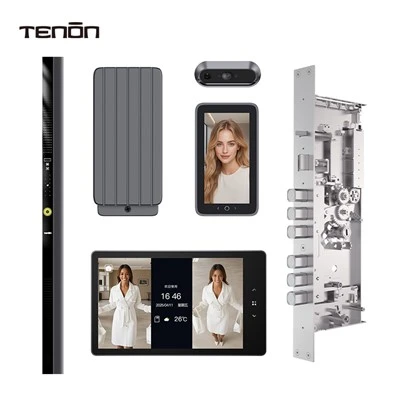
At the end of the day, a face scan door lock’s low-light performance isn’t about being the fanciest—it’s about being functional. It’s about not making you wait, not blinding you, not failing when you need it most. We spent two years perfecting that balance, and every time I walk up to my own door at 1 a.m., and the lock clicks open before I even think about scanning, I know it was worth it. If you’re ready to stop stressing about getting in when it’s dark, reach out—we’re here to help.
Smart Lock References
- National Institute of Standards and Technology (NIST). (2022). Face Recognition Vendor Test (FRVT) Part 3: Demographic Effects.
- Consumer Technology Association (CTA). (2023). Smart Lock Low-Light Performance Testing Protocol.
- Image Sensors World. (2021). Starlight Sensors for Consumer Electronics: Performance Metrics and Real-World Use Cases.
- Pen Test Partners. (2022). Security Audit of Cloud-Based Face Scanning Smart Locks.
- U.S. Department of Homeland Security (DHS). (2020). Infrared Illumination for Border Access Control: Operational Effectiveness in Low-Light Environments.
Guangdong Ap Tenon Sci. & Tech. Co., Ltd.
Guangdong Ap Tenon Sci. & Tech. Co., Ltd. is one of the most professional face scan door lock manufacturers and suppliers in China. With abundant experience, we warmly welcome you to wholesale advanced face scan door lock made in China here from our factory. Also, OEM service is available.
Address: No.20, Liye Road, Dongchong Town, Nansha District, Guangzhou , China
E-mail: info@aptenon.com
WebSite: https://www.tenondoorlock.com/
