If you’ve ever stepped into a flour mill, a coffee roasting facility, a pharmaceutical lab, or even a pet food production line, you’ve interacted with the quiet workhorse that keeps powder goods flowing smoothly: the powder packaging machine. As a supplier of these machines, I’ve spent the last decade talking to production managers, line supervisors, and small business owners who all ask the same question: “Which powder packaging machine model is right for my product, my output, and my budget?” The answer isn’t one-size-fits-all. Powder comes in too many forms—fine, coarse, sticky, free-flowing, prone to dust, or reactive with air—and every production line has unique demands. Over the years, I’ve helped clients sort through the five core models that make up most of our inventory, each built to solve a specific set of challenges. Let’s break them down, from the small-batch craft producer to the high-output industrial plant, so you can see which model aligns with your needs. Powder Packaging Machine
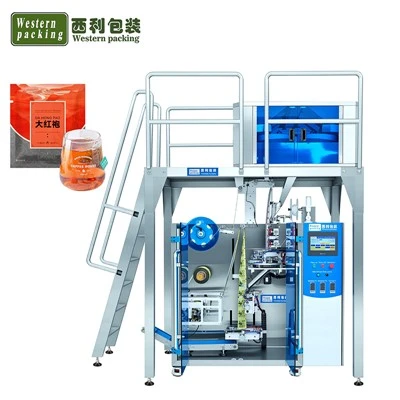
First, let’s start with the model that’s long been the workhorse for medium and large-scale production: the auger filler powder packaging machine. If you’ve bought a 5-pound bag of rice, a tub of protein powder, or a can of baking soda, there’s a good chance it was filled with an auger filler. The design is deceptively simple: a rotating helical screw (the auger) inside a metering chamber turns, pulling powder into the chamber and measuring a precise volume with each rotation. This volume is consistent enough for most dry, free-flowing powders—things like flour, sugar, dry spices, and instant coffee. What makes auger fillers so popular? They balance accuracy, speed, and cost better than almost any other model on the market. Our standard auger filler can hit accuracies of ±0.5% for powders that flow well, which is more than enough for most consumer goods. For higher output lines, we offer variable-speed auger models that can run at up to 60 bags per minute, which is perfect for a company scaling from 10,000 to 50,000 units a day. The biggest advantage here is versatility too: with quick-change augers, we can adjust the machine to work with fine cocoa powder or coarse coffee grounds in just 15 minutes, no specialized tools required. That said, it’s not for every product. If your powder is extremely coarse—like whole-milled corn grits—or sticky, like wet cake batter powder or clumping milk powder, the auger can jam or not measure consistently. We also don’t recommend auger fillers for ultra-high-value pharmaceutical powders, where even a tiny measurement error can lead to batch waste. For that, we typically steer clients toward the next model on our list.
Next up, the most accurate and precise model we offer: the gravimetric powder packaging machine. For any operation that deals with high-value, regulated products—pharmaceutical APIs, specialty food additives, or premium infant formula—gravimetric is non-negotiable. Where auger fillers measure by volume, gravimetric fillers measure by weight, using load cells to capture every gram of powder dispensed. The process is straightforward: a hopper feeds powder into a weighing bin, and the load cell sends real-time data to a controller that stops the flow as soon as the target weight is hit. Accuracies here go as high as ±0.1%, which is a game-changer for products where even a 1-gram overfill on a 100-gram batch can add thousands of dollars in unnecessary material costs. I worked with a specialty pharmaceutical client last year that was using an old auger filler for their antibiotic powder, and they were losing $12,000 a month in overfill waste. Swapping to a compact gravimetric filler cut that waste by 98% within the first month, and they paid for the machine in under two months. The trade-off? Gravimetric machines are more expensive than auger models, and they run slightly slower—usually 20 to 40 units per minute, depending on the bin size. They’re also more sensitive to dust and vibration, so they need to be installed on a level, stable base, away from other heavy machinery in the plant. If you’re in the food or pharma space and accuracy is your top priority, this is the model to consider.
For small batch producers, craft brands, and startups that don’t have space for a full industrial line, we offer semi-automatic powder packaging machines. A lot of people coming to us from home-based businesses or small production facilities ask if they need a fully automatic line right away, and more often than not, a semi-automatic model is the perfect fit. Unlike fully automatic machines that are integrated into a conveyor system and handle every step from feeding to sealing to labeling, semi-automatic machines require minimal operator input. The operator manually places an empty bag or container on the filling station, hits a button to trigger the fill, and then moves the filled package to the next station (whether that’s a sealer, a labeler, or a palletizer). For startups producing small-batch products like organic herbal supplements, specialty spice blends, or small-batch protein powders, these machines can run at 10 to 30 units per minute—fast enough for 5,000 to 10,000 units a day, without the high upfront cost of a full automatic line. The other big plus is flexibility: most semi-automatic models can handle different bag sizes, from 100-gram sachets to 25-pound bulk bags, with quick changeover times that mean you can run 10 different products in a single day. I love working with craft producers on these because they’re not locked into long-term contracts for large equipment, and they can scale up to a fully automatic line once their sales grow. The only downside is that they require a part-time operator, so if your goal is to run a line with minimal labor, this might not be the right long-term solution.
When we talk about powders that are messy, dusty, or prone to environmental contamination, pneumatic powder packaging machines are our go-to for solving those headaches. Dusty powders like titanium dioxide, talcum powder, or industrial grade activated carbon can cause major problems: they escape during filling, create a mess in the plant, and pose respiratory risks for workers. Pneumatic fillers use air pressure to move powder from the hopper to the packaging container, and the design is sealed to almost eliminate dust. How does it work? A vacuum pulls powder into a metering chamber, and then a controlled blast of air pushes the exact amount of powder into the bag. The whole process is enclosed, so there’s minimal dust release—great for keeping your plant clean and your team safe. Pneumatic fillers are also ideal for powders that are delicate or prone to degradation when exposed to air. For example, some specialty food powders like freeze-dried fruit powder can clump or lose flavor if they’re agitated too much, and the gentle air pressure of a pneumatic filler is much less disruptive than the rotating auger of a standard model. We’ve had clients in the cosmetics industry use pneumatic fillers for face powder and mineral makeup, because the sealed design keeps the pure product free of contaminants from the air, and the gentle flow doesn’t break down the fine, delicate particles. The trade-off here is that pneumatic machines are more specialized, and they work best with fine, low-density powders. Coarse, high-density powders won’t flow as well through the air system, and they can cause clogs. But for any operation dealing with dusty, delicate, or contamination-sensitive powders, this model is a lifesaver.
Finally, for the highest-output industrial applications, we offer continuous motion powder packaging machines. These are the workhorses for large-scale production facilities that run 24/7, producing hundreds of thousands of units a day for global brands. Unlike intermittent motion machines that stop and start with every filled package, continuous motion machines operate nonstop, with the bag or container moving along the conveyor line while filling, sealing, and labeling happen simultaneously. They’re built for speed: our top-of-the-line continuous motion models can run at up to 120 units per minute, which is double the output of most standard automatic lines. I worked with a global snack food company last year that was using three separate lines for their powdered drink mix products, and they upgraded to a single continuous motion line that replaced all three, cutting their labor costs by 40% and their floor space usage by 30%. The other key feature of continuous motion machines is their integration capability: they can be connected to upstream powder processing equipment, like mixing and sifting machines, and downstream equipment like palletizers and quality control systems, creating a fully automated end-to-end production line. The investment here is significant—continuous motion machines can cost two to three times more than an auger filler line—but for large-scale operations with consistent product runs, the ROI is almost always worth it. They do require a dedicated maintenance team, though, because of their complex moving parts, so they’re only practical for facilities that can support full-time equipment upkeep.
Over the years, I’ve learned that the best powder packaging machine isn’t the most expensive one or the fastest one—it’s the one that fits your specific product, your output needs, and your budget. I’ve seen small startups go bankrupt buying a high-output continuous motion line they didn’t need, and I’ve seen large medium-scale producers waste thousands of dollars on auger fillers that couldn’t handle their sticky, high-value pharmaceutical powders. That’s why, when a client reaches out to me, I always start with a few simple questions: What powder are you packaging? What’s your target accuracy? How many units do you need to produce per day? And do you have space for a fully automatic line, or do you need something flexible for small batches?
If you’re ready to stop guessing which model will work for you, let’s talk. I can walk you through the pros and cons of each model, help you assess your product’s unique challenges, and even arrange a test run with your actual powder to confirm accuracy and speed. No sales pitches, no hidden fees—just straightforward advice from someone who’s worked with powder packaging for over a decade. The right machine is out there, and it doesn’t have to break the bank. If you’re ready to find the right fit for your production line, reach out to discuss your requirements.
Filling Machine References
Powder Processing & Technology Handbook, 4th Edition. CRC Press, 2020.
Guidelines for Packaging Accuracy in Pharmaceutical Powder Manufacturing. FDA Center for Drug Evaluation and Research, 2019.
Industrial Powder Packaging Machinery: Market Trends and Operational Considerations. Industrial Packaging Association, 2022.
Guangzhou Western Packing Co., Limited
Guangzhou Western Packing Co., Limited is one of the most professional powder packaging machine manufacturers and suppliers in China, also supports custom service. With abundant experience, we warmly welcome you to wholesale durable powder packaging machine at competitive price from our factory.
Address: No.3, Yilong street, Wulonggang, Zhongluotan Twon, Baiyun District, Guangzhou
E-mail: david@westernpacking.com
WebSite: https://www.westernpackingusa.com/
