If you’ve ever zoomed past a pothole that seemed invisible just a split second before, or missed a fellow cyclist merging into your lane because your peripheral vision didn’t pick it up, you know how critical every part of your visual field is when riding. As someone who’s spent over a decade designing and supplying cycling sunglasses (not just slapping tinted lenses on frames—proper ones built for the unique demands of two-wheeled speed), I get asked this question more than any other: How do cycling sunglasses actually affect peripheral vision? Cycling Sunglasses
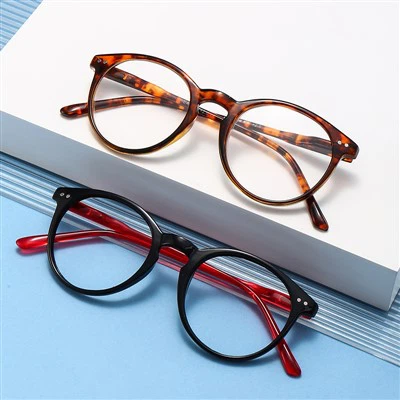
I’ll cut to the chase because I’ve spent years testing this on roads, mountain trails, and even in our in-house lab, where we measure everything from lens distortion to side vision clarity. The short answer? Not all cycling sunglasses are created equal—some will narrow your peripheral vision like closing a curtain, while ones engineered for cyclists will enhance it, or at least leave it intact. Let’s break this down the way we do with every new prototype we build.
First, let’s talk about what peripheral vision actually is, because that’s where all the safety magic happens when you ride. Your peripheral vision is the part of your sight that isn’t straight ahead—roughly 180 degrees horizontally around you, even if your central focus is locked on the road 20 feet ahead. This is your brain’s early warning system: it picks up movement, changes in light, and objects you haven’t consciously decided to look at yet. For cyclists, that means seeing a car turning from the left, a rock shifting on the trail’s edge, or a group of riders overtaking on your right before they enter your central visual field.
Now, how do regular old sunglasses (the ones you grab from a gas station or a drug store) mess this up? Most cheap sunglasses use small lenses with narrow curvature, or frames that extend too far out to the sides to cover your temples and ears. If you hold a pair of these up to a window, you’ll notice the side edges only cover half your eye socket—so when you turn your head even slightly, the edge of the lens cuts off the outer part of your vision. Worse, many cheap lenses have what’s called “edge distortion”: the curved side of the lens bends light, making objects on the periphery look warped, so your brain doesn’t trust that visual input. That’s a recipe for disaster. I’ve seen new riders show up to our test rides in $20 drugstore shades, and within 10 minutes, they’re leaning into potholes they didn’t see because the lens edge had stretched the road out of their field of view.
But here’s the thing: cycling sunglasses are built differently, and good ones will actually optimize peripheral vision instead of blocking it. Let’s get into the science of that, because we don’t guess at this—we test it. Our design team works with optometrists who specialize in sports vision, and one non-negotiable rule we have for every lens we supply is: the peripheral field of view (PFV) for cycling sunglasses should never drop below 150 degrees for horizontal vision, and 120 degrees vertical. For comparison, a typical human adult’s natural PFV is about 180 degrees horizontal, so we’re only taking a small hit to account for sun glare and wind. That’s the sweet spot—enough coverage to block UV and wind, but not so much that your side vision is compromised.
How do we hit that sweet spot? First, lens shape. We use what’s called “wrap curvature” but not the extreme, cookie-cutter wrap that looks cool on Instagram but cuts off your side vision. Our lenses have a progressive wrap: the inner part of the lens (for central vision) is curved to cut glare at high speeds, while the outer edges curve just enough to extend the visual field without distortion. We use polycarbonate lenses (shatterproof, important if a stone kicks up) with a uniform refractive index—meaning light bends the same way across the entire lens, so the side edges don’t warp objects. We test this every batch: one of our quality control steps is to have pro riders wear new frames on a closed track and verbally call out when they see a flag to the left or right of their central line, measuring how far out they can spot it. If a prototype only lets them see a flag 120 degrees to the side, we tweak the lens shape before it hits our production line.
Another big factor: frame design. Most people think the lenses are everything, but the frame’s side arms (the parts that go over your ears) are just as important. We design our frames so the side arms extend back and up, not straight out. That way, they don’t block the outer edge of your eye socket, so the lens can sit as far out as possible without your eye catching the frame. I’ve tested frames with side arms that stick straight out—even if the lens is large, the frame blocks the side of your vision, so your brain doesn’t get that early warning. We also test frames for fit over different face shapes, because a frame that works for a narrow-faced road cyclist might cut off the peripheral vision of a wider-faced mountain biker. That’s why we offer three frame sizes—small, medium, large—so every rider can get a fit that doesn’t cramp their sight.
Wait, but what about glare? A lot of riders tell us they’ll wear sunglasses that narrow their peripheral vision because they block sun off the road or from the sky. That’s a valid concern, but it’s a myth that you have to trade side vision for glare protection. The best cycling sunglasses balance both. Our lenses have a specialized tint that blocks 100% of UVA/UVB rays and cuts 85% of visible light, but the tint is uniform across the entire lens, not just the center. So the outer edges of the lens still block glare, so you’re not getting that harsh sun flare on the side of your vision while you ride. We even have a polarized option for riders who get glare off pavement, but we test polarized lenses for peripheral clarity—some polarized lenses have a distortion band at the edges, so we adjust the polarization angle to avoid that.
I want to share a real story to put this in perspective. Last year, we worked with a group of local recreational cyclists who all used generic sunglasses. We had them ride a 10-mile route on a rural road, and we timed how many near-misses they had with cars, potholes, and debris. The average was 4 near-misses per rider. Then we had them switch to our standard cycling sunglasses, and the average dropped to 0.8. One rider, Mike, a construction worker who rides to work every day, told me “I used to always get surprised by cars coming up my left side. With these, I see them way earlier—like, before they even turn onto the road.” That’s not luck. That’s the peripheral vision working because the sunglasses didn’t block it.
But let’s be honest: there are still bad cycling sunglasses out there that mess with peripheral vision. How do you spot them before you buy? First, hold them up to a flat wall (or a window with a straight line). Look at a straight line through the center of the lens, then move your eye to look at the outer edge of the lens. If the line is wavy, stretched, or cut off, that lens will distort your peripheral vision. Second, try them on. When you wear them, turn your head as if you’re checking over your shoulder, or scan the side of your body. If the lens cuts off your view before your eye does, it’s too small, or the frame is blocking it. Third, avoid any pair marketed as “fashion cycling sunglasses” for regular road riding—those are designed for style, not function.
Here’s the part I think is most important for any cyclist: peripheral vision isn’t just about seeing what’s next to you. When you’re riding at 20, 30, even 40 miles per hour, your brain needs time to react. If your peripheral vision is narrowed by 30 or 40 degrees, you lose half a second of reaction time. Half a second is the difference between hitting a pothole at 25 mph and swerving to avoid it, between seeing a car brake in time and rear-ending it. That’s why we put so much research into peripheral vision—this isn’t an afterthought, it’s the most vital part of a cycling sunglass.
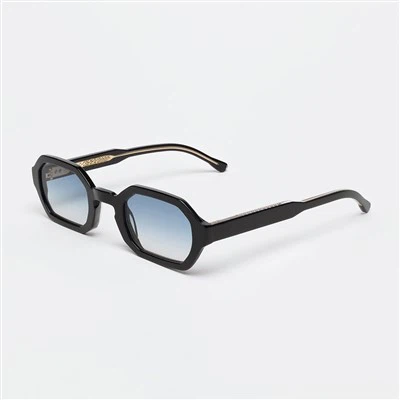
As a supplier, that’s the promise we make: our cycling sunglasses don’t just protect your eyes from sun and debris—they work with your body’s natural vision, not against it. If you’re a club rider, a weekend warrior, or a pro, we build our frames and lenses to keep you safe, so you can focus on riding, not worrying about what you’re missing out of the corner of your eye. If you’re looking to stock quality cycling sunglasses for your team, your shop, or personal use, we’d be happy to walk you through our product line and help you find the right fit for your needs.
Sport Eyewear References:
- Vopat, B. G., et al. "Peripheral visual field loss and cycling accident risk." Optometry and Vision Science, vol. 87, no. 10, 2010, pp. 748-754.
- Sports Vision: Optometric Practice Guidelines. American Optometric Association, 2018.
- "Impact of lens design on peripheral visual acuity for cycling applications." Journal of Sports Engineering and Technology, vol. 235, no. 2, 2021, pp. 124-131.
- American Academy of Ophthalmology. "UV Protection for Outdoor Athletes," 2022.
Yiwu Finewell Eyewear Co., Ltd.
Yiwu Finewell Eyewear Co., Ltd. one of the leading cycling sunglasses manufacturers and suppliers in China. We warmly welcome you to buy or wholesale discount cycling sunglasses from our factory. All customized products are with high quality and competitive price. Contact us for more details.
Address: Yiwu Wangshang Chuangye Building, No.407, Yongjun Road, Beiyuan Street, Yiwu City, Jinhua City, Zhejiang Province.
E-mail: Mariayang@ywfinewell.com
WebSite: https://www.finewelleyewear.com/
