Hey there! I’m a supplier of Metal Cutting Circular Saw Blades, and today I wanna chat about how the blade’s pitch affects the metal cutting speed. It’s a topic that’s super important in our line of work, and I’ve got some real – world insights to share. Metal Cutting Circular Saw Blade
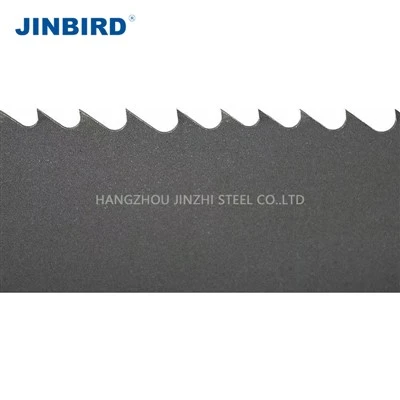
First off, let’s talk about what blade pitch actually is. The pitch of a circular saw blade is the distance between the tips of two adjacent teeth. It’s usually measured in teeth per inch (TPI). You can think of it like the spacing between the teeth on a comb. A blade with a high TPI has closely – spaced teeth, while a blade with a low TPI has more widely – spaced teeth.
Now, how does this pitch impact the metal cutting speed? Well, it all boils down to the amount of material each tooth removes with each pass. When you’re using a blade with a low TPI, each tooth is bigger and can take out a larger chunk of metal. This means that the blade can move through the metal faster in terms of linear speed. You’re making fewer cuts, but each cut is more substantial.
For example, if you’re cutting thick metal bars, a low – TPI blade is often the way to go. Let’s say you’ve got a 1 – inch thick steel bar. A blade with a low TPI, like 6 TPI, can quickly slice through it. The large teeth can dig into the metal and remove a significant amount of material with each rotation of the blade. This results in a faster cutting speed overall because you’re not spending as much time making a large number of small cuts.
On the other hand, a high – TPI blade has smaller teeth that remove less material per pass. But don’t think that means it’s always slower. In fact, for thin metals, a high – TPI blade can be much more efficient. When you’re cutting thin sheets of metal, say 1/8 – inch thick aluminum, a blade with a high TPI, like 24 TPI, is ideal. The closely – spaced teeth make very fine cuts, and they can quickly move through the thin material without causing too much vibration or chipping.
The key here is that the pitch needs to match the thickness and type of the metal you’re cutting. If you use a low – TPI blade on thin metal, you’ll likely end up with a rough cut, and the blade might even cause the metal to warp or bend. The large teeth can put too much stress on the thin material. Conversely, using a high – TPI blade on thick metal can be extremely slow. The small teeth will struggle to remove enough material, and you’ll find yourself waiting a long time for the blade to cut through.
Another factor to consider is the type of metal. Different metals have different hardness levels. For instance, stainless steel is much harder than mild steel. When cutting hard metals like stainless steel, a blade with the right pitch is crucial. A blade with a medium TPI, around 10 – 14 TPI, can often strike the right balance. The teeth are small enough to make precise cuts but large enough to handle the hardness of the metal.
The cutting speed also depends on the feed rate. The feed rate is how fast you move the metal through the saw. When using a low – TPI blade, you can usually have a higher feed rate because each tooth is removing more material. But you need to be careful not to push too hard, or you might damage the blade. With a high – TPI blade, the feed rate is typically lower because the teeth are smaller and can only handle a limited amount of material at a time.
Let’s talk about the impact on the blade’s lifespan. Using the wrong pitch can significantly reduce the blade’s life. If you’re using a high – TPI blade on thick metal, the teeth will wear out quickly because they’re constantly struggling to remove a large amount of material. On the other hand, using a low – TPI blade on thin metal can cause the teeth to chip or break because of the excessive stress on the thin material.
As a Metal Cutting Circular Saw Blade supplier, I’ve seen firsthand how important it is to choose the right pitch. I’ve had customers come to me with problems like slow cutting speeds, rough cuts, or blades that wear out too fast. And in many cases, it’s because they didn’t select the appropriate pitch for their cutting job.
So, how do you decide which pitch is right for you? Well, it’s all about understanding your specific cutting needs. First, determine the thickness of the metal you’ll be cutting. If it’s thick, go for a low – TPI blade. If it’s thin, a high – TPI blade is the better choice. Then, consider the type of metal. Harder metals might require a medium – TPI blade.
I also recommend doing some test cuts. Take a small piece of the metal you’ll be working with and try different blades with various pitches. See how the cuts look and how fast the blade moves through the material. This hands – on approach can give you a better idea of which pitch works best for your particular situation.
In addition to pitch, there are other factors that can affect the metal cutting speed, such as the blade’s diameter, the type of coating on the blade, and the power of the saw. But the pitch is one of the most fundamental aspects.
If you’re in the market for Metal Cutting Circular Saw Blades, I’m here to help. I’ve got a wide range of blades with different pitches to suit all your cutting needs. Whether you’re a professional metalworker or a DIY enthusiast, I can provide you with the right blade for the job.
Don’t hesitate to reach out if you have any questions or need advice on choosing the right blade. I’m always happy to share my knowledge and experience. We can have a chat about your specific cutting requirements, and I’ll do my best to recommend the perfect blade for you.

In conclusion, the blade’s pitch plays a crucial role in the metal cutting speed. By choosing the right pitch based on the thickness and type of metal, you can achieve faster, more precise cuts and extend the lifespan of your blade. So, if you’re looking to improve your metal cutting operations, make sure to pay close attention to the pitch of your circular saw blade.
Carbide Tipped Circular Saw Blade References:
- "Metal Cutting Handbook" by various industry experts
- Technical guides from leading saw blade manufacturers
Hangzhou Jinzhi Steel Co., Ltd.
Hangzhou Jinzhi Steel Co., Ltd. is one of the most experienced metal cutting circular saw blade manufacturers and suppliers in China, also supports customized service. Please feel free to buy discount metal cutting circular saw blade in stock here from our factory. Contact us for pricelist.
Address: 21-2-2304, Kangcheng International, Nan Yuan Sub-district, Linping District, Hangzhou City, Zhejiang Province
E-mail: karen@jinzhi-steel.com
WebSite: https://www.jinzhi-steel.com/
