If you’ve ever had an ultrasound, whether for a prenatal check-up, a musculoskeletal assessment, or a cardiac evaluation, you probably didn’t spend much time thinking about the small, thin layer stretched over the probe the technician pressed against your skin. But as a long-time ultrasound probe cover supplier, I can tell you these unassuming items are one of the most underrated pieces of medical equipment in any diagnostic imaging setting. I’ve worked with clinics, hospitals, and private practices across North America for over a decade, and I’ve seen first-hand how misunderstandings about their purpose can lead to avoidable risks, compliance issues, and even compromised test results. Today, I’m breaking down exactly what ultrasound probe covers do, why they matter more than you might think, and why choosing the right one isn’t just a trivial detail—it’s a critical part of patient care. Ultrasound Probe Cover

Let’s start with the basics: an ultrasound probe (sometimes called a transducer) is the handheld device that emits high-frequency sound waves to create images of internal tissues, organs, or a developing fetus. Most probes are made of sensitive, precision-engineered materials, and they’re designed to come into direct contact with patients’ skin during exams. But without a barrier, that contact creates a chain of risks that even many seasoned healthcare professionals overlook.
First and foremost, ultrasound probe covers act as a sterile barrier to prevent cross-contamination between patients. Think about it: an ultrasound exam involves gel or liquid couplant that’s applied to the skin to improve sound wave transmission. That gel can carry pathogens, and the probe itself can trap bacteria, fungi, or even blood residue in its crevices and seams after use. Without a cover, the probe’s surface—even after a “quick wipe” between patients—can transfer those microorganisms from one patient to the next. Studies from the Centers for Disease Control and Prevention (CDC) have documented multiple outbreaks of healthcare-associated infections (HAIs) linked to contaminated medical devices, including ultrasound probes. For outpatient clinics and small practices, the cost of even one HAI outbreak is staggering: not only does it put patients at risk, but it can lead to lost revenue, regulatory fines, and damage to a practice’s reputation. A good ultrasound probe cover eliminates that risk entirely by creating a single-use, disposable barrier that’s discarded immediately after each patient. It’s a simple, low-cost solution to a high-stakes problem.
Beyond infection control, probe covers protect the probe itself from damage. As I mentioned earlier, ultrasound transducers are precision instruments. They have delicate internal components, including piezoelectric crystals that convert electrical energy into sound waves. These crystals can scratch, crack, or degrade if they come into contact with sharp skin, nail clippings, tissue, or even harsh cleaning solutions used between patients. I’ve seen probes that had to be replaced prematurely because a technician skipped using a cover, leading to scratches that distorted image quality and required costly repairs or replacements. A high-quality ultrasound probe cover is made of thin, flexible yet durable materials—usually medical-grade latex, nitrile, or polyolefin—that act as a buffer. They’re designed to stretch smoothly over the probe, conform to its shape, and resist tears during use, so the probe stays protected for longer, reducing equipment costs for clinics.
Another key function is improving patient comfort and consistency during exams. Most people feel some level of self-consciousness or discomfort during medical exams, especially those involving prenatal ultrasound or musculoskeletal imaging. A probe cover is often pre-lubricated with a thin layer of couplant, so the glide between the probe and the patient’s skin is smooth, reducing friction that can irritate sensitive skin or cause minor discomfort during long exams. For patients with skin conditions—like eczema, psoriasis, or even mild allergies to latex—using a probe cover can also reduce the risk of direct skin contact with the probe’s surface or residual cleaning agents. In my years in this business, I’ve heard countless stories from practice managers and technicians about how a good probe cover can turn a stressful exam into a more comfortable experience, which in turn makes patients more cooperative and improves the accuracy of the images they get.
Wait, but not all probe covers are the same. That’s a point I emphasize to every clinic that works with me: choosing the right cover depends on the type of ultrasound exam being performed, the probe model, and the specific needs of your practice. For example, a rigid, plastic cover might work for a convex abdominal probe used during prenatal exams, but a flexible, thin nitrile cover is necessary for a high-resolution linear probe used in musculoskeletal or vascular imaging, since it needs to conform tightly to the small, curved shapes of tendons or vessels. Some covers are also designed to be compatible with different types of couplant, ensuring that the sound wave transmission isn’t disrupted—because if the cover blocks too many sound waves, the image quality suffers, and the exam might need to be repeated, wasting time for both the patient and the technician. I’ve seen practices cut corners by buying cheap, generic covers that tear mid-exam or degrade image quality, which ends up costing them more in missed appointments and repeat scans. That’s why it’s important to source covers from a supplier who understands the nuances of diagnostic imaging, not just disposable medical plastic.
Regulatory compliance is another factor that often drives the choice of probe covers. In many countries, including the United States, the FDA and other health regulatory bodies have specific guidelines for infection control in medical settings, requiring single-use barriers for reusable devices that come into contact with mucous membranes or non-intact skin. Ultrasound probes are classified as “semi-critical” devices, which means they require a barrier or high-level disinfection between patients. Using an FDA-cleared ultrasound probe cover is one of the easiest ways to meet those guidelines, and it frees up staff time that would otherwise be spent on rigorous probe cleaning and reprocessing between patients. For small practices that don’t have the budget for a dedicated reprocessing area or staff trained in high-level disinfection, probe covers are not just a convenience—they’re a necessary part of staying compliant with health regulations.
I know some might argue that using a probe cover adds an extra step to an already busy exam. But from my perspective, that step is negligible compared to the risks it prevents. Let me put it in real numbers: a pack of 100 ultrasound probe covers costs a practice less than $100—less than a dollar per exam. The cost of a single probe replacement? That can run into thousands of dollars. The cost of an HAI outbreak? That’s tens of thousands in fines, legal fees, and lost revenue. It’s a no-brainer. For me, as a supplier, it’s not just about selling a product—it’s about helping clinics protect their patients, their equipment, and their bottom line. Over the years, I’ve worked with practices to help them choose the right covers for their specific use cases, whether they’re a small OB-GYN clinic needing prenatal-specific covers or a large hospital network with hundreds of probes used across multiple departments.
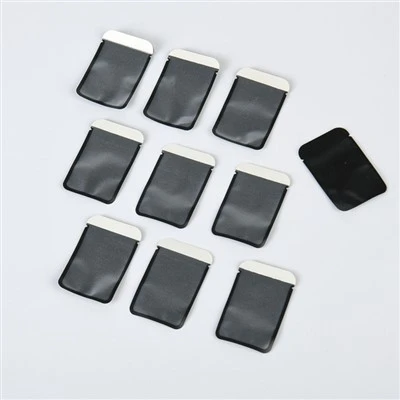
If you’re a practice manager, a technician, or a healthcare administrator who’s looking to upgrade your probe cover supply, or if you’re just trying to get a clearer picture of why these small items matter, I’m here to help. I’ve spent years refining my product line to meet the needs of modern medical settings, and I can work with you to find the right covers for your probes, your exam types, and your budget. Whether you’re looking for latex-free options for patients with allergies, extra-thin covers for high-resolution imaging, or bulk pricing for large hospital networks, I can tailor a solution that works for you. Don’t wait until a preventable infection or a damaged probe costs you time and money—reach out to me to discuss your procurement needs and find out how our ultrasound probe covers can protect your patients and your practice.
Face Protective Shield References
- Centers for Disease Control and Prevention (CDC). Guidelines for Prevention of Healthcare-Associated Infections, 2021.
- American Institute of Ultrasound in Medicine (AIUM). Infection Control Guidelines for Ultrasound Laboratories, 2019.
- Food and Drug Administration (FDA). Guidance for Industry: Disposable Medical Devices, 2020.
- World Health Organization (WHO). Infection Prevention and Control in Health Care: Core Components, 2022.
- Journal of Clinical Ultrasound. “Impact of Ultrasound Probe Barriers on Image Quality and Patient Comfort,” Volume 48, Issue 7, 2020.
Nanjing Jiawei Medical Devices Co., Ltd.
As one of the most professional ultrasound probe cover manufacturers and suppliers in China, we’re featured by quality products and good price. Please rest assured to buy customized ultrasound probe cover made in China here from our factory. Also, pricelist is available.
Address: No. 1, Rungu Road, Guli Sub-district, Jiangning District, Nanjing City, Jiangsu Province
E-mail: 3851343798@qq.com
WebSite: https://www.goldenwayppe.com/
