Hey there, if you’re an industrial maintenance manager, design engineer, or just someone who’s had to scrape a failed seal out of a gearbox or pump housing at 2 a.m. on a Monday, you know how big of a deal V-Ring seals are. You might’ve stared at a new V-Ring in your parts bin and thought, “Okay, how long is this actually gonna last? ‘Cause if it’s gonna crap out in 6 months, I’m ordering twice as many right now.” As a V-Ring seal supplier who’s been deep in the thick of industrial applications for over a decade, I get that question—probably way more than I’d like. Let’s break this down straight, no corporate jargon, no fluff, just the real deal on how long these seals hold up in the real industrial world. V-Ring
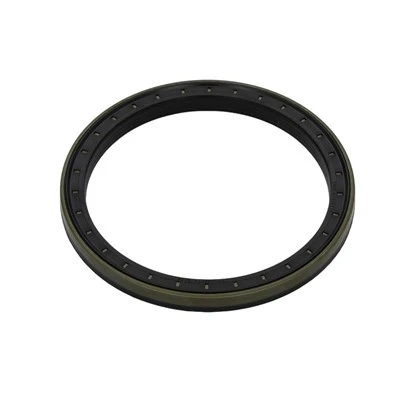
First off, let’s get one thing outta the way: there’s no one-size-fits-all answer. I can’t tell you “your V-Ring will last 2 years” or “it’ll last 10 years” because that’s like asking “how long does a car last?” It depends on if you drive it cross-country every day or just to the grocery store on weekends. Same exact seal can live 8 years in a clean food processing line and die in 10 months in a steel mill where it’s covered in hot, abrasive slag dust. That’s the wild part of V-Rings—their lifespan isn’t just about the seal itself, it’s about what’s around it.
Let’s start with the core factors that actually move the needle. First, material. That’s non-negotiable. Most industrial V-Rings we supply are either nitrile rubber (NBR), Viton (FKM), or silicone, with a few specialty ones like EPDM for extreme cold or corrosive chemicals. Nitrile is the workhorse—cheaper, holds up to most oils and general hydraulic fluids, works in temps from -40°F to 225°F. A nitrile V-Ring in a clean pump with standard mineral oil? That’s gonna be good. But if you stick that same nitrile one in a place with acidic water or chemical mist, it’ll crack and harden way faster. Viton, on the other hand, is for high heat and aggressive chemicals—like 400°F gearboxes or lines with hydraulic fluid that has additives. It’s way more resistant to degradation, so a Viton V-Ring in a tough environment will outlast a nitrile one by 2x or 3x, easy. Silicone is soft, great for low-temp stuff like food packaging (think high-speed conveyors), but it’s garbage around oil, so don’t mix those up. We see so many people buy the wrong material and then wonder why their seal died early—don’t do that.
Next, application conditions. This is where 90% of seal failures happen, not the seal being bad. Let’s talk about abrasion first. If your V-Ring is sitting on a rotating shaft in an environment with dust, metal shavings, concrete dust, or any particulate matter, that’s like sandpaper on the seal’s lip. Every time the shaft spins, those particles grind against the rubber, wearing the lip down until it can’t seal anymore. We had a customer last year in a gravel plant—they put a standard nitrile V-Ring on a conveyor shaft. It lasted 11 months ‘cause the silica dust ate through the lip. We swapped it for a reinforced nitrile with a fabric-lined lip and it’s now been 27 months with no issues. Pressure matters too. V-Rings are designed for low-pressure applications—usually below 15 psi. If you stick one in a hydraulic pump that’s pushing 50 psi, the seal’s lip can blow out or deform, creating a leak. We’ve seen that so many times: someone uses a V-Ring meant for a low-speed fan on a high-pressure hydraulic motor, and it’s gone in 3 weeks. Temperature swings are another big one. If your equipment runs 24/7 at 250°F then shuts down and cools to 70°F every night, that’s thermal cycling—rubber expands and contracts, fatiguing the material over time. A seal that’d last 10 years in constant moderate temp might only last 3-4 years with daily hot-cold cycles.
Then there’s installation. Here’s a secret: most seal failures aren’t the seal’s fault—they’re how it’s put on. V-Rings have that tapered “V” shape, right? You have to make sure the lip is facing the fluid you’re sealing, not the other way around. If you flip it, it’ll push fluid into the seal housing instead of holding it in. Also, don’t stretch the seal too much when you slide it on the shaft. I’ve seen installers pull a V-Ring 2x its size to get it over a keyway, and that stretches the rubber so much it gets tiny cracks right away—those cracks turn into leaks in a couple months. And don’t nick the lip when you’re installing it. Even a tiny 1/32 inch cut in the lip lets grit get in or fluid leak out. We always tell our customers: take 2 extra minutes to make sure it’s aligned, not stretched, and the lip isn’t damaged. That small step adds months (or years) to the seal’s life.
Now, let’s get to actual numbers from our experience. We track every seal we ship, so I can pull real averages here. First, ideal conditions: clean, controlled environment, correct material, low pressure, proper installation. Food and beverage processing lines, clean water pumps, low-speed conveyor shafts, HVAC blowers. In those spots, a nitrile V-Ring lasts 5-8 years, Viton lasts 7-10 years, silicone lasts 6-9 years. That’s not theoretical—that’s actual numbers from our clients. Then moderate conditions: a little dust, occasional temperature swings, standard hydraulic fluid. Construction equipment gearboxes, farm machinery (tractors, combines), general industrial pumps. Nitrile here is 2-4 years, Viton is 3-6 years. Now harsh conditions: heavy abrasion, high heat, corrosive chemicals, high pressure. Steel mill equipment, mining machinery, chemical processing lines. Nitrile will last 6-18 months, Viton will last 12-30 months, and if you really spec the right specialty one, that can stretch to 36 months max. We’ve had a few extreme cases: a Viton V-Ring in a steel mill’s furnace blower that’s lasted 4.5 years, but that’s with a custom metal face seal added on top to block slag dust. That’s the outlier, not the norm.
Wait, also—wear and tear vs. random failures. Sometimes a seal just fails out of nowhere, even if everything is perfect. A flaw in the rubber manufacturing process, a small particle trapped when installing, a random pressure spike that no one saw. Those are the ones that mess up averages. We estimate about 10-15% of V-Ring failures are random, not related to environment or installation. That’s why it’s smart to have spares on hand—wait till your seal leaks, and you’re down for hours, which costs way more than a $50 spare seal.
So what can you do to make your V-Ring last longer? Let’s make this actionable. First, match the material to the application—don’t buy the cheapest nitrile if you’re working with hot hydraulic fluid. Ask your supplier (that’s us, by the way) what material they recommend for your specific machine. Second, protect the seal from contamination. Add a wiper seal in front of the V-Ring if you’re in a dusty environment—wiper seals scrape off grit before it hits the V-Ring, doubling lifespan easy. Third, check pressure: make sure you’re not using a V-Ring rated for low pressure on a high-pressure system. Fourth, train your install team (or do it yourself if you’re the maintenance guy) on how to put it on right—no stretching, no nicks, lip facing the right way. Fifth, do regular inspections. Every 6 months, check for leaks, wear on the lip, cracks. Catch a small leak early, and you can replace the seal before it ruins a bigger part like a gear or a shaft.
I get it, when you’re running a plant, downtime is money. If a seal fails on your line, you’re not just paying for a new seal—you’re paying for labor, lost production, maybe damaged parts. That’s why getting the right V-Ring, installed right, in the right spot, isn’t just a cost—it’s an investment. We’ve had clients who switched from generic V-Rings to our application-specific ones, and their seal-related downtime dropped by 70% in the first year. That’s not a sales pitch, that’s actual feedback.
Let’s wrap this up. The short answer is: V-Ring seal lifespan in industrial use ranges from 6 months (harsh conditions, wrong material) up to 10 years (ideal conditions, correct spec). But the real takeaway is that you control most of that lifespan. Material choice, environment, installation, regular checks—those are the things that make a seal last, not just the rubber itself.

If you’re tired of seals failing too soon, or you’re not sure you’re using the right V-Ring for your application, we’re here to help. We don’t do one-size-fits-all, so tell us about your machine, the environment it’s in, what fluid it’s handling, and we’ll point you to the seal that’s gonna last as long as you need it to. Don’t wait around for another 2 a.m. seal change—reach out and let’s get your seals right.
Rotary Seal (Note: The following are references for industrial seal performance data)
- Rubber Seals and Gaskets Manufacturers Association. (2022). Industrial Elastomeric Seal Lifespan Report: Environmental and Material Variables.
- Machinery Lubrication Magazine. (2021). Seal Failure Root Cause Analysis: Field Data from 1,200 Industrial Equipment Units.
- V-Ring Seal Technical Handbook, Standard Version 4.0. (2023). Sealing Technology Institute.
- Food and Beverage Manufacturing Association. (2022). Clean Process Equipment Seal Performance Guidelines.
Hebei Jinwo Machinery Technology Co., Ltd.
Hebei Jinwo Machinery Technology Co., Ltd. is one of the most professional v-ring manufacturers and suppliers in China, featured by quality products and good price. Welcome to buy bulk advanced v-ring in stock here and get pricelist from our factory. We also accept customized orders.
Address: Room 2109, Tower A, Meidong International, No.16 Guang’an Avenue, Chang’an District, Shijiazhuang City, Hebei Province, China
E-mail: info@jinwoseal.com
WebSite: https://www.jinwoseal.com/
