If you’ve ever worked with machinery—whether it’s assembling a lawnmower, fitting parts in a conveyor belt, or maintaining a car’s alternator—you’ve probably heard of deep groove ball bearings. They’re the workhorses of the bearing world, doing the heavy (and sometimes invisible) lifting to keep rotating parts smooth and low-friction. As a deep groove ball bearing supplier, I get questions about their size all the time: “What’s the standard size?” and “Do I have to custom-order, or will a standard one work for my project?” Today, I’m breaking this down plainly, no stuffy industry jargon, just what you actually need to know. Deep Groove Ball Bearings
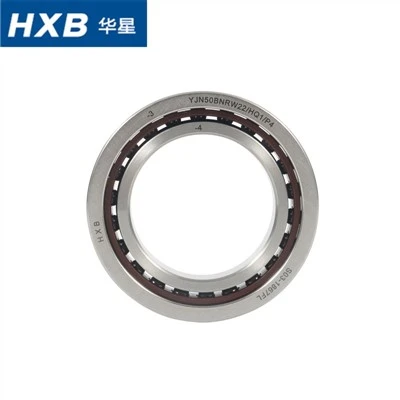
First, let’s get one thing straight: “standard size” isn’t a random number. It’s defined by organizations that make sure bearings from different manufacturers fit the same parts, no matter who built them. That’s the whole point of standards—so if my company makes a 6205 bearing, it’ll fit a housing made by another supplier, same as any other bearing labeled 6205. Without that, you’d have a nightmare matching parts and every repair would mean hunting for a specific, one-off size.
Now, let’s talk about the two big sets of standards that rule deep groove ball bearings. Most of the world uses ISO standards, set by the International Organization for Standardization, while North America also has ANSI/ABMA standards from the American Bearings Manufacturers Association (now part of the American Gear Manufacturers Association, AGMA). For simplicity, I’ll focus on ISO first because it’s the global go-to, and mention ABMA at the end for folks in the U.S.
ISO’s standard deep groove ball bearings fall into two main series: the “open” (unsealed) or “sealed” versions that are the most common, and these are numbered with a four-digit code (sometimes three digits for smaller sizes, like 6200). The key here is the number tells you exactly three measurements: inner diameter, outer diameter, and width. Let’s use 6205 as an example—super common, used in everything from washing machine drums to small electric motors. The last two digits? That’s the “bore code,” which is your inner diameter in millimeters, multiplied by 5 (except for the really small ones, like bore codes 00, 01, 02, 03). Wait, let’s make that clear: bore code 00 = 10mm, 01 = 12mm, 02 = 15mm, 03 = 17mm. Then starting at 04, it’s 045=20mm, 055=25mm, 06*5=30mm, and so on up to like bore code 50 which is 250mm inner diameter.
Then the middle digit in that four-digit number is the “series code”—that tells you the outer diameter and the width. For example, series 62 means “light series” deep groove balls: outer diameter is roughly inner diameter + 27mm (for 6205, that’s 25mm inner +27 = 52mm outer), and width is 15mm. Series 63 is “medium series”: same inner diameter, bigger outer diameter and width—so 6305 is 25mm inner, 62mm outer, 17mm wide. Series 64 is “heavy series”: even larger, 6405 is 25mm inner, 80mm outer, 21mm wide. That makes sense, right? If you need a bearing to handle more load, you go to a higher series, same inner diameter so it fits your shaft.
Wait, but not all deep groove ball bearings are these standard four-digit ones. There are also “miniature” deep groove ball bearings, which are super small—think like the ones in a drone’s motor or a toy’s gearbox. Their ISO standard sizes have bore codes down to 1mm, 2mm, right up to 9mm, and they usually have a three-digit number or a code with prefixes, like “R” for a flange (that’s a little rim on the outer edge to hold it in place without a separate housing). I see a lot of hobbyists and small manufacturing teams go for these because they’re easy to source, cheap, and fit tiny parts without custom work.
Now, what about ABMA standards for North America? A lot of U.S.-made equipment uses the “inch series” bearings, like the 200 series or 300 series. For example, a 6205 in ISO is roughly equal to a 5205 in ABMA? Wait, no, let me get that right—ABMA’s inch-based deep groove bearings use numbering where the last two digits also relate to inner diameter, but it’s in inches. A 205 bearing is 25mm inner? No, wait, no—for inch series, bore code 05 is 5/8 inch inner diameter, which is about 15.875mm, close but not the same as ISO’s 25mm. That’s why I always ask customers in the U.S. to measure their shaft and housing before ordering—if they say “standard 205,” I double-check because it’s not the same as a 6205, and mixing those up means a bearing that won’t fit.
Let’s talk about sizes that are actually the most common, because that’s what we supply most of. If you’re a small business or a hobbyist working on a project, 6200 series bearings (10mm to 50mm inner diameter) are the workhorses. I see orders for 6202 (15mm inner), 6203 (17mm), 6204 (20mm), 6205 (25mm) every single day—those are used in electric motors, agricultural equipment, conveyor rollers, you name it. The 6300 series is less common for small projects but super popular for heavier machinery: 6306 (30mm), 6308 (40mm), those go in car transmissions, large fans, construction tools.
But wait, can you get a standard bearing that’s not these? Sure, there are standard deep groove ball bearings up to 2000mm inner diameter, though those are for big industrial stuff, like wind turbine rotors or ship propeller shafts. On the small end, standard miniature ones go down to 1mm inner diameter, for tiny devices like medical pumps or watch gears. The key here is “standard” means you don’t have to pay extra for a custom bearing, which is the big win for most people. Custom bearings can cost 2-3 times more, have longer lead times, and sometimes have lower quality because they’re made in smaller batches.
Now, let’s clear up a common misconception: “standard size” doesn’t mean all bearings of the same number are identical. Sure, the dimensions are standard, but there are other variables—like clearance (how much the bearing can wiggle, which matters for high-speed applications), sealing (ZZ for metal shields, 2RS for rubber seals, open for no seals), and load rating. For example, a 6205-2RS is the same outer and inner size as an open 6205, but the rubber seals keep dirt and grease out, so it’s perfect for equipment that’s outdoors or in dusty factories. A lot of new customers mix up the number (the size) with the suffix (the features), so that’s something I always walk them through when they reach out.
As a supplier, I’ve seen a lot of people make the mistake of just ordering the number they think they need, without measuring their shaft. Let me give you a quick example: last month, a guy working on a vintage lawnmower ordered ten 6203 bearings, because he thought that was the “standard” size. When they arrived, they were 17mm inner diameter, but his lawnmower’s shaft was only 16mm. Turned out, he’d misread the shaft size—we switched him to a 6202, which is 15mm inner, and it fit perfectly. That’s why I tell everyone: measure twice, order once. The standard size is a guide, but you still need to match it to your specific part.
Another thing: some manufacturers have their own “standard” sizes, but they’re almost always cross-compatible with ISO or ABMA. For example, if you get a bearing from brand X that’s labeled 6205, it’s going to have the same inner, outer, and width as a 6205 from our company, because that’s what the standard says it has to be. No more guessing which brand works—you just need to match the number.
Wait, let’s break down the measurements again to make it super simple, no math headaches. If you have a shaft, measure its diameter with a caliper— that’s your inner diameter (bore) of the bearing. Then measure the housing where the bearing sits, that’s your outer diameter. The width of the bearing is how thick it is, so if your housing has a specific space, you need that too. Once you have those three numbers, you can look up the standard bearing number that matches, and you’re good to go. No need to scour through custom part lists or pay for a special order.
What about if you need a bearing for a non-standard application, like a custom machine someone built in their garage? Even then, a lot of times, you can get close with a standard size. For example, if you need a 22mm inner diameter, wait—there’s no 6204.5, right? The standard bore codes only go up by 5mm after 03. So a 20mm inner is 6204, next is 25mm 6205. But I’ve had customers who make custom robot arms use a 6205, shim it a little, and it works way better than a custom 22mm bearing, which would cost way more. That’s the tradeoff: standard is better for most cases, custom only makes sense if you can’t make a standard fit without modifying your parts.
Let me also mention the difference between deep groove ball bearings and other bearings, because a lot of people mix them up. Deep groove are the simplest type, with balls rolling between two rings, and they can handle both radial load (the load that presses against the side of the shaft, like a wheel rolling) and a little bit of axial load (load that pushes along the shaft, like a car’s axle). That’s why they’re the most common standard bearing—they work for so many applications, so there are more standard sizes than any other bearing type.
Now, for my North American customers who follow ABMA standards: it’s not that complicated, just a different numbering system. ABMA’s inch series uses numbers like 16000, 6000, 6200, 6300, same outer and inner as ISO, but sometimes the number is labeled differently. For example, a 6205 ISO is the same as a 205 ABMA? Wait, no—let me check my files: ABMA’s 205 bearing has a bore of 25.4mm (1 inch), which is a little bigger than ISO’s 25mm, so that’s why measuring is key. If you’re in the U.S., don’t just go by the number—measure your parts to make sure.
I get a lot of questions from customers who think “standard size” is one single number, but it’s a whole range. The most popular standard deep groove ball bearing sizes, by volume, are bore diameters from 10mm up to 50mm (so series 6200, 6201, 6202, 6203, 6204, 6205, 6206, 6207, 6208, 6209, 6210). That’s the sweet spot for almost all small to medium machinery, consumer goods, and automotive parts. If you need a bigger one, like 60mm inner, that’s still standard, just less common. If you need smaller than 10mm, the miniature series is standard too, just a different numbering.
Another thing that’s not always talked about: when a bearing is “standard size,” it also has standard tolerance. That means the inner and outer diameter are within a specific range, so it fits the shaft and housing correctly. No sloppy fits, no too-tight fits—all standardized, so you don’t have to worry about it. Custom bearings often have looser or tighter tolerances, which can be good for high-precision stuff, but for most applications, standard tolerance is more than enough.
Let me wrap this up plain and simple: the standard size for deep groove ball bearings is defined by ISO (global) and ABMA (North America) organizations, uses a number code that tells you inner, outer, and width dimensions, and covers sizes from tiny 1mm miniatures up to massive 2000mm industrial bearings. The most common sizes are between 10mm and 50mm inner diameter, perfect for 90% of the projects I see.
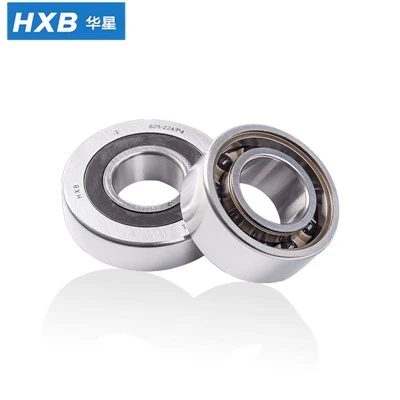
If you’re not sure which size you need—whether you’re replacing a bearing in a broken washing machine, sourcing parts for a new conveyor, or building a custom machine—don’t guess. I’ve helped hundreds of folks get the right bearing, no hassle, no extra costs. Send over your shaft size, housing size, what the bearing is used for, and we’ll hook you up with the right standard deep groove ball bearing, no custom headaches. Don’t waste time ordering the wrong size and waiting for a replacement—reach out and let’s get this right the first time.
Electric Motor Bearings References
- International Organization for Standardization. ISO 15:2017, Rolling bearings — Radial bearings — Boundary dimensions, tolerances and boundary dimensions for housings.
- American Bearings Manufacturers Association. ABMA Standard 11.06: Deep Groove Ball Bearings (inch series).
- SKF Group. “Deep Groove Ball Bearing Selection Guide,” 2024.
- Timken Company. “Standard Bearing Sizes: A Guide to Global Compatibility,” 2023.
Hangzhou Huaxing Kechuang Holding Group Co., Ltd.
Hangzhou Huaxing Kechuang Holding Group Co., Ltd. is one of the leading manufacturers and suppliers of deep groove ball bearings in China, featured by quality products and good service. Please rest assured to buy bulk durable deep groove ball bearings from our factory. Welcome to view our website for more information.
Address: No.553 Yingbin Road, Linping, Hangzhou, 311100, China
E-mail: wmb@huaxingbearing.com
WebSite: https://www.hxbbearing.com/
