Hey everyone – if you’re in the market for power solutions, chances are you’ve stumbled across terms like “electronic transformer” and “switching power supply” and wondered what the actual difference is. As someone who’s been supplying electronic transformers for over a decade, I get it – these two are often mixed up, and that confusion can lead to bad choices for your setup. Let’s break this down simply, no jargon overload, and no sales fluff just yet. Electronic Transformer
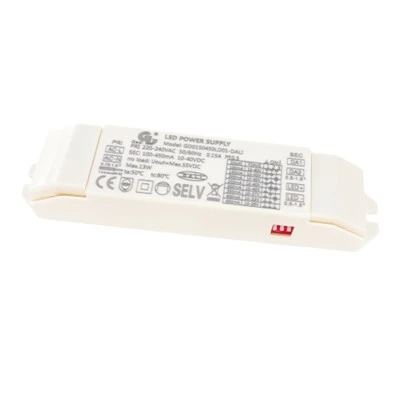
First, let’s start with the basics. A traditional transformer (the big metal box you might remember from old appliances) uses copper coils and iron cores to step voltage up or down. But electronic transformers – which is what we specialize in – are a bit different, right? Wait, no, actually, let’s not lump them together. Electronic transformers and switching power supplies (often called SMPS for short, because no one wants to say the whole name every time) both handle power conversion, but their DNA is totally separate. Let’s get into the core stuff first.
Here’s the big one: how they process power. An electronic transformer (our bread and butter) takes AC power, usually line voltage like 120V or 240V, and converts it to a lower AC voltage – most commonly 12V – using… well, still transformer action, but with electronics to make it smaller. Unlike old heavy transformers, we use high-frequency switching circuits to shrink the coil and core size, so our units are compact, not like the 5-pound brick your grandpa’s TV used. But here’s the key: the output from an electronic transformer is still AC power. That’s non-negotiable. It’s not DC; it’s just lower-voltage AC, perfect for things like LED lights, under-cabinet lighting, or small landscape fixtures that run on 12V AC.
Now a switching power supply? That’s a whole other animal. SMPS take AC input, convert it directly to DC output – no AC step-down at all. Let’s use an example: if you plug your laptop charger into the wall, that’s an SMPS. It turns 120V AC into the 19V DC your laptop needs, all in one go. It doesn’t put out AC, period. That’s the first major divider – output type. If your device needs DC, you’re looking at an SMPS; if it needs low-voltage AC, that’s where an electronic transformer shines.
Next up: size and weight. I know, no one wants to hide a huge power unit behind their kitchen cabinets. Electronic transformers, because we crank up the frequency (usually 20kHz to 100kHz, way higher than line’s 50/60Hz), can have smaller coils and cores. A 12V 60W electronic transformer is about the size of a smartphone, super easy to tuck into tight spaces. What about an SMPS? They’re also smaller than old linear power supplies, but for the same wattage, they’re often a bit bigger than our electronic transformers. Wait, is that always true? Let’s check: a 100W electronic transformer is roughly 3x3x1 inches, while a 100W SMPS is around 4x2x2 inches – yeah, our units are slimmer, which is a huge win for installers dealing with limited space.
Then there’s efficiency and heat. Both are way more efficient than their linear counterparts, but here’s where the gap comes in. Electronic transformers hover around 90-95% efficiency, while SMPS are usually 85-90%. That’s a small number, but multiply it over a year of running 10 lights 8 hours a day, and you’re saving on electricity bills, not just the upfront cost. Also, heat: our units run cooler because less energy is wasted, so you don’t have to worry about them overheating near flammable materials like wooden cabinets or fabric. SMPS do run warmer, just a heads up if you’re mounting them in a closed box with no ventilation – they need a bit more breathing room.
Wait, let’s talk about load compatibility, because that’s where a lot of people mess up. I see it every week: a customer comes in, says “I need a power unit for 10 LED lights,” and sometimes they grab an SMPS without checking if the LEDs are 12V DC or 12V AC. Most modern dimmable LEDs are actually designed for 12V AC – that’s where electronic transformers work best. If you plug an AC LED into an SMPS, it either won’t turn on, or it’ll flicker like crazy. Conversely, if you plug a DC device (like a phone, laptop, or most small electronics) into an electronic transformer, it’ll burn out because it’s getting AC instead of DC. That’s a common mistake, so I always remind folks: confirm your device’s input type first.
What about dimming? That’s a big one for lighting setups, which are our main customers. Electronic transformers are built to work with standard AC dimmers – the same ones you use for your main ceiling lights. You just swap out your old transformer for ours, and your existing dimmer works no problem. SMPS, though, especially cheaper ones, might not be dimmable at all, or they need special electronic dimmers that cost twice as much. Even dimmable SMPS often have a smaller dimming range, so you might get a dimmer that cuts off at 20% instead of 1% like our transformers. For residential lighting, that’s a huge plus for our products.
Cost-wise, let’s be real – price matters. At the same wattage, an electronic transformer is usually 10-15% cheaper than a comparable SMPS. Wait, why? Because our design is simpler for low-voltage AC applications. We don’t need the extra circuitry to convert AC to DC, just to step down the AC at high frequency. That makes us more affordable for people doing larger installations, like a whole house of under-cabinet lights or a big landscape lighting project. Though if you do need DC, SMPS are the only way to go, so it’s not like our product is better across the board – it’s just for specific use cases.
Now, let’s clear up a myth: some people call electronic transformers “low-voltage transformers” and mix them up with SMPS, but they’re not the same. Low-voltage is just a voltage range, not a type of power converter. Our electronic transformers are a type of low-voltage power solution, SMPS are another. Another myth: are electronic transformers outdated? No way – LED lighting blew up, and LED manufacturers still recommend 12V AC for most of their fixtures because it’s more efficient for long runs (12V AC doesn’t drop voltage as much over distance as 12V DC, so you can run a 50-foot wire without needing a bigger gauge, which saves on material costs). That’s a big win for commercial installations too, like office buildings with lots of ceiling lights.
Let’s use a real example to make this concrete. Say you’re doing a kitchen reno and want 8 under-cabinet LED lights, each 10W, so total 80W. If you pick the wrong unit: if you get an SMPS, you’ll have to run DC wiring, which needs thicker wire (18 gauge instead of 20 gauge for AC) and you might get dimming issues. If you get our electronic transformer, you plug it into your existing 120V AC line, run 12V AC wire, and use the same dimmer you’ve already got for your overhead lights. It’s easier, cheaper, and works better.
Now, when would you pick an SMPS over an electronic transformer? Let’s say you’re powering a laptop, a security camera, or a USB hub – those all need DC, so SMPS are the only option. Or if you need a compact power unit for a small electronic device that runs on low DC voltage. But if your project is lighting-focused, especially AC-powered low-voltage lighting, electronic transformers are the way to go.
As an electronic transformer supplier, we’re often the go-to for electricians and contractors because we get the specifics right. We test every unit to make sure it works with common LED brands, has overheat protection, and is safe for indoor and outdoor use. We also offer a range of wattages, from 20W for small accent lights up to 200W for larger setups, so no matter your project size, we’ve got you covered.
Wait, let’s talk about reliability too. Our electronic transformers have a lifespan of around 50,000 hours, which is comparable to a good SMPS, but because we have fewer components (no DC conversion circuitry), there’s less to break. I’ve had customers tell me our units have been running for 7 years without a single issue, which is way better than some cheap SMPS that die after 2 years. That’s a big selling point – less maintenance, fewer replacements.
So to wrap up the key differences, let’s list them quick:
- Output: Electronic transformers = low-voltage AC; SMPS = DC.
- Primary use: Ours = AC-powered lighting; SMPS = DC electronics.
- Size: Ours are slimmer for the same wattage.
- Efficiency: Ours run a bit cooler and more efficiently.
- Dimming: Ours work with standard dimmers, often better range.
- Cost: Ours are slightly cheaper for compatible applications.
At the end of the day, it all comes down to what you’re powering. If it’s an AC low-voltage device (most LEDs, landscape lights, small appliances), an electronic transformer is the right call. If it’s a DC device (laptops, cameras, phones), you need an SMPS.
I know making the right choice can feel overwhelming, especially with all the options out there. That’s why we’re here – if you’re planning a project, need help sizing the right transformer, or have questions about compatibility, don’t hesitate to reach out to our team. We’ll walk you through it, no pushy sales stuff, just honest advice. We work with residential homeowners, electricians, and commercial contractors, so whatever your needs are, we’ve got the product to fit.

Don’t waste time guessing which unit to pick – get in touch today to start your procurement process and make sure your power setup works perfectly for your project.
Low Voltage Cabinet Lights References
- IEEE Standards Association. (2021). Power Conversion for Low-Voltage Lighting Systems.
- National Electrical Manufacturers Association (NEMA). (2020). Comparison of AC vs DC Power for Commercial Lighting Installations.
- Electronic Design. (2022). Efficiency Differences Between High-Frequency Transformers and Switching Power Supplies.
- Lighting Research Center, Rensselaer Polytechnic Institute. (2021). Compatibility of Dimmers with Low-Voltage AC Power Supplies for LED Fixtures.
Foshan Gedi Electrnoic Co., Ltd.
As one of the most professional electronic transformer manufacturers in China, we’re featured by quality products and good price. Please rest assured to buy advanced electronic transformer for sale here from our factory. If you have any enquiry about cooperation, please feel free to email us.
Address: 4th Floor, Building 8, South District, Huayi Decoration City, No.10, Laixiang Road, Shiwan Sub-district, Chancheng District, Foshan City, Guangdong Province, China.
E-mail: market@gedi-lighting.com
WebSite: https://www.gedi-lighting.com/
