Hey everyone, it’s Jamie from the connector team here—you know, the folks that supply 1.25mm pitch connectors for all your tight-space electronics needs. Today I’m tackling a question I get at least twice a week from design engineers and procurement teams alike: Are our 1.25mm pitch connectors halogen free? Spoiler: The short answer is, it depends, but let’s break this down because it’s not as straightforward as you might think, and it matters way more than just checking a box for your next product build. 1.25mm Pitch
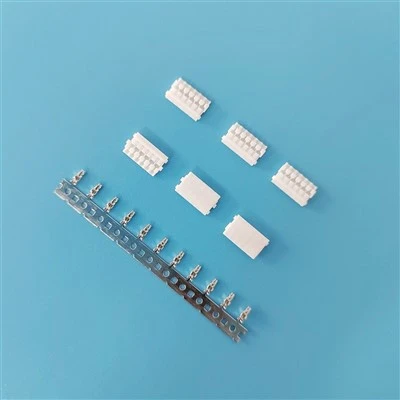
First, let’s ground ourselves. For anyone who’s deep in the weeds, 1.25mm pitch is that sweet spot for small electronics: think wearables, smart watches, portable medical devices, even some compact consumer tech like wireless earbuds. The pitch refers to the distance between the center of one pin to the next—1.25mm is tiny, so these connectors need materials that are flexible, heat-resistant, and able to hold up to repeated insertions. Halogens, for the uninitiated, are elements like chlorine, bromine, fluorine, and iodine, often used as flame retardants in plastics. But here’s the catch: while flame retardants are great for safety, halogens can release toxic fumes when burned, which is why a lot of industries (especially medical, automotive, and aerospace) are pushing for halogen-free components.
Now, let’s talk about our products specifically. Not all 1.25mm pitch connectors are made the same, and that’s a big part of why this question comes up. Early on, a lot of lower-cost 1.25mm pitch connectors on the market used halogenated flame retardants in their housings—cheaper, easy to mold, and they passed basic flammability tests. But over the last 5 years or so, we shifted most of our production lines to halogen-free materials because our clients started asking for it, and we knew it was the right call for sustainability and safety.
Wait, let’s be clear: “halogen free” isn’t a zero-halogen thing. The industry standard (per IEC 61249-2-21, if you’re a nerd like me) limits total halogens to under 1500ppm per element, and under 900ppm for the sum of chlorine and bromine. That’s not “no halogens at all”—that’s trace amounts that don’t pose a risk. A lot of people think “halogen free” means no halogens, but it’s a regulatory threshold, and that’s key to understanding the answer here.
So, right now, 90% of our 1.25mm pitch connector lineup is halogen free. The housings use polyamide (PA) 6T or 9T with a halogen-free flame retardant system—usually aluminum hydroxide or magnesium hydroxide, which work by releasing water when heated, cooling the material and putting out a flame, no toxic fumes. The terminals are made of copper alloys with a thin gold or tin plating, and those plating materials don’t use halogens either. We even test every batch with X-ray fluorescence (XRF) to make sure we’re hitting those ppm limits—no cutting corners here.
But hold on, there’s that 10%. We still make a small subset of 1.25mm pitch connectors for ultra-budget applications where cost is the #1 priority, not halogen compliance. Those ones? They do use halogenated flame retardants. Why? Because switching to halogen-free materials adds 10-15% to the part cost, which can be a non-starter for someone building a $5 wireless mouse that just needs to work, not meet medical device standards. We’re transparent about that, too—we label every product’s material spec sheet so no one buys the wrong one by accident.
Let me share a quick story that illustrates why this matters. Last quarter, a startup came to us panicking. They’d sourced 10k 1.25mm pitch connectors from another supplier, only to find out the housings had bromine levels way over the IEC limit. Their product was a portable insulin pump, and the FDA had just updated their guidelines for halogen-free components in Class II medical devices. They were stuck paying rework costs or scrapping the entire batch, which would’ve set them back 2 weeks and cost them their launch timeline. That’s why we make sure every client gets a clear spec sheet, and we offer both halogen and non-halogen options—no guesswork.
Another point people miss: even if your connector is halogen free, you have to make sure all the associated materials are too. The wires crimped to the terminals? The adhesive holding the housing in place? We work with our suppliers to make sure all the secondary materials we use meet halogen-free standards for our 1.25mm pitch lines. For example, the 30AWG stranded copper wires we crimp use polyvinyl chloride (PVC) that’s halogen free, not the old-school PVC with chlorine. That’s a detail a lot of suppliers skip, but it’s what makes our products reliable for regulated industries.
Now, let’s address some myths I hear all the time. First, “halogen free is always better.” Yeah, usually, but not always. For really high-temperature applications—like connectors in industrial sensors that see 150°C on a regular basis—some halogenated flame retardants have better heat resistance than the halogen-free alternatives. We test both, and for those specific high-temp 1.25mm pitch connectors, we keep the halogenated version, but only when it’s the only option that works, and we tell our clients exactly what they’re getting.
Second, “all halogen-free connectors are created equal.” Nope. A lot of cheap halogen-free connectors use flame retardants that aren’t as durable—they can crack after a few hundred insertions, or degrade faster in high humidity. We test our 1.25mm pitch connectors for 500+ mating cycles, and our halogen-free lines pass that with flying colors, because we use high-grade PA materials, not the cheap regrind plastic some suppliers use. That’s why our clients come back to us, even if our parts are a tiny bit more expensive.
If you’re a design engineer or procurement person reading this, here’s what you need to do before you place an order for 1.25mm pitch connectors: First, check your product’s requirements. If it’s medical, automotive, aerospace, or any product sold in the EU (where halogen limits are mandatory under RoHS 2), go for the halogen-free option. If it’s a low-cost consumer item that doesn’t have strict regulatory rules, the halogenated one might work for you—just make sure you don’t mix up the part numbers. Second, ask for the COC (Certificate of Conformity) for halogen content. Any reputable supplier should have that ready to send within 24 hours, no hoops to jump through. Third, don’t assume a “1.25mm pitch connector” is the same across suppliers—confirm the material spec, not just the pitch size.
At the end of the day, our job is to supply 1.25mm pitch connectors that work for your specific needs, whether that’s halogen free or not. We don’t push one over the other—we just make sure you know what you’re getting, so you don’t end up in a mess like that insulin pump startup I mentioned earlier.

If you’re working on a new design right now, or if you’ve got a batch of connectors that aren’t meeting your halogen requirements, hit us up. We can send you free samples, walk through the spec sheets, and help you pick the right 1.25mm pitch connector for your project. No sales pitch, no pressure—just real answers from the people who make these parts every day.
1.25mm Pitch References:
IEC 61249-2-21:2019, Printed boards and other interconnection structures – Part 2-21: Materials for printed boards – Specification for halogen-free base materials
RoHS 2 Directive 2011/65/EU, Restriction of Hazardous Substances in Electrical and Electronic Equipment
Dongguan Yinglian Electronics Co., Ltd.
As one of the most professional 1.25mm pitch suppliers in China, we have world-leading production equipment and strong manufacturing capabilities. We warmly welcome you to buy bulk high quality 1.25mm pitch at competitive price from our factory.
Address: No.12, Jidele Road, Juqi, Humen Town, Dongguan City, Guangdong Province, P.R. China
E-mail: James@csg-china.com
WebSite: https://www.csg-conn.com/
