If you’re in the biz of surface finishing, you know a drag polishing machine can turn rough, messy parts into smooth, consistent ones without the guesswork of hand polishing. But here’s the thing: a machine is only as good as the accessories you pair it with. As someone who’s supplied these machines for years, I’ve seen way too many guys waste time and money on random add-ons that don’t do squat, or skip key accessories that make their jobs 10x easier. Today, I’m breaking down the actual accessories that work, no fluff, no jargon, just what you need to know. Drag Polishing Machine
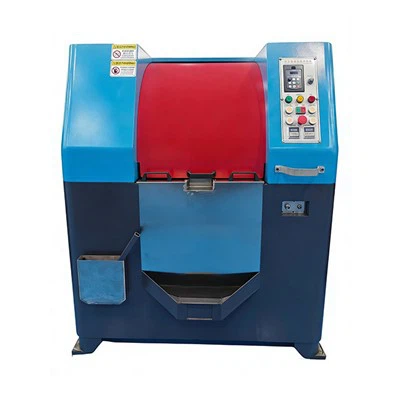
First off, let’s get clear on what drag polishers do, real quick. These machines pull parts through a series of rotating abrasive belts (or sometimes wet wheels, depending on your setup) at a controlled speed, so every part gets the same finish—no uneven spots, no missed edges, perfect for metal stamping, small 3D printed parts, jewelry components, even fasteners like bolts and screws. The accessories aren’t just “extra stuff”; they’re what let you adjust the machine for your specific parts, cut down on downtime, and get the finish you’re after, whether that’s a soft satin for jewelry or a high-shine mirror finish for aerospace parts.
Let’s start with the most basic, yet most underrated accessory: the workholding fixtures. You can’t just toss random parts into a drag polisher and hope they don’t move. If a part shifts mid-cycle, you’ll get inconsistent polishing, or worse, parts banging together and getting dented. There are a ton of fixture types, and picking the wrong one is a mistake a lot of new buyers make.
First, there are custom mandrels. These are basically rods with threaded or press-fit ends made to hold tiny, cylindrical parts—like pins, small tubes, or jewelry settings. Say you’re polishing 1mm stainless steel pins for medical devices; a custom mandrel sized exactly to the pin’s diameter means they don’t wiggle, and every surface gets exposed to the belt. We make mandrels out of hardened steel, not cheap aluminum that bends after a week, because nothing kills productivity faster than a broken mid-run mandrel.
Then there are grid fixtures, sometimes called basket grids, for parts that are small, irregular, or too delicate to hold with mandrels—think small 3D printed brackets, fasteners, or tiny decorative metal pieces. The grid has evenly spaced slots that hold parts securely, but let the abrasive belt reach every surface. The best part? You can stack multiple grids in one machine run, so you can polish 5 different batches at once, no need to split runs. We offer grid inserts in different spacing sizes, too—tight spacing for small parts so they don’t rattle, wider spacing for bulkier pieces.
For really odd-shaped parts, like a custom metal clip or a car engine bracket, we do custom clamping fixtures. These are machined to fit the exact geometry of your part, so you can lock it in place without covering any critical surfaces. I once had a customer who was polishing a complex brake line bracket; before they used a custom clamp, they had to hand polish the edges because the grid kept bending the bracket. Now they run 20 brackets per load, no hand work needed, and their time per batch dropped by 70%.
Next up, abrasive belts. This is the accessory that makes or breaks your finish, hands down. A lot of new buyers just grab any belt they see, but not all belts work for every job. Let’s break down the types: there’s silicon carbide belts, which are great for hard metals like stainless steel, titanium, or brass. They’re tough, don’t wear out fast, and give a consistent, medium polish. Then there’s aluminum oxide belts, which are softer, perfect for aluminum, copper, or even some plastics—they cut faster but leave a smoother, finer finish than silicon carbide.
Wait, and don’t overlook grit size. If you’re starting with a really rough part (like a cast metal piece straight from the foundry), you’ll need a coarse grit, like 80 or 120, to remove the major imperfections first. Then you move to finer grits—240, 400, 600—each one building on the last until you get the finish you want. We also have non-woven abrasive belts for the final polish, like a 1200 grit or higher, that will get you that mirror shine without scratching. A lot of people think they can skip from 400 straight to final, but that leaves micro-scratches that show up under light—trust me, I’ve seen it happen.
One pro tip: always buy extra belts of a couple grits you use the most. We get so many calls from guys who ran out of 240 grit mid-batch, had to pause, and lost 2 hours of production waiting for a new belt. It’s a small cost upfront that saves you way more downtime later.
Then there are wet/dry accessories. A lot of drag polishers can run wet or dry, depending on your needs. Wet polishing uses a coolant or lubricant to cool the abrasive belt, reduce dust, and give a smoother finish. The accessories here are plastic belt guards and a coolant reservoir system. The guards are cheap, but they keep the water off your motor and parts, so you don’t have to deal with corrosion or electrical issues. The coolant systems—we have both gravity-fed and pump-based ones—let you control the flow, so you’re not wasting water or lubricant. For wet jobs, we also recommend using a waterproof cleaning cloth to wipe down parts after, but that’s more of a supply than an accessory. Dry polishing is better for parts that can’t get wet, like electronics components or some jewelry, and you just need a belt, a fixture, and you’re good. Wait, no—wait, there’s also dust collection systems for dry runs. That’s another key accessory. Dry polishing creates a lot of metal dust, which is not only a mess but a fire hazard if you’re working with aluminum or titanium dust. Our dust collection systems hook right up to the machine, pull 99% of the dust out, so you don’t have to sweep your shop every day, and no risk of a dust explosion. That’s a big one for anyone in a small shop with fire code to worry about.
Another accessory that’s super useful for high-volume runs is a part loader/unloader attachment. Yeah, it’s not necessary for a shop that does a few batches a week, but if you’re running 10+ batches a day, this thing cuts your labor in half. It’s basically a robotic arm that loads parts into the fixture and unloads them when the cycle is done, so you don’t have to stand there all day lifting heavy fixtures. I had a customer who does fasteners for a big construction company; before they got the loader, they had 2 guys doing loading and unloading, now they have 1, and their output went up 30% because they can run more cycles in a day. It’s an investment, but it pays for itself in 6 months, easy.
Wait, let’s not forget maintenance accessories. A machine is only good if it stays working, right? So there are replacement parts like belt tensioners, which you’ll need eventually if you run the machine 40+ hours a week. Belt tensioners keep the abrasive belt tight, so it doesn’t slip and cause uneven polishing. We also sell belt sander polishers? No, wait, no—drag polishers, so replacement rollers. The rollers that the belt runs on wear out over time, especially if you’re running hard metals, and a wobbly roller will make your belt bounce, leading to scratches. We keep replacement rollers in stock, so you don’t have to wait weeks for a custom part. Also, cleaning brushes for the machine’s interior—you need to clear out dust and debris after each run to keep the machine running smoothly. Cheap, small, but essential.
Let me address a common question I get: do I need all these accessories? No, not at all. If you’re a hobbyist or a small shop doing custom jewelry, you might only need a couple mandrels, 3 grits of belts, and a basic fixture. If you’re a manufacturer doing high-volume metal parts, you’ll want the grid fixtures, extra belts, dust collection, and maybe the loader. The key is to match the accessories to your specific work, not buy every gadget just because it’s cool.
I’ve seen guys buy a fancy loader and a bunch of custom mandrels when they only do 2 batches a week of small parts, and they end up using half of it. On the flip side, a guy doing 50 batches a month of medical parts tried to get by with cheap generic belts, and his parts kept failing quality control because the belts were inconsistent. That’s where a supplier who knows what they’re doing comes in—we don’t push you to buy stuff you don’t need, we help you pick exactly what works for your workload and parts.
At the end of the day, the accessories for a drag polishing machine aren’t just add-ons—they’re what turn a basic machine into a tool that can handle your unique jobs. Fixtures hold parts secure, belts give you the right finish, dust collection keeps your shop safe, and loaders save you time. If you’re tired of uneven finishes, downtime, or wasting money on the wrong parts, it’s worth reaching out to talk through your setup. We don’t just sell machines; we help you pick the accessories that make your process work better, so you can get more parts done, faster, with better results.

If you’re ready to upgrade your drag polishing setup or just want to ask which accessories fit your needs, hit us up. We’ll walk you through the options, no pressure, no weird fine print.
Ceramic Abrasive Media References
- Surface Finishing Society. (2022). “Drag Polishing Best Practices for Manufacturing Operations.” Journal of Industrial Finishing, 45(3), 112-118.
- Machining Design Handbook. (2021). Workholding Solutions for Abrasive Finishing Equipment. SME Press.
- Occupational Safety and Health Administration (OSHA). (2020). “Dust Control Guidelines for Metal Finishing Equipment.” OSHA Technical Manual.
- Abrasive Technology Association. (2023). “Abrasive Belt Selection Guide for Surface Finishing.” ATA Technical Report Series.
- Small Business Manufacturing Association. (2022). “Cost-Effective Accessories for High-Volume Finishing.” SMB Manufacturing Insights.
Dongguan Xindingsheng Intelligent Grinding Technology Co., Ltd.
Dongguan Xindingsheng Intelligent Grinding Technology Co., Ltd. is one of the most reliable drag polishing machine manufacturers and suppliers in China, also supports customized service. Please feel free to wholesale bulk high quality drag polishing machine in stock here from our factory. Contact us for pricelist.
Address: Room 101, Building 1, No.73 Dahuangmei Road, Dalingshan Town, Dongguan City, Guangdong Province, China
E-mail: cndskj@126.com
WebSite: https://www.xdsfinishing.com/
