If you’re involved in manufacturing pharmaceuticals, food and beverage, cosmetics, or any industry that deals with dry powders, granules, or viscous semi-solids, you’ve probably come across mixers that promise uniformity— but not all mixers are built to meet the strict hygiene standards that these sectors require. That’s where a sanitary ribbon mixer stands out: it’s not just another mixing machine; it’s a specialized piece of equipment designed to blend materials thoroughly while preventing cross-contamination, surviving rigorous cleaning protocols, and meeting the regulatory demands of high-stakes industries. As a ribbon mixer supplier who’s worked directly with manufacturers for over a decade, I’ve seen first-hand how the right mixer can make or break a production line—and how a non-sanitary model can lead to costly recalls, regulatory fines, and even safety risks for end consumers. Let’s break down what makes a sanitary ribbon mixer unique, why it matters, and how it fits into your operations. Ribbon Mixer
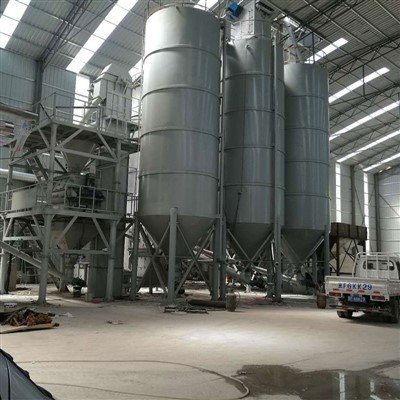
First, let’s start with the basics: a ribbon mixer, at its core, is a horizontal, U-shaped trough with a rotating auger (or ribbon) inside. The ribbon has two distinct helical flights—inner and outer— that move materials in opposite directions. The outer flight pushes materials from the ends of the trough toward the center, while the inner flight pushes from the center back to the ends. This dual-action motion creates a tumbling, folding effect that ensures every particle is evenly distributed—far more consistently than a simple single-blade mixer or even a tumbling bin blender for certain dense or cohesive materials. But the “sanitary” label is what sets this mixer apart from a standard industrial ribbon mixer.
When we say “sanitary,” we’re talking about a set of design features that prioritize easy cleaning, contamination control, and compliance with global food, drug, and cosmetics regulations. A standard ribbon mixer might have crevices, rough welds, or hard-to-reach corners where old product can get trapped, leading to cross-contamination between batches. For example, if a bakery switches from mixing flour-based dough to a nut-containing batter in a non-sanitary mixer, even a quick wipe-down might leave tiny traces of nuts, which could trigger allergic reactions in consumers. A sanitary mixer eliminates that risk. Let’s dive into those key design features:
Material construction is non-negotiable. Sanitary ribbon mixers are almost always made from 304 or 316L stainless steel—types that are corrosion-resistant, non-porous, and easy to sanitize. 316L is especially preferred in pharmaceutical and high-acid food applications because it contains molybdenum, which makes it more resistant to pitting from acidic or chloride-based cleaners, which are commonly used in these industries. Unlike mild steel, which can rust or react with ingredients, stainless steel won’t leach chemicals into your product, a critical requirement for FDA (U.S.), EFSA (EU), and other regulatory bodies. The entire interior surface—trough walls, ribbon flights, and shaft— is polished to a smooth, “passivated” finish. Passivation is a process where the steel is treated to remove free iron on the surface, preventing rust and ensuring a non-reactive, easy-to-clean surface. A standard mixer might have a 120-grit polish, but a sanitary model uses 180-grit or higher, with a Ra value (roughness average) of less than 0.8 micrometers. That’s so smooth that product can’t stick to the walls, and bacteria or mold can’t grow in tiny surface irregularities.
Next, the trough and internal components are designed to eliminate hard-to-clean crevices. The U-shaped trough has a continuous, round bottom (no flat edges) and welded seams that are ground flush and polished—no gaps between sections where product can hide. The ribbon flights are attached to the central shaft with no exposed fasteners; instead, sanitary mixers use clamp-style connections or welded mounting points that are recessed into the flights, so there’s nowhere for material to build up. Even the shaft seal is a sanitary design: most non-sanitary mixers use a conventional lip seal that can trap product between the seal and the shaft, leading to contamination. A sanitary ribbon mixer uses a mechanical seal or a double mechanical seal with a cleanout flush port, so you can run a sanitizing solution through the seal during CIP (Clean-in-Place) cycles. Some models even have a shaft that’s vented or capped to prevent product from building up at the ends.
Cleaning capabilities are another defining feature. Sanitary ribbon mixers are designed for both manual disassembly and automatic CIP, which is critical for batch-to-batch consistency and regulatory compliance. CIP systems use high-pressure water, steam, or sanitizing chemicals pumped through nozzles in the trough, so you don’t have to take the mixer apart after every batch—saving time and reducing labor costs. Many sanitary models have access ports that are large enough for workers to reach into and clean manually if needed, with no sharp edges or protrusions that can cut hands. Drainage is also a key point: the trough has a sloped bottom and a large, sanitary drain valve (usually a ball valve with a smooth, crevice-free design) that lets all cleaning solution and residual product drain completely, with no pooling at the bottom. I’ve had customers tell me that switching to a sanitary mixer reduced their cleaning time per batch by 70%—a huge win for production efficiency, especially when you’re running multiple small batches of different products.
Now, let’s talk about why this matters for different industries. For pharmaceutical manufacturers, a sanitary ribbon mixer is essential for mixing active pharmaceutical ingredients (APIs) with excipients to create tablets or capsules. Even trace cross-contamination between different drug formulations can lead to adverse drug reactions, so regulators like the FDA require that mixing equipment be fully sanitized between batches. For example, a customer of mine in the generic drug space was previously using a standard mixer that had hidden crevices; after a routine inspection, the FDA flagged it for cross-contamination risks, and they had to spend $50,000 to rework their cleaning process. Switching to a sanitary ribbon mixer not only helped them pass their next inspection but also reduced their batch changeover time by half.
In the food and beverage industry, think of bakeries mixing specialty flours, snack manufacturers blending powders for protein bars, or dairy companies mixing dry ingredients for formula. A sanitary mixer eliminates the risk of allergen cross-contamination— a major concern for brands that market nut-free, gluten-free, or vegan products. I once worked with a small granola company that was losing 15% of their production batches because of cross-contamination from their old mixer; after switching to a sanitary model, that waste dropped to less than 1%, and they were able to secure contracts with larger retailers that required strict food safety certifications. Cosmetics manufacturers, too, rely on sanitary mixers for blending powders like mica or zinc oxide into foundations or lotions; these products are often applied directly to skin, so any leftover product from a previous batch can cause irritation or spoilage.
A common question I get is: “Can’t I just clean a standard mixer enough to make it sanitary?” The short answer is no. Even with meticulous manual cleaning, standard mixers have design flaws that make full sanitization impossible. For example, a standard ribbon mixer might have bolted connections on the ribbon flights that create a gap between the bolt and the flight, where fine powders can get trapped and become impossible to remove without taking the mixer apart completely. That takes time—time that many manufacturers don’t have, especially if they’re running tight production schedules. Sanitary mixers are engineered to eliminate those gaps, so even a basic CIP cycle will leave them clean, consistent, and compliant.
Another misconception is that sanitary ribbon mixers are only for small-batch operations. While they’re ideal for small to medium batch sizes (10 to 5,000 liters), modern sanitary designs are also available for large-scale industrial production, up to 10,000 liters or more. The core design principles stay the same—smooth surfaces, easy CIP, no crevices—even as the equipment scales up. I’ve supplied mixers to a large infant formula manufacturer that runs 10,000-liter batches, and they told me the sanitary mixer was able to handle their high-volume production while meeting the strict standards of the FDA’s Infant Formula Act.
When choosing a sanitary ribbon mixer, there are a few key factors to consider. First, check the certification: look for mixers that meet 3-A Sanitary Standards, a widely recognized set of guidelines for sanitary equipment used in food and beverage, as well as cGMP (current Good Manufacturing Practices) for pharmaceuticals. These certifications ensure that the design has been audited by independent third parties to meet strict hygiene requirements. Second, consider your batch size and material properties: if you’re mixing dense, heavy powders like titanium dioxide, you’ll need a mixer with a higher-torque motor to handle the load. If you’re working with cohesive materials like wet granulations, look for a mixer with adjustable ribbon speed to ensure uniform blending without clumping. Third, think about your cleaning process: if you’re using CIP, make sure the mixer has compatible nozzles and seal design. If you’re doing manual cleaning, ensure the access ports are large enough for your workers to use comfortably.
As a ribbon mixer supplier, I’ve seen too many businesses cut corners on mixing equipment hygiene, only to face costly consequences. A sanitary ribbon mixer isn’t just an expense—it’s an investment in product safety, regulatory compliance, and operational efficiency. It reduces waste, speeds up batch changeovers, and helps you build trust with your customers by ensuring their products are safe, consistent, and free from cross-contamination. Whether you’re a small artisanal brand just starting out or a large industrial manufacturer looking to upgrade your equipment, a sanitary ribbon mixer is a critical piece of machinery that can transform your production line.

If you’re ready to learn more about how a sanitary ribbon mixer can fit your specific production needs, don’t hesitate to reach out to discuss your requirements.
Dry Mortar Production Equipment References
- 3-A Sanitary Standards. (2022). Standard for Mixers for Food Products. 3-A Sanitary Standards, Inc.
- U.S. Food and Drug Administration. (2021). Current Good Manufacturing Practice (cGMP) for Finished Pharmaceuticals. 21 CFR Part 211.
- European Food Safety Authority. (2019). Guidance on Food Safety Management Systems for Food and Beverage Manufacturers. EFSA Journal.
- Marshall, W. (2020). Mixing Technology for Pharmaceutical and Food Applications. Chemical Engineering Progress.
- Smith, J. (2019). Sanitary Design Principles for Industrial Process Equipment. Journal of Food Processing and Preservation.
Zhengzhou Tongding Machinery Equipment Co., Ltd.
Zhengzhou Tongding Machinery Equipment Co., Ltd. is one of the most professional ribbon mixer manufacturers and suppliers in China, featured by quality products and good price. Please rest assured to buy CE approved ribbon mixer made in China here and get quotation from our factory. Also, customized service and 5 years warranty are available.
Address: Kexue Avenue Industrial Park, Xingyang City, Zhengzhou City, Henan Province
E-mail: admin@tongdingmachine.com
WebSite: https://www.td-machinerygroup.com/
