If you manage a workshop, a manufacturing facility, or a small business that relies on gas cylinders, you’ve probably wondered at some point: “What’s the maximum pressure my gas cylinder should ever reach?” As a gas cylinder supplier with over 12 years in the industry, I get this question weekly—often from operators who’ve noticed pressure gauges flickering, or from new business owners who want to avoid dangerous, costly mistakes. The answer isn’t a one-size-fits-all number; it depends on a mix of science, regulatory standards, and how you care for your cylinders. Let me break this down in plain, practical terms, no jargon, just what I’ve learned from working with hundreds of customers across industries. Gas Cylinder

First, let’s start with the basics: gas cylinders hold compressed gases, right? Most common industrial and commercial gases—like oxygen, nitrogen, argon, or carbon dioxide—are stored as compressed gases, meaning they’re cooled and pressurized until they turn liquid, then sealed in a steel (or sometimes aluminum) cylinder. Pressure is the core here, but the maximum safe pressure isn’t just a random limit stamped on the cylinder. It’s calculated based on three key factors: the cylinder’s material, its design rating, and the type of gas inside.
Let’s take material first. Steel is the most common for heavy-duty cylinders because it’s strong and resistant to impact, but not all steel is the same. High-strength carbon steel cylinders, which we supply for industrial use, have a standard maximum working pressure (let’s call this MWP, the number every cylinder has stamped on its neck) of 2,400 psi (pounds per square inch). Wait, psi is the unit we use daily, but sometimes you’ll see bar—1 bar is roughly 14.5 psi, so that 2,400 psi is about 165 bar. For aluminum cylinders, which are lighter and popular for medical or portable use, the MWP is usually lower, around 2,015 psi (139 bar). That makes sense because aluminum isn’t as dense as steel, so its design can’t handle the same pressure without risking failure.
But the gas type changes everything. If the gas is what we call a “permanent gas”—meaning it stays in gas form even at room temperature, like nitrogen or oxygen—the cylinder’s pressure at full fill will be exactly equal to its MWP when the cylinder is at 70°F (21°C), which is the industry standard for testing. But if the gas is a “dissolved gas”—like acetylene, which is used in welding—it’s stored dissolved in acetone inside the cylinder, so its pressure works differently. Acetylene cylinders don’t follow the same MWP rule; their maximum safe pressure is much lower, around 250 psi (17 bar) at 70°F. That’s a critical detail I always make sure new customers know, because welding operators sometimes mix up pressure specs for acetylene with those for oxygen, and that’s a quick way to a hazard.
Now, here’s the part most people don’t talk about: temperature affects pressure way more than you might think. A lot of customers show up to our warehouse with a cylinder that’s been sitting in a 100°F (38°C) loading dock, panicking because their gauge reads 2,700 psi on a cylinder rated for 2,400 psi. Is that dangerous? Well, yes, if the temperature keeps climbing. Boyle’s Law (the basic gas law that states pressure and volume are directly proportional at a constant temperature) is the rule here. When a cylinder’s volume is fixed (which it is, since it’s a rigid steel tank), if temperature goes up, pressure goes up too. For every 10°F increase in temperature, pressure rises about 3 to 4 percent. So a 10-degree swing might not be a big deal, but a 30-degree swing? That’s a 9 to 12 percent jump. If your cylinder is rated for 2,400 psi, pushing it above 2,700 psi because it’s been left in a hot truck for a few hours is a serious risk—cylinders can rupture, leak, or even explode if pressure gets too high. That’s why all our customers get a quick training tip: never store cylinders in direct sunlight, near furnaces, or in enclosed spaces that heat up during the day.
Regulatory standards also set hard limits that we as suppliers and customers have to follow. In the U.S., that’s OSHA and the DOT (Department of Transportation) rules, and in many other countries, it’s ISO safety standards. The DOT requires all compressed gas cylinders to have a stamped “TC” mark, which certifies that they meet minimum design and pressure requirements. We never supply a cylinder that doesn’t have that mark, and we refuse to sell a cylinder to a customer who wants to fill it above the stamped MWP. OSHA also mandates that all cylinders undergo periodic testing—usually every 5 to 10 years, depending on the material—to check for cracks, corrosion, or weak spots that would lower their maximum safe pressure. I’ve seen customers try to skip that testing to save money, and it’s always a bad call. Last year, a small fabrication shop in Texas ignored testing on an old oxygen cylinder, and it ruptured during a fill, damaging their equipment and sending one employee to the hospital. That’s exactly the risk we warn people about.
Wait, but what about “burst pressure”? Some people confuse MWP with burst pressure, so let’s clear that up. MWP is the maximum pressure a cylinder is designed to hold during normal use, with a safety factor. Burst pressure is the pressure at which the cylinder would physically rupture, and that’s way higher—usually 3 to 5 times the MWP for steel cylinders. But that doesn’t mean you should ever get close to it. The safety factor is there to account for minor temperature swings, small manufacturing defects, and normal wear and tear. Operating near MWP isn’t just against regulations; it’s unnecessary and risks damaging the cylinder’s valves or the pressure regulator you use on it.
Now, let’s get to practical scenarios, because that’s what matters most for our customers. Let’s say you’re a restaurant owner using CO2 for soda fountains. CO2 cylinders are usually aluminum, with an MWP of 2,015 psi. When full, they’ll read around 800 to 900 psi at 70°F. If you leave that cylinder outside in the winter, at 32°F (0°C), the pressure drops to about 700 psi, but if you leave it in a summer storage shed at 90°F (32°C), it jumps to 1,000 psi—still well under the MWP, so that’s safe. But if that same CO2 cylinder is stored in a car trunk that hits 120°F (49°C) on a hot day, pressure could climb to 1,200 psi, which is still under 2,015, but it’s pushing the upper end. That’s why we recommend indoor storage for all cylinders, no matter the gas type.
Another example: a construction company using oxygen and acetylene for cutting and welding. Oxygen cylinders are high-strength steel, MWP 2,400 psi, full pressure around 2,200 to 2,300 psi at 70°F. That’s right at the MWP, so it’s critical not to expose that cylinder to extra heat. If you’re working on a hot rooftop, the oxygen cylinder sitting next to you could get up to 100°F, pushing pressure to around 2,600 psi—over the MWP, and that’s a violation of DOT rules. Acetylene, as I mentioned earlier, is different: its maximum pressure is only 250 psi, so even a small temperature increase can make it spike. I always tell welding crews never to leave an acetylene cylinder in direct sun, and to turn off the valve when not in use, because a sudden pressure jump can blow the safety cap or damage the valve.
Now, let’s address a common myth: some people think “empty” cylinders are low pressure, but that’s not exactly true. For permanent gases, an empty cylinder (when the pressure is too low to be useful) will still have around 50 to 100 psi of pressure left, to keep contaminants like dust or moisture out of the cylinder’s interior. If you empty a cylinder completely, that void can cause corrosion inside, which weakens the metal over time. For dissolved gases like acetylene, “empty” is when pressure drops to around 15 psi, but even then, you shouldn’t push the cylinder above its maximum safe pressure when refilling.
As a supplier, my job isn’t just to sell you a cylinder—it’s to make sure you use it safely. That’s why every cylinder we ship has a stamped MWP, a label with the gas type, and a quick safety sheet that outlines maximum pressure limits for that specific gas and cylinder. We also do free pre-delivery checks for new customers: we’ll go over their storage area, their regulators, and their procedures to make sure they’re not at risk of overpressurizing a cylinder. Last quarter, I worked with a new medical supply company that was using a 2,015 psi aluminum oxygen cylinder but had a regulator set to go up to 2,500 psi. We caught that before they even received the cylinder, and adjusted their regulator for free—probably saving them from a costly mistake.
So what should you do if you’re unsure about your cylinder’s maximum pressure? First, check the stamp on the cylinder’s neck: it’ll have numbers like “2400” or “2015” followed by “psi” or “bar”—that’s your MWP, the maximum safe pressure for normal use. Second, never fill a cylinder above that number, and never expose it to temperatures that would push pressure higher. Third, follow the periodic testing requirements—don’t let your cylinder expire, and if it ever shows signs of rust, dents, or bent valves, stop using it and contact a professional.
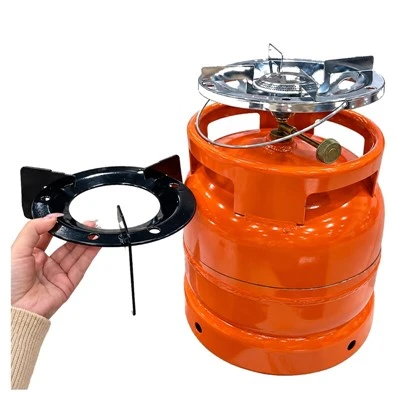
If you’re in the market for new gas cylinders, or you need a supplier that prioritizes safety as much as you do, let’s connect. We can walk you through the right cylinder for your gas type, show you how to check pressure limits correctly, and answer any questions you have about safe operation. Don’t wait until a pressure issue becomes a hazard—reach out today to schedule a consultation, and we’ll make sure you have the right equipment and knowledge to keep your operations running safely.
Cylinder Accessories References
- Occupational Safety and Health Administration (OSHA). (2022). Compressed Gas Cylinder Safety Standard. 29 CFR 1910.169.
- U.S. Department of Transportation (DOT). (2021). Specification for Compressed Gas Cylinders. 49 CFR 178.35.
- International Organization for Standardization (ISO). (2019). Gas Cylinders—Design, Construction and Testing of Seamless Steel Gas Cylinders. ISO 9809-1:2019.
- Compressed Gas Association (CGA). (2020). Safe Handling of Compressed Gases in Containers. CGA Pamphlet P-1.
Shanghai Luzhen SCM Co., Ltd.
As one of the most professional gas cylinder manufacturers and suppliers in China, we’re featured by quality products and good price. Please rest assured to buy bulk gas cylinder in stock here and get quotation from our factory. We also accept customized orders.
Address: Workshop 10, Longxing Steel Logistics Park, No. 400 Hutai New Road, Fuqiao Town, Taicang City, Jiangsu Province, China
E-mail: info@lu-chain.com
WebSite: https://www.lu-chain.com/
