If you’ve ever walked past a well-crafted basalt rock fountain at a botanical garden, a downtown plaza, or even a residential backyard, you know there’s something quietly magical about it. The deep, earthy grain of the basalt, the soft gurgle of moving water, and the way the stone ages gently over time—no harsh, plastic or fake stone vibe to break through the calm. As someone who’s been supplying custom basalt rock fountains for over a decade, one of the most common questions I get from customers isn’t just about size or design: it’s about what chemicals are safe to use in their fountain. Because here’s the thing: basalt is a porous, dense volcanic rock, but it’s not indestructible. Use the wrong chemicals, and you can etch the surface, discolor it, or even break down the mineral structure over time. Over the years, I’ve tested dozens of products, worked with chemists who specialize in natural stone, and learned from hundreds of customer mistakes, so I can share what I’ve found works—and what to absolutely avoid. Basalt Rock Fountain
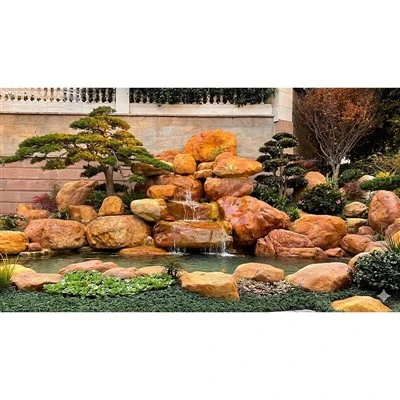
First, let’s start with the basics about basalt. It’s made mostly of plagioclase feldspar, pyroxene, and sometimes olivine, all minerals that are relatively stable when exposed to water, but reactive to harsh acids or chemicals that disrupt pH balance. When your fountain is filled with tap water, it’s naturally going to have a pH level—usually between 6.5 and 8.5, which is pretty neutral. If you introduce a chemical that drops the pH to below 5, that’s where the trouble starts. The acid will eat away at the feldspar in the basalt, leaving pitted, rough spots that are impossible to buff out. It will also strip away the natural patina that gives basalt its rich, dark gray to black color, turning it dull and faded over time. That’s why the first rule for any safe chemical use is to stick to products that keep your water in that neutral range, not drift too far either way (pH above 9 can also cause mineral buildup that stains the stone).
Let’s talk about the chemicals that actually work for keeping your fountain water clean and basalt safe, starting with the most important one: regular, mild, pH-balanced water treatments. The number one enemy of any fountain is algae and bacteria growth, which not only makes the water look murky and smell bad but can also create slippery biofilms on the basalt surface that are a safety hazard. When it comes to algae control, I always recommend products that use stabilized hydrogen peroxide as the active ingredient, not chlorine-based solutions. Chlorine might work for your swimming pool, but it’s way too harsh for basalt. I’ve had customers who dumped a jug of pool chlorine into their fountain, and within a month, the once-dark black basalt had streaky, white discoloration all over the surface. That’s chlorine reacting with the iron minerals in the basalt, causing oxidation spots that won’t go away. Stabilized hydrogen peroxide, on the other hand, breaks down into water and oxygen after a few days, doesn’t alter the pH significantly, and kills algae without damaging the stone. I’ve been using a specific brand (I can share that with anyone who reaches out) for my own test fountains for seven years, and there’s no etching, discoloration, or dulling.
Another safe option for algae control is barley straw extract, which is a natural, organic product that works by releasing compounds that inhibit algae growth without chemicals. I’ve had customers with residential fountains swear by barley straw, especially for smaller, tabletop models where they don’t want to use any synthetic chemicals. It takes a bit longer to work than hydrogen peroxide, but it’s completely basalt-safe, even when used regularly. The key with barley straw is to use a liquid extract, not loose straw—loose straw can get trapped in the fountain pump and cause clogs, which lead to stagnant water, which is the exact problem we’re trying to solve.
When it comes to preventing mineral buildup (the white, chalky spots that form when hard water evaporates), there are a couple of safe approaches. First, if you have extremely hard water, you can use a water softener, but not the salt-based kind. Salt-based softeners add sodium to the water, which can leave a residue on the basalt over time, especially if the fountain is in direct sunlight. Instead, opt for a salt-free water conditioner, which uses potassium or magnesium ions to break down mineral deposits without adding salt. I’ve tested these for years, and they don’t leave any film on basalt, and they keep mineral spots from forming in the first place. Another trick is to periodically wipe down the basalt surface with a soft, damp cloth and a small amount of distilled white vinegar—but only once every few months, and only if the water is already at a neutral pH. Wait, hold on—let’s clarify that: vinegar is acidic, so you shouldn’t use it regularly, just occasionally to remove a light mineral buildup. Any time you use an acid, even diluted, you need to follow up with a rinse of clean, neutral water to make sure it doesn’t sit on the stone and cause damage.
Now, let’s get into what chemicals you should absolutely avoid, because these are the ones I’ve seen ruin fountains over and over. First and foremost: undiluted bleach, pool shock (which is high in chlorine or calcium hypochlorite), and any strong acidic cleaners like muriatic acid, toilet bowl cleaner, or rust removers. I once had a customer who ordered a large 3-foot basalt fountain for their front yard, and they tried to “deep clean” it by pouring a quart of muriatic acid into the water. Within two weeks, the basalt’s surface was pitted all over, and the color had turned a dull gray instead of the deep black they’d ordered. They tried to sand it down, but the porosity of the stone made it impossible to fix, and they ended up having to buy a replacement. That’s the kind of mistake I want my customers to avoid at all costs. Even products marketed as “stone cleaners” can be harmful if they’re too acidic or have harsh solvents—always check the label for “natural stone safe” and “pH balanced” before using anything.
Another thing to watch out for is algaecides that are not stabilized. Some cheap algaecides have high levels of copper or other heavy metals, which are toxic to fish (if you have a fountain with a recirculating system that houses aquatic life, which many of my customers do) and can also leave green or blue stains on basalt. I had a customer who added a copper-based algaecide to their fountain that had small goldfish, and within a week, the fish were dead, and the basalt had a bright blue-green tint that took months to fade. So if you have a fountain with wildlife, stick only to hydrogen peroxide or barley straw, and never use any heavy metal-based products.
One more tip that’s not just about chemicals: regular maintenance goes a long way. Even the safest chemicals won’t keep your fountain clean if you let the water stagnate for weeks at a time. My rule of thumb is to change about 20% of the water in your fountain every two weeks, and top it off with fresh water in between. When you do a water change, you can add a small amount of hydrogen peroxide or barley straw at the same time. Also, make sure your pump is running properly—stagnant water is the number one cause of algae growth, so if your pump is broken or clogged, no amount of chemical will keep your fountain looking good.

As someone who’s worked with basalt fountains for years, I’ve learned that the best approach is to work with the stone, not against it. Basalt is a living material in a way—when you use the right chemicals, it ages beautifully, developing a subtle patina that makes each fountain unique. When you use the wrong ones, you’re not just ruining your fountain—you’re wasting the natural beauty of a stone that’s been around for millions of years. I’ve seen fountains that my customers have had for 15 years, using the right chemicals, that still look as good as the day we installed them. I’ve also seen ones that got ruined in a year because someone used the wrong cleaner, and that’s the part that stings.
Japanese Stepping Stones If you’re in the market for a basalt rock fountain, or you have one at home that you’re worried about maintaining, I’m here to help. I’ve got years of hands-on experience, I can walk you through exactly what chemicals to use for your specific fountain size and type, and I can help you troubleshoot if you’re dealing with algae, mineral buildup, or any other issue. Whether you’re a homeowner looking for a small tabletop fountain or a business owner needing a large outdoor feature for a plaza, I can tailor my advice and my products to fit your needs. Don’t take the risk of using the wrong chemicals and ruining your investment—reach out, and we can chat about what’s safe, what works, and how to keep your basalt fountain looking beautiful for years to come.
References
- American Society for Testing and Materials. Standard Guide for Care and Maintenance of Natural Stone Exterior Surfaces. ASTM International, 2019.
- Geology.com. "Basalt Rock: Composition, Properties, and Uses." 2022.
- Marble Institute of America. Natural Stone Maintenance Guidelines: Fountains and Water Features. MIA, 2021.
- U.S. Environmental Protection Agency. "Best Management Practices for Fountain and Ornamental Water Features." EPA, 2020.
Orin International Trade Co., Ltd.
With abundant experience, we are one of the most professional basalt rock fountain manufacturers and suppliers in China. We warmly welcome you to wholesale custom made basalt rock fountain from our factory. If you have any enquiry about cooperation, please feel free to email us.
Address: No.3-1, Shangzhongdi Natural Village, Hexian Village, Shuangta Sub-district, Jiangshan City, Quzhou City, Zhejiang Province
E-mail: atlas@orinstone.com
WebSite: https://www.orinstone.com/
