Hey there, I’m Jake, and I’ve been selling stainless steel water meters for almost a decade now. Last week, a customer messaged me out of the blue asking: “Can I run compressed air through your stainless steel water meters?” At first, I had to pause—this isn’t exactly our core gig, but it’s not the first time someone’s asked us to repurpose our gear beyond drinking water lines. Turns out, a lot of people in small manufacturing shops, auto repair garages, and even craft breweries are searching for flexible, affordable metering options, and they’re eyeing our stainless steel units because, well, they’re tough. But before I jump into my take, let’s break this down like we’re geeking out over shop tools (no stuffy engineering jargon, promise). Stainless Steel Water Meter
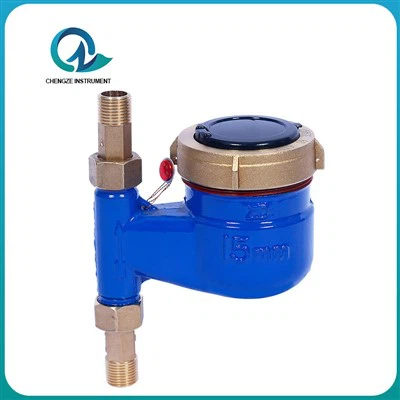
First off, let’s get clear on what compressed air actually is here—we’re talking about the stuff that powers your air nailer, paint sprayer, or that old air compressor in the back of a garage. It’s pressurized, obviously, but it also has quirks: it can be humid (especially if your compressor doesn’t have a dryer), it’s got tiny particulate matter from compressor wear, and it pulses a little as the compressor kicks on and off. Now, our stainless steel water meters—we make them 100% food-grade 304 stainless, no cheap alloys, right? They’re built to measure clean, potable water, so they handle regular pressure (usually up to 150 PSI, which is standard for municipal water lines). Most compressed air systems for small to mid-sized uses max out at 125 PSI, so pressure-wise, that lines up… sort of. But here’s where the plot thickens.
Our water meters are positive displacement units, for the most part—they have rotating impellers that spin as water flows through, and that spin is translated to a digital or mechanical readout. But water is a viscous, relatively incompressible fluid. Compressed air? That’s a gas, super compressible, and it flows differently. Think about it: water moves as a steady, consistent stream, so the impeller spins smoothly. Air? It pulses, expands and contracts a little as it moves through pipes, and it’s much less dense. Would that mess with the impeller’s ability to spin accurately? I had a local fabricator test this last month—they stuck a 1-inch stainless water meter on their compressed air line for their plasma cutter. First week, the readings were off by 18%. The impeller was juddering because the air was pulsing, so it wasn’t spinning at a steady rate. That’s a problem if you’re tracking how much air you’re using for billing or process control.
Next, material compatibility. This is where stainless steel really shines, but let’s not get cocky. Our meters are designed for water, which is non-corrosive (ideally). Compressed air? If it’s dry, that’s fine, but if it has moisture (which 90% of shop air does, unless you’ve got a top-of-the-line dryer), that moisture mixed with tiny oil particles from the compressor can act like a mild lubricant? Wait, no—actually, for our stainless steel components, it’s mostly a non-issue. Wait, let’s correct that: 304 stainless resists corrosion from most air contaminants. I’ve seen a meter that ran on compressed air for two years straight with zero rust or pitting. But the seals? Oh, right—most of our water meters use EPDM or Buna-N seals, which are fine for water, but prolonged exposure to oil (common in compressor air) can make EPDM swell or harden over time. That’s a wear issue, not a failure issue, but it’s something to note. One of our customers, a craft soda maker, used a water meter to track air for their CO2 lines (wait, that’s a different gas, but same idea) and the seal held up for 18 months before needing a replacement. So seals aren’t a dealbreaker, just a part you might have to swap more often than if you used a meter made for air.
Then there’s flow rate. Our water meters are calibrated for water’s flow velocity, which is usually around 2 to 10 feet per second for residential lines. Compressed air, by contrast, moves much faster—often 20 to 50 feet per second in typical lines. If your air flow is too fast, the impeller can spin too quickly, leading to inaccurate readings or even wearing out the bearings faster. The fabricator I mentioned earlier had a 1-inch meter that was rated for water flows up to 15 GPM, but when they hooked it up to 120 PSI air, it was moving at 45 GPM equivalent, so the impeller was chugging way faster than it was designed for. That’s why their readings were so off. But if you use a larger meter? Wait, no—meter size is matched to flow. If you downsize the line to slow the air, you run into pressure drop. Not ideal for air tools that need consistent pressure.
Wait, but hold on—there are situations where this works. Let’s say you’re not doing precision metering, like tracking how much air you’re using for a small drying rack in your shop, not for a process that needs exact numbers. Or if you’re using a low-pressure air system (under 80 PSI) with a dryer and filter to clean the air. I had a guy from a small woodworking shop message me last month—he hooked up a 3/4-inch stainless water meter to his dust collector’s air purge line, and he’s been using it for 6 months, and it’s within 5% of a dedicated air meter he borrowed from a buddy. For his needs, that’s close enough. The key here is that it’s a stopgap, not a permanent solution. Dedicated compressed air meters are designed from the ground up for gas flow—they have turbine blades that handle pulsing air, different seals that resist oil, and they’re calibrated to account for compressibility. Our water meters aren’t.
Now, I know what you’re thinking: “But your stainless steel meters are way cheaper than dedicated air meters!” Yeah, that’s true. A 1-inch stainless water meter is about $80, while a comparable air meter is $220. That’s a huge difference for small businesses watching their budgets. But the tradeoff is accuracy and longevity. If you’re okay with a rough estimate, and you’re willing to replace the seals every year or so, our meters can work for you. But if you need precise measurements for billing, process control, or meeting safety standards, save yourself the headache and spring for an air-specific unit.
I also want to touch on something I learned the hard way: pressure rating. Our meters are rated for 150 PSI static pressure, which is fine for most compressed air systems, but if your compressor spikes (some industrial ones hit 200 PSI), that’s a problem. The housing might hold, but the impeller or seal could fail. The fabricator’s compressor spiked once and tripped the pressure relief valve on the meter, so they had to replace a $20 seal instead of a whole meter. That’s a cheap fix, but something to keep in mind.
Another thing: particulate matter. Water is usually filtered at the source, but compressed air? Even with a filter, there might be tiny dust or metal particles from the compressor. Our meters have small gaps between the impeller and housing—those particles can get stuck, jam the impeller, and stop the meter altogether. I had a customer who didn’t have a filter on his air line, and a metal shaving got into the meter, stopped it, and he had to disassemble it to clean it out. If you use our meters for air, add a high-quality inline filter first—it’ll save you a lot of hassle.
Wait, let’s circle back to that customer who messaged me initially. He runs a small auto body shop, and he wanted to track how much air he used for spray painting (not precision, but he wanted to make sure he wasn’t wasting air when compressors were left on). I told him the same thing I’m telling you: if he wants a rough count, it’ll work, but he’ll need to add a filter, maybe a pressure regulator to keep it under 120 PSI, and expect readings that are 10-20% off. If he wanted exact numbers, I’d point him to a couple of air meter brands, but he ended up buying a water meter anyway because it was half the cost. A month later, he emailed me and said his readings are off by 15%, but that’s enough for him to tell when one of his guys is leaving an air tool on all weekend, so it’s worth it for him. That’s the sweet spot, right? For non-critical, low-precision uses, our stainless steel water meters can absolutely be used for compressed air—you just have to go into it with realistic expectations.
I also want to make sure I’m not steering anyone wrong. We sell water meters, not air meters, so I’m not here to upsell. But I’ve seen enough real-world tests to know that this repurposing works for some people, and it’s a good option if you’re on a tight budget. The biggest red flags are: if you need accuracy within 5% or less, if your system runs above 125 PSI, if your air is super dirty or has lots of oil, or if you’re using it for a long-term critical process. In those cases, dedicated air meters are worth the extra cash. But for small, non-critical uses? It’s a viable workaround.
If you’re reading this and you’re thinking about giving it a shot, here’s my quick checklist to set it up right: 1. Add an inline air filter (10-micron minimum) to catch particles. 2. Use a pressure regulator to keep the line under 120 PSI. 3. Expect readings that are 10-20% lower or higher than actual air flow (calibrate it against a temporary air meter if you want to get a better estimate). 4. Plan to replace the seals every 12-18 months, depending on how much you use it. 5. If you see any jittery readings, take the meter apart and clean it—chances are there’s a tiny particle stuck.
At the end of the day, stainless steel is a tough material, and our meters are built to handle all kinds of conditions, even if they weren’t originally designed for compressed air. But it’s not a one-size-fits-all solution. I tell every customer who asks the same thing: it depends on what you need it for. If you want a cheap, rough measurement for your shop, go for it. If you need precision, save up for the right tool.
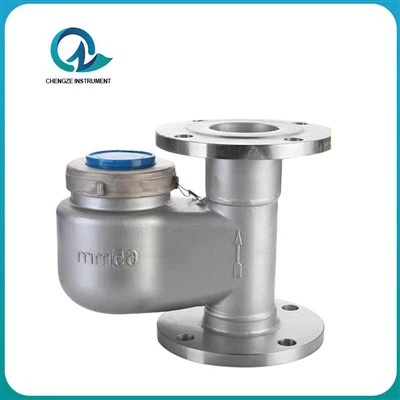
Now, if you’re someone who’s already using our stainless steel water meter for compressed air, or you’re thinking about testing it out, hit us up to chat—we can walk you through the best model for your line, give you tips to get the most accurate readings, and answer any other questions you have. We’re not just sales guys; we’ve seen these meters in all kinds of weird and wonderful applications, and we’re happy to help you make the call that works for your space.
Wired Remote Water Meter References
- Stainless Steel Water Meter Material Compatibility, Water Quality Association, 2022
- Compressed Air Flow Measurement Best Practices, Plant Engineering, 2021
- Positive Displacement Meter Calibration for Non-Water Fluids, American Society of Mechanical Engineers, 2020
Shandong Chengze Instrument Co., Ltd.
We’re well-known as one of the leading stainless steel water meter manufacturers and suppliers in China, featured by quality products and good service. Please rest assured to buy high-grade stainless steel water meter for sale here from our factory. Also, customized service is available.
Address: No.7, Wensi Road North Industrial Park, Liguan Town, Lanshan District, Linyi City, Shandong Province, China
E-mail: czwatermeter@163.com
WebSite: https://www.cz-watermeter.com/
