Hey there, if you’ve got a drainage grate project – whether it’s for fixing a spot in your warehouse, sizing a new one for a backyard patio drain, or swapping a worn grate in a commercial parking lot – at some point you’re probably going to run into a problem: the grate you ordered doesn’t fit the space exactly. Don’t worry, you’re not alone. As a drainage grate supplier who’s fielded way too many panicked calls from folks staring at a too-big or too-small grate in their garage, I’ve learned that cutting metal grates isn’t rocket science – but skip the right steps, and you’ll end up with a wobbly, leaky mess that defeats the whole purpose. Drainage Grate
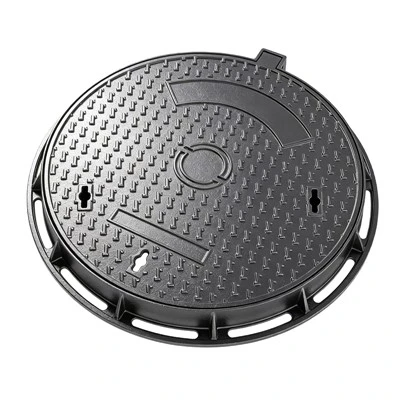
First off, let’s get one thing straight: not all metal grates are made equal. Most of the ones we supply are either cast iron, galvanized steel, or stainless steel – the three workhorses for drainage. Each cuts a little differently, so I’ll break this down based on the most common types we see. If you’re working with something exotic like aluminum, this still applies for the most part, but note it’s way softer so you’ve gotta go easy.
Let’s start with prep work, because I see so many people skip this and regret it. You can’t just grab a hacksaw and start sawing away – you need to get the exact measurement right, and prep the grate to stay safe.
Step 1: Measure twice, mark once. I know it’s a cliché, but when you’re cutting metal, wrong = waste of time and material. Here’s the thing: most drainage grates have a frame – the lip that sits inside the drain opening. If you cut the grate itself without accounting for the frame, you’ll end up with something too big, and it’ll stick out. Grab a tape measure, measure the inside of the drain frame (not the outer edge), then subtract 1/8 inch from both width and length. That tiny gap gives you room for expansion – metal heats up and expands, especially in sun-exposed spots like parking lots, and if you cut it exactly, it’ll buckle. Mark your lines with a sharpie or a scribe – not a pencil, because pencil marks smudge on metal and your saw will slide right over them. For straight cuts, run a straight edge (like a 4-foot level or a heavy aluminum rule) along your mark to keep your line dead straight. For curved cuts – rare, but sometimes folks need a round grate for a circular drain – use a piece of string to trace a perfect circle, then mark it clearly.
Before you even touch a tool, put on your safety gear. I don’t care if you’re just doing a small project in your backyard – metal shavings fly, sharp edges are no joke, and even a tiny piece in your eye will ruin your day. Grab safety glasses, work gloves (not the thin gardening kind – thick leather or cut-resistant gloves), and closed-toe shoes. If you’re working with power tools, a face shield’s not a bad idea either.
Next, secure the grate. If it’s a small one (under 2ft x 2ft), clamp it to a workbench. Don’t just lay it on the bench – if it shifts mid-cut, your line will be off, and you might slip. For larger grates, set it on sawhorses and weight the edges down with heavy cinder blocks or dumbbells so it doesn’t bounce when you cut. Pro tip from our team: if you’re cutting cast iron, lay a scrap piece of plywood under the grate to catch shavings and prevent scratching the bench.
Now, the actual cutting part – this is where the type of grate matters most. Let’s go through each common type:
Cast iron: This is the heaviest, most durable stuff we supply, used for commercial applications mostly. It’s brittle, so you can’t just whack at it with a sledgehammer unless you’re okay with random chunks breaking off. For cast iron, your best bet is a heavy-duty hacksaw with 18 to 24 TPI (teeth per inch) blades. Lower TPI means bigger teeth, which are better for thick metal – that’s the sweet spot here. Avoid a regular hacksaw with fine teeth, it’ll take forever and dull fast. If you’ve got a angle grinder with a metal cutoff wheel, that’s way faster – just make sure the wheel’s rated for cast iron, not just steel. Go slow, apply steady pressure, don’t force the saw or grinder. For small cuts, a reciprocating saw with a metal blade works too – just use a bi-metal blade (way stronger than all-metal) and clamp the grate extra tight. One big mistake people make with cast iron: they cut too fast, and the metal gets so hot it warps. Stop every 30 seconds or so to let it cool, and you’ll save yourself a lot of hassle.
Galvanized steel: This is the most popular type we sell for residential and light commercial use – it’s affordable, rust-resistant, and easy to cut. Galvanized steel is thicker than cast iron? No, wait – no, cast iron is denser, but galvanized steel is a bit more flexible. For this, a hacksaw with 24 TPI works, but an angle grinder with a cutoff wheel is way quicker. If you’re using a reciprocating saw, a regular bi-metal blade will work here too. Just keep in mind: the galvanized coating is zinc, and when you cut it, it gives off fumes. Make sure you’re working in a well-ventilated area – don’t do this in your garage with the door closed. Also, once you cut it, the exposed metal will rust if you don’t touch it up. We sell touch-up spray paint for galvanized grates, so keep that in your toolbox after cutting.
Stainless steel: This is for heavy-duty, corrosive environments – like near a pool, a food processing plant, or a coastal area where salt air will eat through regular steel. It’s the most difficult to cut because it’s super hard and sticky – it gums up blades fast. For stainless steel, don’t waste time with a regular hacksaw blade. You need a bi-metal blade with high cobalt, or a carbide-tipped blade – they cost a little more, but they’ll last 10x longer. An angle grinder with a stainless steel cutoff wheel works too, but again, make sure the wheel’s rated for stainless, not just metal. If you’re using a reciprocating saw, go for a 14 to 18 TPI bi-metal blade, and go slow – if you rush, the blade will bend or break. And don’t forget the fumes here too – stainless steel cutting fumes aren’t great, so ventilation is key.
Wait, what about if you need to cut a grate that’s got a lot of crossbars? Those little bars that make up the grate pattern – how do you cut around them? Easy. Instead of trying to cut straight through each bar, mark your line so it runs along the bars, not through them. If your mark crosses a bar, just cut the bar halfway, then cut the other half from the opposite side – that way, you don’t have to saw through the entire grate in one go, and it’s less likely to warp. For example, if your line is 1ft from the edge and it crosses a crossbar at 6 inches, cut from one end of the grate to the middle of the bar, then flip the grate and cut from the other end to the middle. That small break makes the cut way smoother.
Once you’re done cutting, you’ve got a sharp edge there – you can’t just leave it, because it’ll scratch your hands, or scratch the drain frame when you install it. Grab a metal file (a half-round file works great for this) and smooth down the cut edge. If you’ve got an angle grinder with a grinding wheel, that’s faster for big edges, but a file works for small projects. Pro tip: we always recommend rounding the corners of the cut grate a little too – sharp corners can catch on debris, or even break off if someone bumps them.
Now, after you cut it, test the fit. Set the grate into the drain frame, and make sure it sits level. If it’s still a little too big, don’t panic – you can always sand the edge down a bit more with a wire brush or sandpaper. If it’s too small, well… you’ll have to cut another one, but that’s why we told you to measure twice.
Wait, let’s cover some common mistakes that people make, because these are the things that turn a simple cut into a headache. First, not accounting for expansion. I mentioned that earlier – if you cut the grate exactly to the frame size, when the metal heats up in the summer, it’ll expand and get stuck, and maybe even crack. That gap of 1/8 inch is non-negotiable. Second, using the wrong blade. We’ve seen people use wood-cutting blades on metal – that’s a disaster. Wood blades have big, wide teeth that will grab the metal, skip, and make a mess. Third, not securing the grate. If it moves when you cut, your line will be off by an inch, and you’ll have to start over. Fourth, skipping safety gear. I’ve had a customer come to our counter once with a tiny metal sliver stuck in his eye – he skipped safety glasses, and it wasn’t fun. Don’t be that guy.
Now, what if you don’t want to cut it yourself? A lot of folks don’t have the right tools, or they’re nervous about messing it up. That’s totally fine – we offer custom cutting services for all the grates we supply. You just send us your dimensions, tell us what type of grate you want, and we’ll cut it to size, smooth the edges, and even touch up the finish if needed. No more guessing, no more wasted material.
At the end of the day, cutting a metal drainage grate is all about prep, the right tools, and taking your time. Rushing is how you mess up – take 10 extra minutes to measure, clamp the grate tight, and go slow when you cut. If you’re working with the wrong type of grate, or you just don’t have the tools, reach out to our team – we’ve got years of experience cutting grates for every project you can think of, from residential backyard drains to commercial warehouse parking lots. We can help you pick the right grate for your space, cut it to the exact size you need, and make sure it fits perfectly and lasts for years.
If you’re ready to get started or have questions about your project, get in touch with our team to chat through your needs and place an order. We’re here to help make your drainage project as smooth as possible.
Ductile Iron Manhole Cover References
- Metalworking Safety Handbook, Occupational Safety and Health Administration (OSHA), 2022.
- Drainage Grate Installation and Maintenance Guidelines, National Association of Water Companies, 2021.
- Cutting Tools for Metal Work, American Society of Mechanical Engineers (ASME), 2020.
- Galvanized Steel Coating Fume Exposure, Environmental Protection Agency (EPA), 2023.
Hangzhou Hongkun Municipal Engineering Co., Ltd.
We are one of the most experienced drainage grate manufacturers and suppliers in China, also accept customized orders. We warmly welcome you to wholesale bulk high quality drainage grate in stock here from our factory. If you have any enquiry about quotation, please feel free to email us.
Address: No.666, Jiuheng Road, Shangcheng District, Hangzhou City, Zhejiang Province
E-mail: tsxhxw@126.com
WebSite: https://www.hkmuni.com/
