What’s up, stone lovers and interior peeps? If you’ve ever walked into a fancy bathroom, a cozy café, or a high-end kitchen and stopped dead in your tracks over those warm, creamy, hole-punched stone tiles… yeah, that’s travertine. I’ve been selling this stuff for over a decade now, and let me tell you, most folks come to me thinking it’s just another pretty marble or limestone. Nah, travertine’s got a super specific origin story, and once you know that, you’ll look at every slab a little differently. Travertine

I started out as a kid hanging around my uncle’s stone yard back in Italy, where travertine is practically a local staple. Back then, I just saw slabs—warm beiges, soft creams, even that rusty terracotta stuff. No one told me back then that it’s formed in places that look like something out of a fantasy novel: hot springs, caves, and ancient riverbeds where water’s chock-full of minerals. Let me break this down like I’d break it down to a first-time buyer, no boring textbook jargon, I promise.
First off, travertine is a type of sedimentary rock? Wait, no—wait, actually, it’s classed as a chemical sedimentary rock, which is just a fancy way to say it forms when minerals drop out of water, right? Not from sand piling up like sandstone. The main mineral here is calcite, same as limestone, but travertine’s whole vibe comes from how that calcite gets deposited over time, usually in super hot, geologically active areas. Think the Roman countryside, parts of Turkey, even some spots in the US like Yellowstone.
Here’s the process, step by step, and it’s wild to wrap your head around. Start with groundwater—rain that soaks deep into the earth, heating up from the planet’s core, right? As that water heats, it dissolves all kinds of stuff from the rock it passes through, but the big one here is calcium carbonate. That’s the same stuff that makes up seashells and chalk. So now you have this super hot, mineral-rich water, just chugging along underground, until it hits a crack or a spring vent that brings it up to the surface.
When that hot water hits air, a crazy thing happens: carbon dioxide gas starts bubbling out, like when you shake a soda can and open it. That CO2 was keeping the calcium carbonate dissolved in the water, right? So when it leaves, the calcium carbonate can’t stay mixed in anymore. It starts crystallizing, and that’s how travertine forms, layer by layer, for thousands or even millions of years.
Now, why all the holes? That’s the best part. As the calcite crystallizes, little pockets get trapped where gas bubbles were still escaping, or where plant debris, tiny shells, or even bugs got stuck in the soft, forming rock. Wait, no—actually, most of the pores come from the CO2 bubbles that were leaving when the water hit the surface. Imagine blowing bubbles into soapy water; those little holes are exactly what travertine is made of. Sometimes those pores are tiny, other times they’re big enough to fit a finger, which is why old travertine often gets filled with epoxy or resin when we process it for countertops or tiles. But some people like the natural holes—they add that rustic, lived-in look that’s been trendy for decades.
I’ve seen travertine formations in person, let me tell you. Last year, I was touring a quarry in Tuscany, the same place where they’ve been cutting travertine since Roman times. We hiked up to a natural spring that’s still forming travertine today—you could see layers of soft, white rock building up right there, and the water was so warm I could put my hand in it for only a second or two. The quarry workers told me that some of the slabs we cut are from formations that started 10,000 years ago, way before the Roman Empire even existed. That’s wild, right? You’re selling something that’s been around longer than human civilization.
Wait, let’s clear up a common mix-up too. A lot of people call travertine “marble,” but no—marble forms when limestone gets heated and compressed underground, way deeper than travertine’s shallow spring and cave origins. Travertine’s much softer than marble too, which is why it’s not great for super high-traffic areas like entryways where people drag heavy dirt and shoes, but perfect for kitchen backsplashes, bathroom floors, accent walls—places where it gets looked at, not beaten up.
Another thing I get asked all the time: why does travertine come in so many colors? It’s all about what other minerals are in the water when it forms. If there’s iron oxide, you get those warm rusty reds and terracottas. If there’s magnesium, you get paler, almost gray-tinged creams. Even manganese can give it that soft pink hue. The quarry I mentioned in Tuscany has like 15 different travertine colors, all from the same general formation, just a few feet apart in the quarry. It’s crazy how nature does that.
Now, as a supplier, I’ll be real with you—travertine isn’t as easy to work with as some other stones, but that’s part of its charm. Those natural pores mean you have to seal it properly when you install it, otherwise it’ll stain if you spill wine or coffee. That’s one of the first tips I give every customer: if you go with travertine, don’t skip the sealer. But when it’s sealed right, it lasts forever. I’ve got a customer in Miami who installed travertine tiles in her beach house 20 years ago, and they look as good as the day she put them in. That’s the thing about travertine—once it’s in your space, it’s there for life.
Wait, I should also mention that not all travertine is from hot springs. Some forms in caves too, right? It’s called cave travertine, and that’s what stalactites and stalagmites are made of. Same calcite deposits, just forming slowly inside caves where mineral-rich water drips from the ceiling. A lot of people don’t know that, so that’s always a fun fact to drop at a trade show.
I’ve been in this business long enough to see travertine go in and out of style, but it never really dies. Back in the 90s, it was everywhere for those big, rustic kitchen designs. Then it got a little passe, but now it’s back bigger than ever for modern boho, minimalist, even industrial spaces. The key is you can use it any way—polished for a sleek look, filled and tumbled for that vintage, worn feel, even left unfilled for that raw, natural vibe.
If you’re reading this, chances are you’re either renovating a space, sourcing stone for a project, or just curious about where that pretty holey tile comes from. I’ve worked with everyone from small homeowners looking for a bathroom accent wall to big commercial contractors needing travertine for a hotel lobby. No order is too small or too big for us. We can source custom cuts, different finishes, any color you want—we’ve got access to quarries all over the world, not just Italy.
Wait, let’s circle back to how it’s formed one more time, because it’s easy to gloss over, but it’s the whole reason travertine is special. Unlike granite, which forms from volcanic rock cooling deep underground, or marble from metamorphosed limestone, travertine is a surface-level rock, formed by the interaction of groundwater and air. It’s constantly being made, even today—those hot springs I was at in Tuscany are still depositing travertine every single day. That’s why it’s such a sustainable stone choice, too—nature’s still making more, we’re just cutting it in quarries instead of letting it build up over thousands of years. That’s a big selling point for a lot of eco-conscious customers, and it’s something I always highlight when I’m talking to people.
I think the biggest mistake people make with travertine is treating it like any other imported stone. It’s got a personality, right? Each slab is unique—those pores are never the same, the color variations are never identical. You can’t just pick a “standard” beige travertine; no two batches are exactly alike. That’s part of the joy of using it. It’s not a mass-produced tile from a factory; it’s a piece of Earth’s history, cut and polished to show off what nature made.
If you’re in the market for travertine, or just have questions about how it works, don’t hesitate to reach out. I’ve got years of experience, I know the ins and outs of every quarry we work with, and I can help you pick the right color and finish for your project, no matter how big or small. Whether you’re doing a tiny powder room backsplash or a whole commercial building, we’ve got you covered.
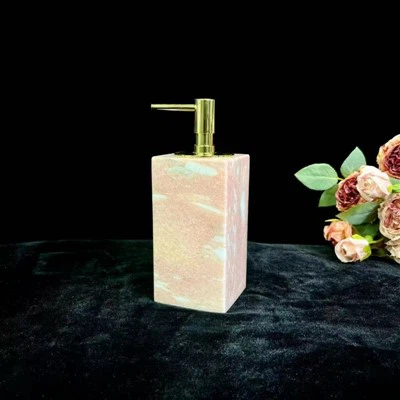
At the end of the day, travertine’s origin story is what makes it more than just a building material. It’s a rock that was born in hot springs and caves, formed over millennia, and now it’s warming up homes and spaces all over the world. That’s the cool part about working with stone—you’re not just selling a slab, you’re selling a piece of that natural story. If you want to learn more, or grab a sample to see for yourself, get in touch with our team to discuss your specific needs.
Pebbles References:
- Geological Society, London. (2015). Sedimentary Rocks: Chemical and Biochemical.
- Ford, T. D., & Williams, P. W. (2007). Karst Hydrogeology and Geomorphology. John Wiley & Sons.
- Quarry Operations International. (2022). Travertine Formation and Global Quarrying Practices.
- Italian Stone Confederation. (2021). Travertine: A Historical and Geological Overview.
Xiamen Yigong Import and Export Co., Ltd.
As one of the most professional travertine suppliers in China, we also support customized service. With abundant experience, we warmly welcome you to buy high quality travertine for sale here from our factory. For price consultation, contact us.
Address: No.850-2 Xingxi Road, Houxi Town, Jimei District, Xiamen
E-mail: ella@xmyigong.com
WebSite: https://www.yigongstone.com/
