When I first started selling elevator guide systems, I mostly worked with office buildings, residential skyscrapers, and hotels. Those were the easy clients—projects I’d bid on that were straightforward, predictable. Then, a couple years back, a maintenance manager from a medium-sized industrial warehouse hit me up on LinkedIn, asked if my guide systems would work for their new loading dock elevator, the one that hauled pallets of parts up and down three floors every hour. I’ll admit, I almost wrote him off. Industrial buildings felt like a totally different world, full of heavy equipment, dust, constant use that most elevators (and their parts) weren’t built to handle. But I said yes, met him on-site, and that conversation changed how I see my product entirely. Elevator Guide System

So let’s cut to the chase: Can an elevator guide system be used in industrial buildings? The short answer is a resounding hell yes—if you’re picking the right one, not the generic off-the-shelf stuff you’d use for a 10-story office. Most people picture guide rails as just those metal tracks an elevator car slides along, and that’s part of it, but industrial environments throw way more variables at the system than a fancy downtown high-rise ever will. Let’s break this down, from what industrial elevators actually need, how our guide systems fit, and why this market’s been a game-changer for both my business and the facilities that use them.
First, let’s talk about what makes industrial elevators different. Office elevators run maybe 15 trips an hour, peak time rush. Industrial elevators? I’ve seen ones that run 24/7, 100 trips an hour, hauling 5,000-pound pallets, forklifts, even large machinery. They’re not moving people—well, occasionally they do, but the main job is moving heavy, awkward cargo that doesn’t care about smooth rides. Then there’s the environment. A food processing plant? Steam, grease, constant cleaning with high-pressure hoses that’d eat through uncoated metal. A manufacturing shop? Metal shavings, dust, humidity that rusts anything left out. A logistics warehouse? Outdoor exposure, temperature swings from freezing winter nights to 90-degree summer days, rain, maybe even road salt tracked in by forklift tires. Standard residential guide rails? They’re coated with a basic paint, meant to hold up to light use and occasional dust. That’s not enough for industrial.
Wait, let’s use that warehouse example I mentioned earlier. The maintenance guy there—let’s call him Joe for simplicity, his actual name’s Bob, but Bob’s more approachable—told me his old elevator had to have its guide rails replaced every 18 months. The warehouse runs 16 hours a day, six days a week, hauling pallets of auto parts. The old rails were standard cold-rolled steel, no extra coating, and the metal shavings from the parts would get trapped in the gaps between the rail and the elevator’s guide shoes, causing friction, wear, even jams. That’s a huge problem—if an industrial elevator’s down, the whole loading dock stops. No pallets get moved, no shipments go out, that’s thousands of dollars lost per hour.
So what did we bring him? Our industrial-grade guide system, specifically the high-wear variant we developed a few years back. Let’s not get too techy, but here’s the key bits: First, instead of cold-rolled steel, we use carbon steel with a chrome-moly coating—way harder, more resistant to abrasion from metal shavings, dust, whatever. Then, the guide shoes aren’t the plastic or rubber ones you see in office elevators—they’re hardened steel with a self-lubricating insert. That’s a game-changer because it eliminates the friction that causes wear and noise, and it pushes any debris that gets caught out to the sides, not between the rail and the shoe. We also added a modular design, so if a section of rail does get worn (rare, but it happens), you don’t have to replace the whole 30-foot rail. You just swap the one bad section in 20 minutes, instead of hours of tearing out old rail. That’s what Bob needed.
A year later, he hit me up again to say that elevator’s still running, no replacements, no major issues. That’s when I realized industrial buildings aren’t just a side gig—they’re a huge, underserved market. A lot of elevator companies only focus on office and residential, so they treat industrial as an afterthought. But facilities managers know: cutting corners on elevator parts means downtime, and downtime in industrial? That’s not an inconvenience, it’s a cost that eats into margins fast.
Wait, let’s talk about another use case, because not all industrial buildings are warehouses. There’s the chemical processing plant I worked with last year. Their elevator had to handle corrosive fumes, constant cleaning with chemical cleaners that’d dissolve regular metal. Standard guide rails would’ve rusted through in a year. We offered our stainless steel guide system, with a passivated coating that resists chemical corrosion. And because the plant runs 24/7, they can’t shut down the elevator for repairs—so we also added remote monitoring sensors in the guide rails. Those sensors track how much wear the rail’s getting, temperature, even vibration. So the maintenance team can pull data on their phone, no need to send someone up to the top of the elevator shaft every week, and they can schedule replacements during a planned shutdown, not when the elevator just jams mid-shift and brings production to a halt. That’s something most small elevator companies don’t offer—they’re still in the “call us when it breaks” mindset.
I know a lot of people reading this might be thinking, “Wait, elevator guide systems are just tracks, right? How much can they matter?” But here’s the thing: the guide system is the backbone of the entire elevator. If that part fails, the whole elevator stops. For industrial, that’s not a “wait a day for repair” situation. One of our old clients, a packaging plant, told me that when their old elevator’s guide rails failed, they lost $12,000 in two hours because they couldn’t move finished goods out of the plant to shipping. That’s more than the entire cost of a new guide system. So it’s not an expense—it’s an investment.
Now, let’s address the common myths I hear all the time. First myth: “Industrial elevators need totally custom systems, way more expensive than what you use for offices.” Yeah, no, not anymore. We developed modular industrial guide systems that are built to order, but not so custom that they cost twice as much. The key is matching the grade of the rail and the components to the exact environment, not overbuilding (though, let’s be real, overbuilding’s not the worst thing when downtime’s on the line). For most industrial applications, our mid-grade industrial guide system is 20% more expensive than standard office guide rails, but it lasts 5 times longer, cuts maintenance time by 70%, and reduces unplanned downtime to almost zero. That math adds up fast.
Second myth: “Industrial buildings already have their own elevator parts, so why would they buy a guide system from a vendor like me?” Because if your existing guide system’s failing, replacing just the rails is way cheaper than replacing the whole elevator. A lot of facilities managers think, “Oh, I need a new elevator,” when really, they just need a better guide system. I’ve had people come to me with 10-year-old elevators that run perfectly fine, just the guide rails are worn out, causing all the problems. We swap those rails, add the right shoes and coating, and the elevator runs like new for another 10 years. No need to spend $100k on a new elevator. That’s a huge win for small to medium industrial facilities that don’t have big budgets for upgrades.
Third myth: “Guide systems are only for new elevators, you can’t retrofit them into existing industrial buildings.” That’s not true, at all. A lot of industrial facilities have older elevators installed when the building was built 20, 30 years ago, and they don’t want to tear the whole thing out. We do retrofits all the time. Last year, we retrofitted a 25-year-old elevator in a auto manufacturing plant. The old guide rails were bent, the shoes were worn, the whole elevator would shake when moving heavy pallets. We swapped out just the rails and shoes, added the remote sensors, and now the elevator’s smooth, no more jams, and the maintenance team gets alerts when a part needs replacing. The retrofit cost them a third of a new elevator, and it’s been running flawlessly ever since.
Let me also talk about something most people don’t consider: safety. Industrial elevators don’t just move cargo—they also occasionally move maintenance workers, inspectors, even employees. If the guide system fails, the elevator can derail, which is a huge safety hazard. OSHA has strict rules for elevator safety in industrial buildings, and using a substandard guide system is one of the top violations I see on facility inspection reports. So it’s not just about reducing downtime—it’s about staying compliant, avoiding fines, and keeping workers safe. Our guide systems meet all OSHA and ASME standards, specifically tailored for industrial use, not the generic ones meant for offices. That’s a big deal.
Now, I know some of you are still on the fence. Maybe you’re a facilities manager at an industrial site, or a maintenance supervisor tired of dealing with elevator breakdowns, or even a small business owner who just realized their loading dock elevator’s causing you to lose money every time it’s down. Let’s be real, I’m not here to sell you a $10k guide system if you don’t need it. But I am here to say that skipping a good industrial guide system is the mistake that’ll cost you way more in the long run. I’ve seen it too many times: a facility goes with the cheap guide rails, they save $2k upfront, and then they end up paying $15k in repair bills and lost production over the next two years. That’s not a win.
Wait, let’s circle back to Bob, the warehouse manager I mentioned earlier. He told me after six months of using our guide system, he calculated that he’d already saved $8,000 in downtime costs compared to the year before. He even used that savings to upgrade another elevator in the warehouse. That’s the kind of thing I love—this isn’t just a transaction. It’s helping people keep their operations running smoothly, not dealing with the stress of a broken elevator every other month.
So, to answer the original question: Can an elevator guide system be used in industrial buildings? Absolutely. The only catch is that you can’t use the same generic one you’d put in a downtown office. Industrial environments demand a guide system built to handle heavy loads, rough conditions, constant use, and strict safety rules. We’ve spent years refining our industrial-grade guide systems to fit exactly those needs, and we’ve worked with everything from small 2-story manufacturing shops to large distribution centers with 50-foot elevators running 24/7.
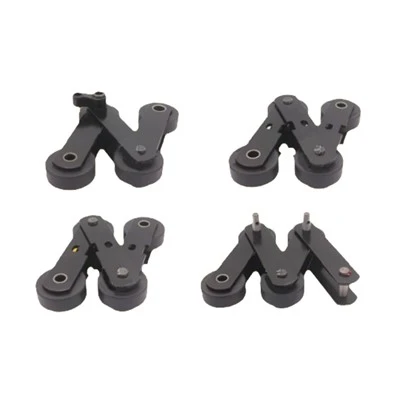
If you’re dealing with an industrial elevator that’s breaking down too often, costing you lost production, or not meeting safety standards, we can help. We don’t do one-size-fits-all here—we’ll look at your specific building, your elevator’s usage, the environment it’s in, and put together a guide system that fits your needs and your budget. No jargon, no confusing contracts, just a system that works. Reach out to us to talk through your needs, get a quote, or even schedule a site visit. We’re here to make your elevator run, not give you another headache.
Elevator Door System References
- Occupational Safety and Health Administration (OSHA). “Elevator Safety Standards for Industrial Applications.” U.S. Department of Labor, 2023.
- American Society of Mechanical Engineers (ASME). “Safety Standard for Elevators and Escalators (ASME A17.1).” 2024 Edition.
- National Elevator Industry, Inc. (NEII). “Industrial Elevator Maintenance and Performance Best Practices.” 2022 Industry Report.
- “Industrial Elevator Downtime Cost Analysis.” Facility Maintenance Decisions Magazine, October 2023.
- Guide to Modular Retrofit Systems for Industrial Elevators. Elevator World Journal, June 2024.
Huzhou Kenai Elevator Technology Co., Ltd.
As one of the most professional elevator guide system manufacturers and suppliers in China, we also support custom service. We warmly welcome you to wholesale advanced elevator guide system made in China here from our factory. For more cheap products, contact us now.
Address: No. 6666, Qianghua West Road, Dongqian Street, Nanxun District, Huzhou City, Zhejiang Province, China
E-mail: info@kenailift.com
WebSite: https://www.kenaielevator.com/
