Hey there, fellow landowners, fence crews, and anyone who’s ever stared at a pile of 8-foot wooden posts, a bucket of concrete, and a patch of rocky ground and thought “this is gonna take way longer than I expected”—today we’re diving into a question I get at least three times a week from folks checking out our mini skid steers: Can a mini skid steer actually work for fence installation? Mini Skid Steer

Let me start with the unfiltered truth—when I first sold my beat-up old full-size skid steer and started this business selling small, nimble mini skids to people who don’t need a construction yard’s worth of equipment, I rolled my eyes when a fence contractor hit me with this exact question. “My post hole digger has a Kubota engine and a cab,” they’d say, like that makes it better for digging a 4-foot post hole in an overgrown, tight spot. But after spending the last four years watching my machines show up on everything from 10-acre ranch fences to backyard pet barriers, I’m here to tell you: not only can a mini skid steer do fence installation— it might just turn what used to be a two-day headache into a half-day win.
First off, let’s get one thing straight: mini skid steers aren’t tiny toys. These bad boys are 3 to 5 feet wide, weigh between 1,500 and 3,500 lbs, and have enough hydraulic power to run a post hole digger, a grapple, a trencher, even a small concrete mixer attachment. That’s way more grunt than a handheld post hole digger (you know, the ones that leave you with a backache for a week) or a tow-behind unit that can’t fit through a standard gate. And here’s the kicker: most fence work happens in spots full of obstacles—like trees, rocks, or old fence line debris— that a full-size skid steer or a tractor with a backside can’t squeeze into. I had a customer last spring, a rancher in western Ohio, who needed to put up 2 miles of woven wire fence along the edge of his hayfield. The only way to get equipment within 6 inches of the existing fence line was through a 48-inch gate—you guessed it, too narrow for his 70 hp tractor. He rented one of our mini skids, and by the end of day one, he’d dug 120 post holes, set 60 posts, and half-strung the fence. By day three, he was done. He used to say that fence installation was his least favorite chore—now he texts me photos of his finished fences every time he gets a new machine.
But wait, let’s get real—this isn’t “plug and play.” You can’t just show up with a mini skid, a post hole digger, and call it a day. There are ways to make this work, and ways to waste a whole bunch of time and money making it not work. Let’s break down the actual steps of a fence install, and how a mini skid fits (or doesn’t) into each one.
First up: site prep. Before you dig a single post hole, you’ve got to clear the line—pull old posts, cut down small saplings, move rocks that are big enough to mess up your auger. A mini skid’s bucket is perfect here. It’s not too big to yank out a rotting 10-inch fence post without tearing up the surrounding grass, but it’s strong enough to lift a 500-lb rock that would take two guys to heave. I recommend our customers pair the mini skid with a root grapple attachment for site prep—way less likely to scratch your new truck when you’re loading debris, and way more efficient than a shovel or a rake. One of our smaller customers is a guy who puts up backyard dog fences for a living; he uses his mini skid’s grapple to clear brush around 100-foot backyard lines in 10 minutes flat, instead of an hour with a trimmer and a trash bag. That translates to more jobs, more cash, less sore knees.
Next: digging post holes. This is where most people ask me, “Why not just use a handheld auger?” Let’s do the math. A handheld gas auger takes 5 to 10 minutes to dig a single 4-foot hole, and that’s if the ground is soft. If you hit a small rock? Half an hour. If you have 200 posts to dig? That’s 20 hours of backbreaking work. A mini skid with a hydraulic post hole auger? We’re talking 30 seconds to a minute per hole, even in compacted soil or with small rocks. The hydraulic power is consistent—no dying halfway through a hole because you ran out of gas on your handheld. The only catch here is: match the auger size to the post size. For 4×4 wood posts, you need an 8 or 10-inch auger. For steel T-posts? Wait, you don’t even need a auger for T-posts—most mini skids can run a post driver attachment, which drives T-posts into the ground in 10 seconds flat, no hole needed. That’s a game-changer for perimeter fences where you’re using T-posts every 10 feet. I had a customer who installs security fences for commercial properties—he used to drive T-posts with a sledgehammer. Now he uses a mini skid post driver, and he can drive 150 T-posts in an hour, compared to 8 hours of pounding. He told me he’s cut his labor costs for T-post fences by 70%—and that’s not a number I make up.
Then there’s setting posts. Once the hole is dug, you need to lower the post in, add concrete or gravel, and make sure it’s straight. A mini skid’s lift capacity varies, but our mid-size model can lift a 10-foot 4×4 post without breaking a sweat. You can use the grapple attachment to cradle the post, lower it exactly into the hole, and even hold it steady while you pour concrete—no need for two guys to hoist a post and hold it. For setting posts in concrete, a tip I give every customer: use the mini skid’s bucket to move concrete bags or mix on-site if you don’t want to haul in ready-mix. We sell a small concrete mixing attachment that fits right on the mini skid, so you can mix 2 cubic feet of concrete at a time, dump it into the hole, and pack it down with the bucket. Way more precise than dumping a whole bag and hoping it spreads.
Now, let’s talk about the downsides, because I’m not here to sell you a unicorn. Mini skid steers are small, so their weight limit is lower than full-size equipment. That means if you’re digging 3-foot deep holes in hard, clay-rich soil that’s full of big rocks, you might need a bigger model. Our biggest mini skid has 2,500 lbs of operating weight, which is enough for 10-inch augers and compacted soil, but if you’re working in a construction site with bedrock? A mini skid’s not gonna replace a full-size skid steer or a drill. Also, you have to be careful with ground slope. Most mini skids can handle a 20-degree slope, but anything steeper than that and you risk tipping—so if you’re putting up fence on a hillside that’s straight up and down, you might need to go with a different type of equipment, or get a tracked mini skid (we have those, by the way, for soft or steep ground). Another thing: you have to know how to operate one. This isn’t a lawnmower you can pick up and use in 10 minutes. I always tell new customers to take a 2-hour training session, or at least watch a few YouTube videos (and I have a whole playlist on our channel for fence installs with mini skids) before they show up to a job. I’ve seen guys rent a mini skid, skip the training, and accidentally dig a hole in the middle of a customer’s flower bed—so training is non-negotiable.
Wait, let’s talk about some real-world examples, because stats are great, but actual stories are better. Last summer, I had a guy named Jake who runs a small fencing company in southern Indiana. He’d been using a full-size tractor and a tow-behind auger for years, but he was tired of not being able to fit into tight spaces and the constant repairs on his big equipment. He rented one of our mini skids for a month, tested it on a 5-acre pasture fence, and then bought one. His numbers? Before, he’d do 2 acres of pasture fence a week with two guys, working 10-hour days. Now, with the mini skid, he can do 3 acres a day with one guy. He told me he’s making $1,500 more per week on jobs he couldn’t even take before because his old equipment was too big. Another example: a homeowner in Colorado who put up a 1,000-foot fence around his property to keep deer out. He did all the work himself over a weekend with a mini skid he bought for his landscaping business. He said he spent $8,000 on the skid, but he would’ve spent $12,000 on a professional fence install—so he made his money back in one job. That’s the kind of ROI that makes mini skids worth it for fence work, whether you’re a pro or a DIYer.
I also want to address the elephant in the room: cost. A lot of fence guys will say, “A mini skid is too expensive for my small jobs.” Let’s do that math too. A good mini skid for fence work costs between $10,000 and $20,000, depending on the model and attachments. The average fence install job for a residential property is $3,000 to $5,000, and a commercial job is $10,000+. If a mini skid cuts your labor time by half, you can do twice as many jobs in the same month—so the equipment pays for itself in 6 to 12 months, if not faster. For DIYers, renting a mini skid for a day is $150 to $250, which is way cheaper than paying a professional to do the same job. I had that Colorado homeowner tell me he saved $12,000 by renting for two days before he bought his own—so you don’t even have to buy one to test if it works.
Wait, one more thing that people don’t talk about: cleanup. After you dig all those holes, you have a ton of dirt and debris to move. A mini skid’s bucket can load all that dirt into a truck or a trailer in minutes, instead of shoveling for hours. And if you’re putting up post-and-rail fence, you can even use the mini skid’s grapple to move the rails and panels into place without lifting them by hand. I’ve seen guys use the mini skid to unload 50 12-foot rails from a trailer in 10 minutes—something that would take two guys an hour and a half. That’s not just efficiency, that’s less wear and tear on your body. No more waking up with a bad back or sore shoulders after a fence install.
Now, let’s wrap this up with the bottom line: Is a mini skid steer good for fence installation? The answer is a resounding yes—if you pick the right model, use the right attachments, and know how to operate it properly. It’s not for every single fence job (like if you’re putting up a fence in a 1-acre yard with super soft, swampy ground, a handheld auger might be fine), but for most jobs that are larger, have tight access, or need a lot of post holes, a mini skid will save you time, money, and a whole lot of pain.
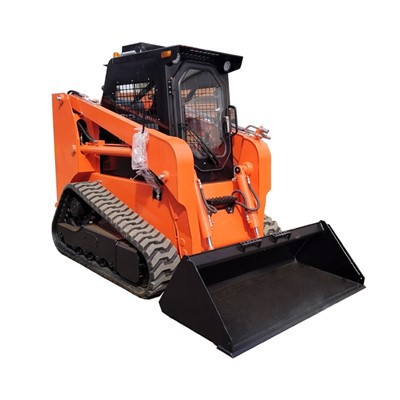
If you’re a fence contractor tired of losing jobs because your equipment is too big, or a DIYer who wants to take on that fence project you’ve been putting off for years, you should hit us up to chat. We don’t do pushy sales stuff—we just give you the real talk on what mini skids can and can’t do for fence work, and help you pick the right model or attachments for your specific job. No fake promises, no hidden fees, just honest advice from a guy who’s been in this game for years and has seen firsthand how mini skids change the fence installation game.
Skidsteer Loader References:
- American Fence Association. (2022). 2022 Fence Industry Equipment and Labor Efficiency Report.
- Compact Equipment Magazine. (2023). Mini Skid Steer Applications for Site Work and Landscaping.
- Occupational Safety and Health Administration (OSHA). (2021). Back Safety for Manual Laborers in Construction Trades.
Taian Luyue Modern Agricultural Equipment Co., Ltd.
Taian Luyue Modern Agricultural Equipment Co., Ltd. is one of the most professional mini skid steer manufacturers and suppliers in China, featured by quality products and low price. Please rest assured to wholesale cheap mini skid steer made in China here from our factory.
Address: No.35 Leigushi East Street, Shengzhuang Town, Taishan District, Taian City, Shandong Province, China
E-mail: 19312334305@163.com
WebSite: https://www.skidintelligent.com/
