Hey everyone, I’m Jake, part of the team here at the industrial air cooler supplier that’s been helping factories, warehouses, and manufacturing spaces beat the heat for over a decade. I get questions every single day from shop managers, plant foremen, and small business owners wondering: “Does the size of my industrial air cooler actually matter, or is it just a box that blows air?” The short answer? It’s way more than a box. The size of your industrial air cooler is one of the biggest factors in how well it works for your space—and picking the wrong size isn’t just an inconvenience, it can cost you money, mess with productivity, and even damage your unit over time. Let’s break this down like we’re chatting over a coffee (no stuffy engineering jargon, I promise) so you can get a clear picture of what’s actually going on. Industrial Air Cooler
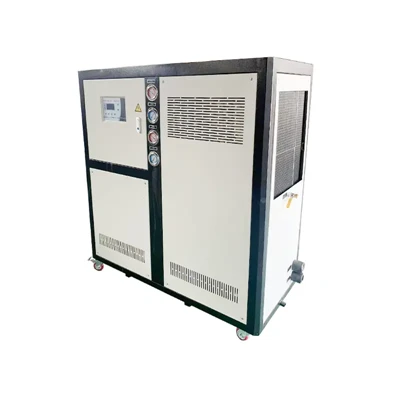
First, let’s make sure we’re on the same page about what “size” actually means here. I know when you hear the word size, you’re probably thinking about how big the unit looks when it shows up on a forklift. That’s part of it, but the real size metrics that matter for performance are airflow capacity (measured in CFM, or cubic feet per minute), cooling pad area, and water tank volume. A lot of folks mix up physical footprint with these specs, and that’s where the first mistake happens. For example, a compact unit might look small, but if it has a CFM rating that’s too low for your space, it’s not going to cut it no matter how neat it fits in your loading dock. Let’s dive into the core performance stuff first: airflow and CFM.
Airflow is the lifeblood of an industrial air cooler. This is the amount of air the unit pulls in, cools down by passing over those porous cooling pads soaked in water, and blows back out into your space. If your cooler is too small for your square footage, its CFM is way too low to circulate air fast enough to make a difference. Let’s take a warehouse I visited last month—20,000 square feet, 18-foot ceilings, used for storing plastic parts. The shop foreman had bought two small portable coolers, each rated for 5,000 CFM, thinking two would be enough. But the space needed at least 30,000 CFM total. What happened? The air was just moving in little circles near the ceiling—none of the cool air was reaching the floor where the workers and inventory were. It felt like the air was just being stirred, not actually cooled. Workers were still reaching for water bottles every 20 minutes, productivity was down because people were sluggish, and the foreman was convinced industrial air coolers “don’t work” even though he just picked the wrong size.
On the flip side, too big isn’t great either. I had another client, a small machine shop with 1,200 square feet and 10-foot ceilings, that bought a unit rated for 15,000 CFM because they thought “bigger is better.” What happened there? The air was moving so fast that it was pulling in too much hot, humid outside air before it could even properly pass through the cooling pads. The humidity level in the shop dropped way too much, but not the temperature—workers felt a drafty chill instead of a nice, consistent coolness. Even worse, the oversized fan was putting more strain on the motor, running 24/7 when it only needed to run half the time, so their electric bill jumped by almost $150 a month. That’s the thing about industrial coolers—they’re not one-size-fits-all, and size balance is everything.
Next up, cooling pad size and area. This is where the physical size of the unit (the footprint) actually does matter, because the cooling pads are the part that actually does the cooling. Think of the cooling pads like the wick in a sponge. If you have a big pad, there’s more surface area for the water to evaporate, which is how the cooler gets colder (evaporative cooling, for anyone who wants the science behind it: when water evaporates, it absorbs heat from the air, so the air blowing out is cooler). A smaller pad means less surface area for evaporation, so the air that comes out is barely cooled at all. Last year, we worked with a food processing plant that needed cool air near their packaging line, which produces a lot of steam from washing containers. They tried a unit with thin, small cooling pads to save space, and the steam just soaked through the pad without evaporating properly—so the air blowing out was humid and felt sticky, not cool. We swapped it for a unit with thicker, larger cooling pads (just a little bigger footprint, not a huge jump) and suddenly the humidity near the line dropped 20% and the air was 10 degrees cooler. Workers said it felt like working in a whole new space.
Water tank size ties into this too, especially if your space is really big or you run the cooler all day. A small tank means you’re refilling every 2-3 hours, which is a pain if you have multiple coolers or a shift that’s 12 hours long. We had a construction site in Texas that had three small coolers for their portable offices and tool storage. Each had a 10-gallon tank, so the guys on shift had to drag water hoses around all day, stopping every hour to top them off. They swapped to one larger unit with a 50-gallon tank that could cover the whole site, and they only had to fill it twice a day—huge time saver, and since the unit was sized right for the 1,500 square foot site, it actually cooled better than three small ones. Pro tip here: don’t just look at tank size in gallons, check if the unit has an auto-refill feature (most good industrial units do now) so you don’t have to mess with it at all. That’s a game-changer for big sites.
Now, let’s talk about why picking the right size is so critical for long-term performance and maintenance. I’ve seen so many units get damaged because they’re sized wrong. A too-small cooler works way harder than it should to move enough air, so the motor runs non-stop, wears out 2-3 years faster than it should, and uses way more electricity. A too-big cooler, like I mentioned earlier, pulls in too much dirty air (from dust, fumes, or debris in warehouses/factories) because it’s moving air too fast, which gunked up the cooling pads in just a few months, making them less effective. One metal stamping plant had a unit that was too big for their 8,000 square foot shop, and within 6 months, their pads were so clogged with metal dust that the airflow dropped by 40%—they had to replace them early, costing them $800 in parts plus downtime to install. That’s avoidable if you size right.
Wait, let’s get into how we actually figure out the right size for a space, because it’s not just guessing. When someone reaches out to us asking for a unit, we don’t just send a catalog and say “pick the biggest one that fits your door.” We ask specific questions: square footage, ceiling height, how many people work there, what’s stored or produced (steam, dust, chemicals? All of that affects airflow needs), how hot it gets during peak hours, and if there’s any shade or ventilation in the space. For example, a 2,000 square foot workshop with 12-foot ceilings and 10 workers needs a CFM of around 10,000, but that same 2,000 square foot space with 18-foot ceilings and heavy welding that produces heat needs 15,000 CFM. We also adjust for climate—hotter, drier areas (like Arizona or West Texas) get more cooling from evaporative coolers, so you might get away with a slightly smaller unit, while more humid areas (like Florida or the Gulf Coast) need a little more airflow to move enough air to overcome the humidity. That’s why we never just go by square footage alone; we run these numbers, and even sometimes do a quick site visit to check out the space ourselves.
I also get asked all the time: “can I just get a bigger unit and use it on low speed?” Technically, yes, but it’s not efficient, and you might not get the performance you want. A unit built for 20,000 CFM on low speed will only put out, say, 10,000 CFM, but that’s not the same as a unit built for 10,000 CFM. The fan is calibrated for maximum airflow at high speed, so running it slow means it’s not moving air as evenly, and the cooling pads won’t get the right amount of water flow to cool the air properly. It’s like using a truck engine to drive a small car—yes, it will move, but it’s not designed for that, and you’re wasting gas (or electricity, in this case).
Let’s talk about real world examples that make this concrete. Last summer, we worked with a fruit packing facility in Central California. They had a 15,000 square foot packing area with 16-foot ceilings, and they were using four small portable coolers rated for 4,000 CFM each, total 16,000 CFM. The problem was, the packing line runs non-stop during harvest season, and the space has a lot of moisture from washing fruit, so the air was super humid. The small coolers could barely keep up—workers were complaining about the heat, and the fruit was getting warm too, which shortened its shelf life. We swapped them for two mid-sized units, each rated for 10,000 CFM, with extra-thick cooling pads and 30-gallon tanks. Within a week, the temperature dropped 12 degrees, the humidity went down, workers were more productive, and the fruit stayed colder longer. The total cost was only a little more than keeping the four small coolers going (which required repairs, pad replacements, and more water refills) so it paid for itself in two months.
Another example: a brewery in Oregon with a 3,000 square foot fermentation room. They had a unit that was too big, rated for 20,000 CFM, and it was blowing cold air directly onto the fermentation tanks, which slowed down the yeast process and messed with their beer quality. We downsized it to a 12,000 CFM unit, adjusted the placement to blow air across the ceiling instead of directly at the tanks, and now their fermentation process is consistent, the beer is tasting better, and their electric bill is down $120 a month. That’s the kind of impact sizing right has beyond just worker comfort—it affects the actual product you’re making.
Now, let’s clear up a common myth: some people think “bigger is always better” because they want to future-proof their space. But what if you expand your space in a year? That’s totally fine—we offer upgrade options where you can add more units later, so you don’t have to buy a giant unit that’s overkill for your current space. For example, if you have a 2,000 square foot shop now, buy a 10,000 CFM unit, and if you expand to 4,000 square foot next year, add another 10,000 CFM unit. That way, you’re not wasting money on a unit that’s too big and inefficient right now.
So, what does all this mean for you, if you’re looking for an industrial air cooler? The size isn’t just a number on a spec sheet—it’s the difference between a unit that makes your space comfortable, productive, and cost-effective, and one that’s an expensive paperweight. Too small, and you’re stuck in a sweltering space with no relief. Too big, and you’re wasting money on electricity, repairs, and even risking damage to your unit or your product. The sweet spot is matching the unit’s CFM, cooling pad area, and water tank size to your specific space, climate, and needs.

If you’re not sure what size you need, don’t guess—reach out to us. We don’t push the biggest unit just to make a sale. We’ll walk you through the process, ask you the right questions, and even help with placement to get the most out of your unit. Whether you’re a small workshop, a big warehouse, a construction site, a brewery, or a food processing plant, we’ve helped hundreds of clients get the right size cooler that works for their space. We’ve seen firsthand how picking the right size makes all the difference, and we want to help you avoid the mistakes so many others have made. Don’t waste money on a unit that doesn’t do what you need—let’s chat about your space and find the perfect industrial air cooler for you.
Chiller Unit References:
- ASHRAE Handbook—HVAC Applications, Chapter 25: Evaporative Cooling Systems, American Society of Heating, Refrigerating and Air-Conditioning Engineers, Inc., 2023.
- Industrial Ventilation: A Manual of Recommended Practice for Design, 30th Edition, American Conference of Governmental Industrial Hygienists, 2021.
- Evaporative Cooling Technology Guide, U.S. Department of Energy, Office of Energy Efficiency and Renewable Energy, 2022.
- Performance Standards for Industrial Evaporative Coolers, Air-Conditioning Contractors of America (ACCA), 2020.
Kunshan Aotianxin Machinery Co., Ltd.
We’re well-known as one of the most reliable industrial air cooler manufacturers in China. With abundant experience, our factory offer high quality industrial air cooler made in China with low price. If you have any enquiry about quotation and free sample, please feel free to email us.
Address: 550 Shengguang Road, Bacheng Town, Kunshan City, Jiangsu Province
E-mail: 1516722561@qq.com
WebSite: https://www.atxks.com/
