Hey there, Sarah here—founder of that small but scrappy office furniture edge banding supplier you might’ve seen around (no fancy corporate name, just a team that actually knows what works for your team). Let’s cut to the chase: if you’re scrolling this because you’ve got a mixed bag of wooden office furniture—say, a reclaimed oak desk by your coffee station, pine side cabinets by the printer, and that weird birch bookshelf you thrifted for the break room—and you’re wondering if edge banding (EB) can actually glue all those different grain patterns together? Spoiler: it’s not a yes/no, it’s a it depends, and I’ve spent the last 7 years on the floor of our warehouse testing this exact scenario so you don’t waste 50 yards of EB on a botched fix. Office Furniture Edge Banding
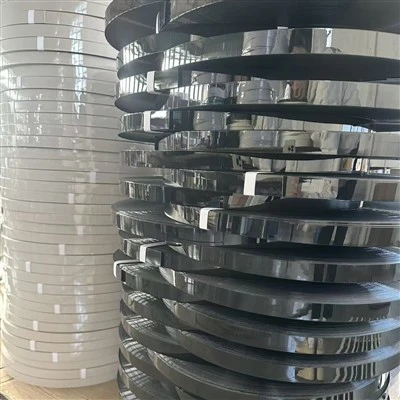
First, let’s get one thing straight: edge banding isn’t just that plastic strip you slap on a desk to cover a raw cut. Wait—ok, sometimes it is, but the good stuff (the kind we sell) is engineered to flex, grip, and adapt. The myth I hear all the time from office managers and interior designers is “grain has to match perfectly for EB to work.” Nah, that’s for DIY TikTokers who use Amazon’s $0.99 roll and a hair dryer. When we’re talking about commercial office furniture—stuff that takes a beating from people slamming drawers, coffee spills, and the occasional intern bumping a cart—EB needs to do more than look pretty; it needs to stick, not peel, and hide those weird, mismatched grain gaps you get when you mix different woods.
Let’s break down the “why” first, because this isn’t rocket science, it’s wood science (basic version, I promise). All wood grain is just the pattern of cellulose fibers, right? Some woods (like maple) are super tight-grained, almost uniform lines, while others (oak, ash, even reclaimed barn wood) have wild, open grain with big, porous gaps. Birch, on the other hand, is pretty smooth, fine-grained. Now, when you cut a piece of wood for office furniture, you end up with raw edges— that’s where EB goes. The key here is the adhesive on the back of the EB, not the grain of the furniture itself. Wait, but hold on—does the furniture’s grain matter at all? Yeah, but not in the way you think.
Let’s talk about when this works, because that’s probably what you’re here for. Case in point: last quarter, we worked with a marketing agency in Brooklyn that had just renovated their open office. They’d scrounged up desks from three different old office liquidations: one batch was white oak (big, swirling grain), another was soft pine (tiny, straight grain), and a third was birch (fine, even grain). The problem? The raw edges of all these desks were exposed, making the whole space look like a half-finished DIY project. Their interior designer tried matching each desk’s EB to its wood, but guess what? They ran out of matching oak EB halfway through, and their office budget was tapped. They reached out to us panicking, like “Sarah, can we just slap some light gray EB on all these? Will it stick to pine? Will it stick to oak?”
We tested a sample first—took a 2-inch strip of each wood, sanded the raw edge just enough to rough it (not too much, that’s a mistake), applied our high-temp hot-melt adhesive EB (the stuff we custom cut to their exact desk edge lengths—yes, we do custom cuts, no more trimming 100 strips to fit) and clamped it with those little edge banding clamps for 10 minutes. The result? It didn’t just stick—we pulled on it with a pair of pliers (don’t judge, we’re thorough) and it didn’t budge. Why? Because our EB’s adhesive is formulated to melt and seep into the tiny pores of different woods, not just grab onto the surface. Pine’s porous? The glue seeps in, oak’s open grain? The glue fills those small gaps, birch’s tight grain? The adhesive still has enough grip to hold. So even with totally different grain patterns, that’s a yes—when you use the right EB for the job.
But wait, let’s not sugarcoat it—there are times when this doesn’t work, and those times come down to prep, not the grain itself. I once had a client who tried to EB a set of desks that had been sitting in a garage for 6 months, covered in dust and old paint splatters. He sanded the edges super aggressively (like, down to bare wood that was all scratched up) and used the cheap EB he grabbed from a home improvement store. Within a week, half the strips were peeling. That wasn’t the grain’s fault—that was his prep and his EB choice. If he’d prepped the edges right (light sanding, wiping them down with isopropyl alcohol to get rid of grease and grime) and used our industrial-grade EB, it would’ve been fine even if the grain was all over the place.
Another big one: what kind of EB are you using? Because not all edge banding is created equal. We sell three main types, and each works differently with varying grain patterns. Let’s make this simple, no jargon. First, PVC edge banding—this is the workhorse for offices, durable, stain-resistant, and works on almost any grain because it’s flexible enough to conform to both tight and open grain. Second, wood veneer edge banding—this is for when you want a more natural look, like matching a reclaimed oak desk to an oak EB, but it can work on other grains too if you pick a veneer that complements (not matches) instead. Third, hot-melt reactive edge banding—this is the heavy-duty stuff for high-traffic offices, perfect if you’ve got super porous grain like ash or hickory, because the adhesive forms a permanent bond that won’t let go, even if the wood moves a tiny bit with humidity (which all wood does, by the way—humidity swings make wood expand and contract, that’s why cheap EB peels).
Oh, and here’s a pro tip I learned from fixing a botched EB job for a law firm last year: if you’ve got a mix of grain patterns and you’re using wood veneer EB, don’t try to match each individual grain. Pick a veneer that’s a close color family (like warm brown for both oak and ash) and go with that. The eye is more forgiving than you think—when people look at a desk, they notice if the edges are smooth and finished, not if every tiny grain line on the EB matches exactly. That law firm had 20 desks with mixed oak and pine grain; we used warm oak veneer EB on all of them, and within a week, no one even mentioned the grain mismatch. They did, however, mention that their desks didn’t have that raw, “unfinished office” look anymore.
Wait, let’s address the elephant in the room: what if you’ve got super weird grain, like that live-edge desk you picked up from a farmers market that has knots and holes? Can EB work on that? Short answer: yes, if you fill those gaps first. Knots and big open grain gaps are fine, but if you don’t fill them with wood filler that matches your base wood, the EB will sink into the gaps and look lumpy. We’ve got a little trick for that—when we prep custom EB orders, we send a free mini tube of matching wood filler with every bulk order for exactly that reason. No more messy, mismatched filler that sticks out like a sore thumb.
Let’s talk about a common mistake a lot of office managers make: over-sanding edges. I see this all the time. They think if they sand the edge down to a glass-smooth finish, the EB will stick better. No—wait, no. You need to rough up the surface just enough to give the adhesive something to grab onto, not sand it so smooth there’s no texture. For open-grain wood like oak, a light 80-grit sanding is perfect. For tight-grain wood like maple, maybe 120-grit—you don’t want to scratch the wood, just give it a little bite. And always, always wipe the edge with a clean cloth and isopropyl alcohol before applying EB—any dust, coffee residue, or even hand lotion (if someone’s handled the desk) will make the adhesive not stick. We include those wipes in every bulk order too, because we’ve been where you are—staring at a stack of desks at 8 PM, wondering why the EB won’t stick, and it’s just because you missed a coffee stain.
Now, let’s get to when you should maybe skip this and do a different fix. If you’re talking about super expensive, high-end custom office furniture—like a walnut desk that cost $2,000—you might want to match the EB exactly. But even then, if you’re on a budget, complementary grain EB works. I’ve had a lot of corporate clients go for the “complementary grain” look because it’s way cheaper than custom-cut EB for every single piece. Another time to skip? If the wood edges are so damaged or warped that they’re not straight. If a desk edge is twisted, EB will follow that twist and look terrible—so fix the warp first before even touching EB.
Wait, let’s circle back to that Brooklyn marketing agency. They ended up going with our 1.5-inch oak veneer EB (it was a perfect middle ground between the oak, pine, and birch) and we custom cut all the strips to fit their desk edges, so they didn’t have to trim a single one. The total cost was 30% less than trying to match each desk’s EB, and 6 months later, we stopped by to pick up a sample order for another client, and their entire office looked polished. No one could tell the grain patterns on the desks were different—all they noticed was that the raw, ugly edges were gone, and the whole space felt more put-together.
I could go on for hours about the tests we’ve run—like when we left samples out in a warehouse with a humidifier cranked to 90% for 3 months, and the EB still didn’t peel, even on pine and oak edges. Or when we tested PVC vs. wood veneer on ash grain, and the wood veneer looked more natural but the PVC held up better when someone spilled soda on it (which is why most offices stick to PVC for high-traffic areas). But here’s the bottom line you need to take away: office furniture edge banding absolutely can be used on wooden office furniture with different grain patterns—you just need three things: the right type of EB (industrial-grade, not the cheap stuff from the big box store), proper prep (light sanding, clean edges), and a willingness to go for complementary grain instead of exact matches if needed.
If you’re still on the fence, maybe you’ve got a bunch of desks or cabinets at your office that need edge banding, and you’re not sure if your mixed grain will work—hit us up. We offer free sample kits (yes, free, no hoops to jump through) with different types of EB, so you can test it on a tiny piece of your wood before buying a whole roll. We don’t do pushy sales stuff—just a team that’s been doing this for years, knows the ins and outs, and wants to make your office furniture look good without wasting your time or money.
Oh, and one last thing—common myth busted: EB doesn’t damage the wood. If you do it right, it’s reversible, not permanent. If you ever decide to replace a desk or re-finish furniture, you can peel the EB off without ruining the wood underneath. That’s a big one for offices that reconfigure their space every few years.

So, if you’re ready to stop staring at those raw, mismatched edges and make your office look polished, reach out to connect and talk through your needs. No fancy scripts, no hidden fees—just us, figuring out the right edge banding solution for your mixed grain furniture.
Panel Furniture Edge Banding References
- Forest Products Laboratory. (2021). Adhesive Bonding of Wood and Wood-Based Materials. U.S. Department of Agriculture.
- Office Furniture Manufacturers Association. (2022). Edge Banding Best Practices for Commercial Office Spaces. OFMA Technical Bulletin No. 17.
- Wood Science and Technology Magazine. (2020). Performance of Edge Banding on Heterogeneous Wood Substrates. Vol. 54, Issue 6.
Linyi Meador New Materials Co., Ltd.
As one of the most experienced office furniture edge banding manufacturers and suppliers in China, we offer a wide range of products with superior quality. We warmly welcome you to buy bulk premium office furniture edge banding from our factory. Good service and punctual delivery are available.
Address: Meidu New Materials, No. 66 Zhenxing Road, Tanyi Town, Feixian County, Linyi City, Shandong Province
E-mail: meador@zohomail.cn
WebSite: https://www.meadorfactory.com/
