Hey there! I’m in the business of supplying molecular sieves, and I often get asked, "What the heck is a molecular sieve?" So, I thought I’d take a few minutes to break it down for you in plain and simple terms. Molecular Sieve
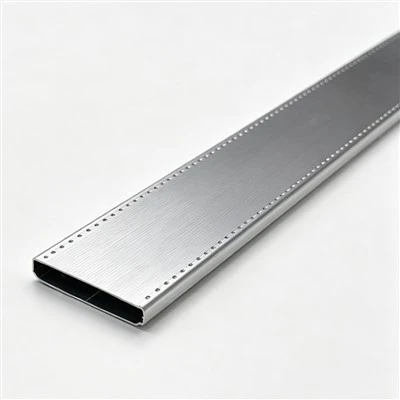
Let’s start from the basics. A molecular sieve is kind of like a super – tiny filter. Picture it as a super – fine mesh, where the holes in the mesh are just the right size to let some molecules through while blocking others. These are usually made up of porous materials, and the most common ones are zeolites.
Now, what are zeolites? Zeolites are a group of naturally – occurring minerals, but we can also make them in the lab. They’ve got a really cool crystal structure. It’s like a three – dimensional maze, full of tiny pores and channels. These pores are extremely uniform in size. And that’s the key to a molecular sieve’s magic.
Let’s talk about how these pores work. The size of the pores in a molecular sieve is measured in angstroms. For example, some molecular sieves have pores that are 3 angstroms wide, others 4, 5, or even 13 angstroms. Why does this matter? Well, different molecules have different sizes. Water molecules are relatively small, about 2.8 angstroms in diameter. So, a molecular sieve with 3 – angstrom pores can easily trap water molecules. But larger molecules, like propane (which is around 4.9 angstroms), can’t get in.
One of the most common uses of molecular sieves is in drying. You know how sometimes you open a box of electronics, and there’s that little packet with some white stuff in it? That’s likely a molecular sieve. It’s there to soak up any moisture in the box. Water molecules are attracted to the surface of the zeolite in the molecular sieve because of the electrical charges in the zeolite structure. Once the water molecules enter the pores, they’re kind of stuck there. This process is called adsorption.
But it’s not just about water. Molecular sieves can also separate other types of molecules. In the petrochemical industry, for example, they’re used to separate different hydrocarbons. You see, different hydrocarbons have different chain lengths and shapes. By using a molecular sieve with the right pore size, you can separate out the ones you want from the mixture. Say you’ve got a mix of normal – butane and iso – butane. Normal – butane has a more linear shape, while iso – butane is more branched. A 5 – angstrom molecular sieve can let normal – butane through its pores while blocking iso – butane.
Another neat application is in the production of high – purity gases. Oxygen and nitrogen are two major components of air. You can use a molecular sieve to separate them. The pores in the sieve are designed to preferentially adsorb nitrogen. So, when you pass air through the sieve, nitrogen gets stuck inside, and you’re left with a stream of relatively pure oxygen. This is used in hospitals to supply oxygen, as well as in industrial processes where pure oxygen is needed.
Now, let’s chat about the features of our molecular sieves. First off, they’re highly efficient. We’ve got a really precise manufacturing process that ensures the pore sizes are as uniform as possible. This means better separation and adsorption performance. Whether you’re looking to dry a gas or separate two different types of molecules, our molecular sieves can do the job quickly and effectively.
They’re also incredibly durable. We know that in industrial environments, things can get rough. Our molecular sieves can withstand high temperatures and pressures without losing their shape or function. This means that you can rely on them for long – term use without having to worry about constant replacements.
And we offer a wide range of options. We’ve got molecular sieves with different pore sizes to meet your specific needs. Whether you need a 3 – angstrom sieve for drying applications or a 13 – angstrom one for more complex separations, we’ve got you covered.
But how do you know which molecular sieve is right for you? Well, it all depends on what you’re trying to achieve. If you’re mainly focused on drying, a smaller – pore sieve is probably your best bet. But if you’re looking to separate different chemicals, you’ll need to consider the size and shape of the molecules involved. You can always reach out to us, and our team of experts will be more than happy to help you figure out the best solution for your specific situation.
Speaking of reaching out, if you think our molecular sieves could be a good fit for your business, don’t hesitate to get in touch with us. Whether you’re a small – scale laboratory operation or a large – scale industrial facility, we’re ready to supply you with the high – quality molecular sieves you need. We can also provide you with samples so you can test them out for yourself and see the difference they can make.

In conclusion, molecular sieves are these amazing little materials that can do some really cool things. They’re like the unsung heroes in many industries, quietly working away to separate, purify, and dry all sorts of substances. And if you’re in the market for a reliable supplier of molecular sieves, we’re here for you.
Molecular Sieve References
- Breck, D. W. (1974). Zeolite Molecular Sieves: Structure, Chemistry, and Use. John Wiley & Sons.
- Ruthven, D. M. (1984). Principles of Adsorption and Adsorption Processes. John Wiley & Sons.
Renqiu City Xinjian Metal Products Co., Ltd.
Renqiu City Xinjian Metal Products Co., Ltd. is one of the most professional molecular sieve manufacturers and suppliers in China. With abundant experience, we warmly welcome you to wholesale customized molecular sieve from our factory. If you have any enquiry about free sample, please feel free to email us.
Address: Caicun Dajie Village, Changfeng Town, Renqiu City, Hebei Province China
E-mail: melody@xinjianmetal.com
WebSite: https://www.xjglassspacer.com/
